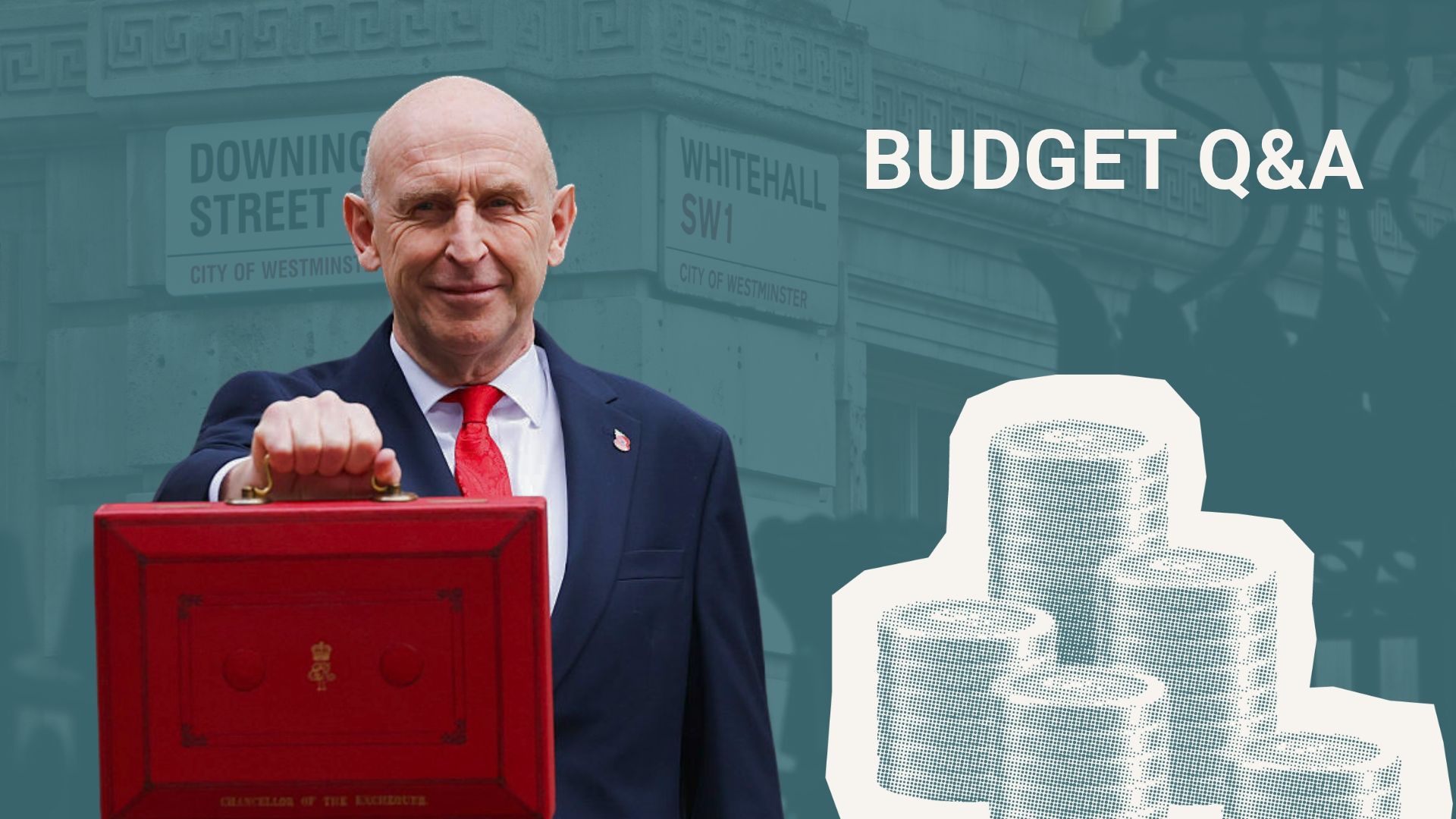
It was dubbed a cautious, “steady-as-you-go” Autumn Budget, but chancellor John Healey announced a number of tax hikes and changes in his first fiscal statement.
The chancellor addressed the controversial Lifetime ISA “unauthorised” withdrawal penalty and scrapped the cash ISA reform which was due to come into force from April 2027.
Start your trial of MoneyWeek today
Get unparalleled financial insight, analysis and expert opinion you can profit from.
Start your trial
Sign up for MoneyWeek’s free twice-daily newsletter.
Join more than 165,000 subscribers and keep yourself informed with latest financial news, insights and expert analysis to help you understand what really matters when it comes to your finances.
Join more than 165,000 subscribers and keep yourself informed with latest financial news, insights and expert analysis to help you understand what really matters when it comes to your finances.
In a poll by , answered by 895 readers, 48% of respondents said the 2026 Autumn Budget “left much to be desired” while 24% felt it was “catastrophic”. Some 13% agreed it was “okay”, 10% were “indifferent” while 5% said it was “great”.
But what does the Budget mean for you? readers submitted their questions, which we put to the financial experts.
Will I be taxed more?
"Will working people on minimum wage be taxed more? I am already struggling.”
Rachael Griffin, personal tax expert at Quilter, said: “The short answer is that a rise in the minimum wage should still leave you better off, but you may find more of your earnings going to tax. That is because the amount you can earn before paying income tax has not been rising alongside wages.
“As your pay increases, a greater proportion can therefore fall above the tax-free personal allowance. This is known as ‘fiscal drag’. It means some of the benefit of a wage increase is effectively clawed back through higher tax, even though income tax rates themselves have not gone up.
“What really matters is how much extra money ends up in your pocket each month. A higher minimum wage should increase take-home pay, but frozen tax thresholds mean the increase will not translate pound-for-pound into disposable income.”
Will interest rates on student loans be cut?
“Is there any sign that the obscenely exorbitant interest rates on student loans will be cut? With the recent revelations on mental health impacts on the younger generation, surely some message of hope needs to be sent their way?”
Sarah Coles, head of personal finance at AJ Bell, replies: “When Plan 2 loans were announced in 2021, the Government said the earnings threshold would be uprated every year in line with earnings from 2016. However, the threshold was frozen from 2016–2018 and again from 2021–2025, and is set to be frozen for three years from 2027.
“A Treasury Committee has called for this to be reversed, but the government refused. It also wanted to switch from a link to RPI to a lower CPI measure, but this was turned down too. However, there is a crumb of better news, because from February 2030, the government will stop producing a separate RPI rate – which is the inflation rate student loans are pinned to. Instead, it will be aligned to CPIH, which tends to be slightly lower.
“It’s essential to bear in mind that most students won’t end up repaying the debt in full, because it will be written off, so while it can feel alarming to see the interest rack up, in most cases you won’t end up paying all of it. It’s important to focus on the monthly repayments rather than the loan itself. These can still be horribly painful, but can feel less overwhelming.
“For students on the newer Plan 3 student loan, things are even tougher because while the interest rate will be lower for some people, loans aren’t written off for 40 years instead of 30, so far more people will repay them in full. Average earners will be particularly hard hit, because they will carry the debts for longer before fully repaying – so rack up more interest.”
How is Pension Credit changing?
“How will the state pension increase affect people who also receive Pension Credit? Will Pension Credit be taxed?”
Steve Webb, partner at LCP, replies: “In April 2027 the new state pension and the basic state pension will both rise by 3.9%, which is the increase in average earnings over the last year. But Pension Credit will also rise by the same percentage. This means it will rise from £238 per week for a single person this year to £247.30 next year. As long as your income next year, including the increased state pension, is under the new figure, you should still receive Pension Credit. And the good news is that, unlike the state pension, Pension Credit is not subject to income tax.”
Are Help to Buy ISAs changing?
“Were there any changes to the property price limit for Help to Buy ISAs? My child started paying into one in 2016 and now wants to use it for his first property purchase.
“He has had his offer of £259,000 accepted on a flat, which is at the top of his budget because property prices in the South East have risen over the last 10 years.
“He can’t benefit from the HTB bonus of £3,000 because the limit for the property price is £250,000 and has remained unchanged since the scheme was started. His money would have been better invested elsewhere!”
deputy digital editor Jessica Sheldon replies: “The Lifetime ISA (LISA) was introduced in 2017, replacing the Help to Buy ISA, but savers can still pay up to £200 a month into a Help to Buy ISA if they have one until 30 November, 2029. To get the 25% government bonus (up to £3,000) via a Help to Buy ISA, the purchase price of the property must be up to £250,000, or £450,000 in London. Unfortunately, this means your child won’t get the government bonus if the flat isn’t in London.
“Lifetime ISA savers can get a 25% government bonus (up to £1,000 per year) on money they put into the account, until they turn 50. You can pay £4,000 a year into this account but you need to purchase at least 12 months after making your first LISA contribution to get the bonus on a first home, so unfortunately your child wouldn’t qualify if they are buying before then.
“If you're buying a property using your Lifetime ISA savings, the property needs to cost £450,000 or less if you want to keep the government bonus.
“Chancellor John Healey made changes to the Lifetime ISA “unauthorised” withdrawal charge in the 2026 Budget and announced details of the new First Time Buyer ISA (due to be introduced from April 2029, also with a £450,000 property price cap), but hasn’t changed the Help to Buy ISA.
How closely were you following the 2026 Autumn Budget? Test your knowledge in our quiz.