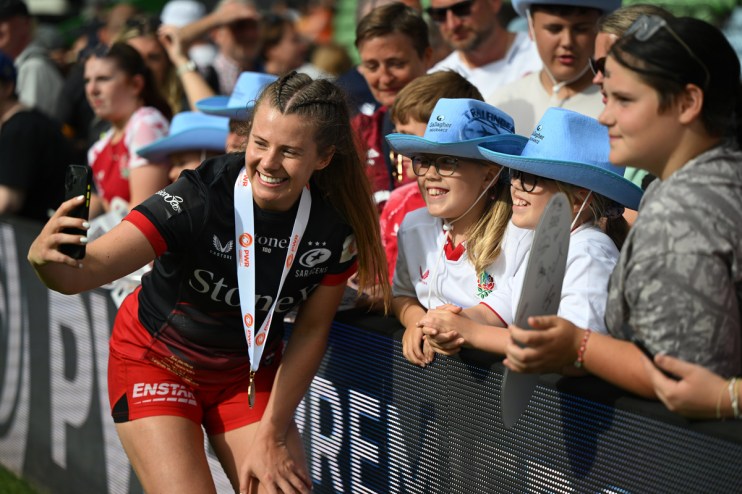
For the last 10 years, the story of women’s rugby has been told through the lens of investment and comparison. How quickly could it catch up with the men’s game? When would attendances improve? When would broadcasters pay for it and big brand sponsors follow?
Those were understandable questions, but they are now the wrong ones. Women’s rugby is no longer a development project sitting alongside the “real” commercial product. It is becoming one of rugby’s most compelling growth stories and, increasingly, there are things the men’s game could learn from it.
The numbers are starting to make the case. The 2025 Women’s Rugby World Cup set all kinds of records for attendance, engagement and sponsorship. That is about momentum, not just potential, and the domestic game is beginning to convert it. Average attendances rose 23 per cent last season and its fan database grew four-fold.
“While the appetite for the international game is undeniable, it’s the trajectory of Premiership Women’s Rugby that excites me most,” says women’s sports strategy consultant Minty Martin.
Women’s rugby has cracked Gen Z
What interests me is not simply that the audience is growing, but how. Women’s rugby has been forced to build fandom in a very Gen Z way. It has leaned into personalities, TikTok content and storytelling.
It has been less constrained by some of the traditions that can make the men’s game feel inward looking or conservative. The clubs and unions – and players! – seem more willing to devote energy to growing the game and lifting the veil.
At the World Cup, 15 per cent of attendees were at their first rugby match of any kind. Almost a third of women’s rugby fans are under 35. World Rugby says increased player visibility is one of the major reasons fans are engaging more deeply.
Sport today competes not simply against other sports, but against every other form of entertainment. You have to earn the next generation’s attention, and women’s rugby appears increasingly comfortable with that reality.
“Audiences – especially younger ones – can tell the difference between a sport performing for them and a sport genuinely opening the door and inviting them in,” says Lottie Rowland, women’s rugby lead at Counteruck.
There is a paradox here. The women’s game has less inherited commercial infrastructure; that can be an advantage. It can test formats, voices and partnerships without first asking whether rugby has always done things that way.
There is also a commercial freshness to the women’s game. Sponsors are not being asked simply to put a logo onto an established property. There is an opportunity to participate in its growth, shape the fan experience and build relationships with audiences.
Daryl West, partnerships director at AG1, says women’s rugby players “are its greatest asset: authentic, relatable and trusted, they have built deeply engaged social followings that give sponsors a credible voice rather than simply a logo. For brands seeking genuine connection over just exposure, women’s rugby offers a rare and powerful platform.”
Women’s rugby has answers for men’s game
World Rugby found that women’s rugby fans are nine percentage points more likely to talk about a brand that sponsors the game than among men’s rugby fans. For rights holders and brands, that should be difficult to ignore.
The economics of the domestic game remain challenging. Clubs need greater revenues, players need sustainable careers, and audiences need to convert from big event excitement into weekly habits. But perhaps the biggest change required is the way that people think about the game.
Women’s rugby should no longer be discussed solely in terms of how close it is to the men’s game. The more interesting question is what it can become on its own terms and what rugby more broadly can learn.
Rugby has long worried about attracting younger supporters, creating stars, improving content and being more culturally relevant. Women’s rugby is already experimenting with many of the answers. The conversation has changed and the men’s game would be wise to start listening.
Simon Dent is founder and chairman of Firmative and has more than 20 years’ experience across sport, entertainment and the creative industries.