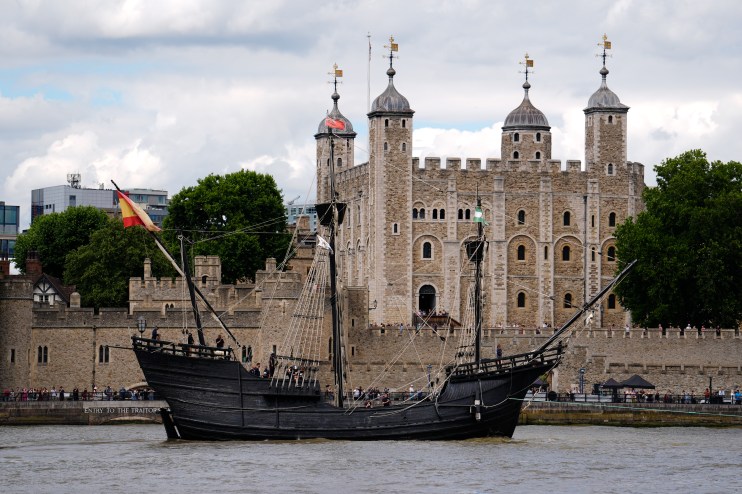
Plans to protect views of the Tower of London will cost the economy £1.2bn in lost economic output every year, the City of London Corporation has warned.
Historic England, the government’s heritage watchdog, is battling to secure a “larger uninterrupted gap of clear sky” between the medieval prison and the cluster of skyscrapers on the eastern edge of the Square Mile.
But Tom Sleigh, the City of London Corporation’s planning chairman, told that curbs on construction near the Tower could “sterilise” the area’s economic output to the tune of £1.2bn anually.
The Corporation’s planning policy had been signed off last year, only to be called in for further scrutiny by housing minister Matthew Pennycook, over fears that it could threaten the Tower of London’s status as a Unesco world heritage site.
A planning inspector is considering Historic England’s alternative plan, which proposes that nearby towers “lean away” from the heritage site.
The City Corporation has warned that the watchdog’s plan could mean developers are unable to build as high as they would otherwise like to. These upper floors are often the most valuable, and end up making the entire development financially viable, Sleigh said.
“If you start removing entire floors from potential schemes, you basically get rid of the profit margin. So no developer in their right mind would develop them,” he said.
Historic England’s plan could wipe out as many as 20 plans for skyscrapers in the east of the City. This would “essentially sterilise [this] strip of land,” costing 1m sq foot of office space, 6,800 jobs and £1.2bn every year in economic output, Sleigh said.
He continued: “[This] suddenly starts to feel really significant when we have this national economic urgency that we need to help [to] try and find solutions to.
“We hear the government say ‘growth in every postcode’. I would say EC2 and the other postcodes in the City are rather important postcodes, and you shouldn’t hold them back and stop them from growing.”
The City’s planning chief added that bigger curbs on office space could threaten the ability of the Square Mile to convince global companies to place their headquarters in the UK.
“The risk is we start losing them to competitive cities, because most of these international businesses don’t have to choose London for their European headquarters. They can go anywhere,” he said.
Most of the high-rise buildings in the City are already concentrated in its eastern edges because of the legal requirement that views of St Paul’s Cathedral are not blocked, Sleigh added.
Heritage plan ‘would threaten growth’
Office space in the Square Mile has reached record lows in recent years, prompting City figures to urge the government to roll out emergency laws to encourage construction in the area.
In its submission to the planning hearing, which took place on Wednesday, the City of London Corporation said that buildings near the Tower should have a “clearly defined edge” that leaves views of the site unobstructed.
“[Historic England’s proposal] would – significantly and demonstrably – reduce the ability of the City to meet [its need] for commercial growth, removing important potential floorspace from the most productive part of the City.
“Historic England’s approach removes floorspace at the higher and more valuable parts of the contours.”
A spokesperson for the heritage watchdog said: “We are keen to work together to identify solutions to reduce the potential for further harm to the Tower of London world heritage site whilst still achieving major economic growth.
“Reducing the potential for harm is of vital importance to the conservation of the world heritage site and we believe critical to minimising the potential for the Tower of London to be included on the list of world heritage in danger.”