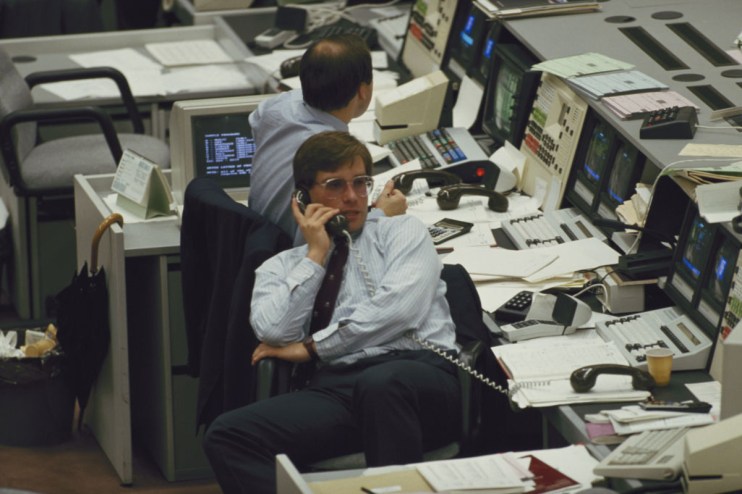
The City of London was changed forever by a sweeping package of deregulation in 1986, known as the Big Bang. Forty years on – and facing existential threats – can the Square Mile reinvent itself again?
When Alasdair Haynes left work as a young options trader on Friday 24th October 1986, he didn’t know what world would await him when he returned on Monday morning.
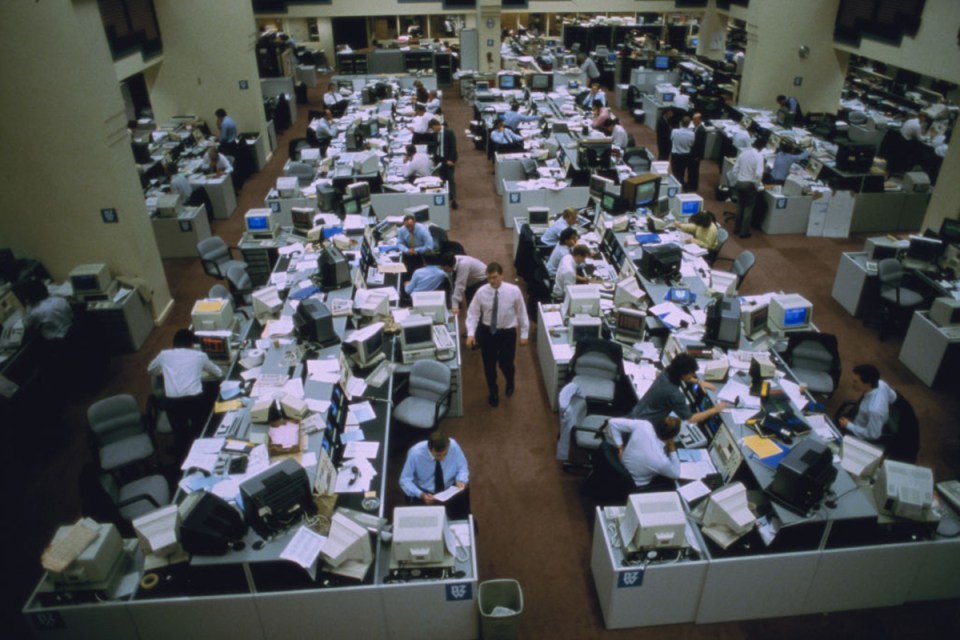
For months technicians had been wiring up futuristic-looking machines in offices around the Square Mile. Haynes’s bosses had been running practice sessions on new electronic trading systems and briefing staff as best they could in preparation for the sweeping change ahead. The reality, he says, was more drastic than anyone could have imagined.
“Everybody thought on Friday that there would be a few people off the [stock exchange] trading floor working in offices, and everybody else would come in. But we came in and the trading floor was practically a desert,” Haynes, who went on to found challenger stock exchange Aquis, tells .
“Everybody else had gone off on Friday, never to come back ever again. It was a mind-blowing experience.”
Stay in the know
Three daily briefings with the key market moves and top business and political stories.
SUBSCRIBE HEREOn that Monday, 27th October 1986, the sudden deregulation of financial markets known as the Big Bang took effect, transforming the City of London and catapulting Britain’s financial industry into the modern age.
The bustle and life of the London Stock Exchange floor were swapped for the screen-based Stock Exchange Automated Quotation system. Strict rules dividing work between brokers – who bought and sold shares on behalf of clients – and jobbers – who made markets and held shares – were ditched. Fixed commissions were abolished, allowing transaction fees to be negotiated freely, as were rules prohibiting international firms from owning London’s stockbrokers.
International firms piled into the City and consolidated London’s fractured broking market. Americans arrived in droves – and with them came their hard-charging, cut-throat ways of working. The City’s clubby and cosy ways were changed forever.
“In the morning of the old days at the London Stock Exchange, you used to walk around the boxes around the edge of the exchange, and talk to everybody and find out what they thought about the market,” Haynes says.
“You’d meet people after work in the Arbitrager or Greens, or go out to lunch. All that changed, literally as if somebody turned a light switch off.”
Speaking at the Lord Mayor’s banquet two weeks after the changes took effect, even Margaret Thatcher acknowledged her reforms were a death knell to a certain way of life.
“The new technology does have a disadvantage: the people who are making deals need never meet,” she said. “You can’t look a computer in the eye and shake its hand to close a bargain.”
The train timetables shifted too to accommodate the earlier starts and longer hours of new international arrivals coming in from the home counties, Sir Philip Augar writes in his book the Death of Gentlemanly Capitalism.
The result though was a sudden rise in jobs in Britain’s financial services sector. In early 1986, the City employed around 1m people. By 1990 that had swelled to 1.18m, according to government figures.
The deregulation drive, ushered in by Thatcher and Chancellor Nigel Lawson, triggered an explosion of activity in the Square Mile and thrust London back to the forefront of global finance. A string of huge privatisations of state-owned utilities added to a sudden influx of investment and jobs in the Square Mile.
While the day itself delivered a shot in the arm, London’s markets had been internationalising for years prior thanks to the rise of the Eurodollar market – the global banking market for dollar deposits held in banks outside the United States – and the abolition of exchange controls in 1979, which ended strict limits on moving money in and out of the country.
Duncan Weldon, the financial historian and author of Two Hundred Years of Muddling Through, argues those changes were just as significant as the sudden overhaul on that Monday in October 1986.
“The City was in this sort of funk from the 1920s, all the way up to the 1950s. And then in the 50s, ’60s and ’70s you see this rebirth in international finance in London in debt markets, because of the Eurodollar market,” he says.
Dropping exchange controls in 1979 too was “just as big a deal as the changes to the market structure in the mid-80s”, he adds.
Big Bang 2.0?
Politicians have for years nostalgically invoked the Big Bang to pledge another wave of quick and transformative deregulation. Jeremy Hunt, Rishi Sunak, Liz Truss and Kwasi Kwarteng all promised various forms of Big Bang 2.0, claiming that slackened solvency buffers for insurance firms and an overhaul of listing rules would thrust London back to the centre of global finance.
But Weldon says the reality is more complex.
“Rhetorically, the idea of the Big Bang, and the idea there are some regulatory levers you can pull and it will turbocharge your financial sector, is clearly a very appealing one to policy makers,” he adds.
“But it helps to put this in a longer context. It wasn’t just that the policy unit in Number 10, and Nigel Lawson as Chancellor, did these reforms and it turbocharged the financial sector in London.”
Weldon’s warnings point to the challenge now facing the City as it is battered by a wave of foreign takeovers and a historic dearth of initial public offerings. While there have been signs of life for London’s listing market in recent weeks, a slew of reforms made to the rules governing UK capital markets have so far failed to yield a meaningful uptick in deals.
Changes to the buffers of insurance firms and calls for pension funds to pump more cash into domestic equities are also yet to shift the dial on domestic investment.
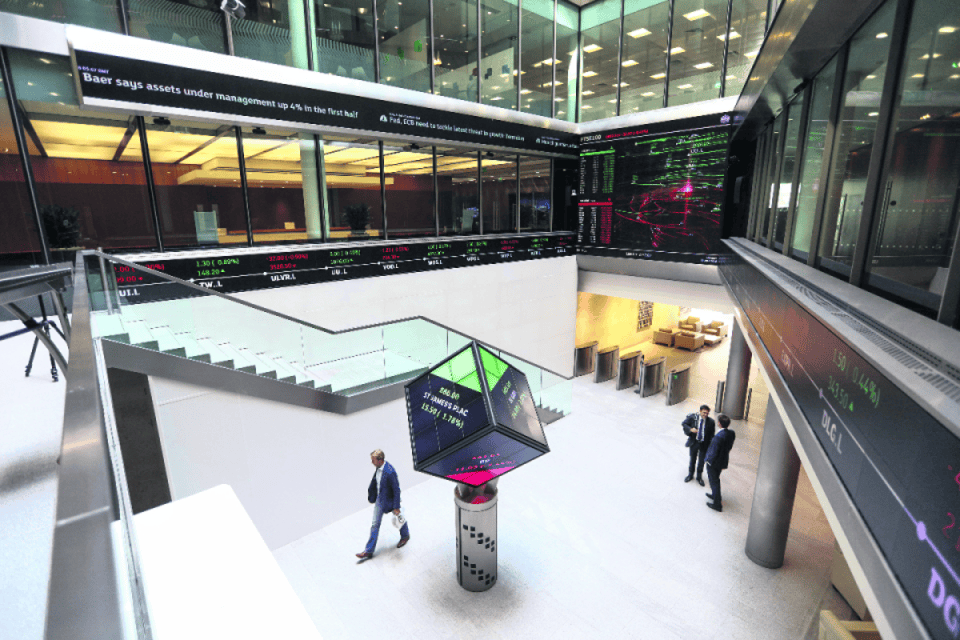
Policymakers and regulators point to a retreat of domestic capital as among the primary reasons for London’s market malaise. Just four per cent of the domestic stock market is now held by UK pension funds, down from 39 per cent around 20 years ago, according to think tank New Financial. Like the rebirth of the City in the 1980s, that trend has been decades in the marking.
Steven Fine, boss of City investment bank Peel Hunt, says: “The problem we’ve got is that the IPO Market hasn’t come back, and the bigger problem we’ve got is the almost complete lack of domestic demand and the hollowing out of the domestic asset management industry.
“That I think is something that is more in need of [another] Big Bang than regulatory change for listed companies.”
Few are looking at the Budget on Wednesday as a moment likely to deliver solutions and reignite the City’s animal spirits. Banks are set to be hit with higher taxes despite warnings from international bosses that such a move will force them to reallocate capital away from the UK. While a capital gains tax hike has been ruled out, the City’s calls for an end to stamp duty on shares and tax breaks for domestic investment from pension funds look set to be unheeded.
Is another Big Bang possible? Not in Haynes’s view. Rather than search for another deregulatory transformation to revive the Square Mile’s former glory, he says policymakers should learn from the principles that inspired it.
“There’s no magic wand, but the Big Bang wasn’t a magic wand. It was thought through for a long time beforehand” he says.
“It was about many things which a strong, powerful government at the time was able to push through. And that is what we need today. It’s not Big Bang 2.0 – you can’t electronify something again. But what you can do is take the same principles to make it work better.”