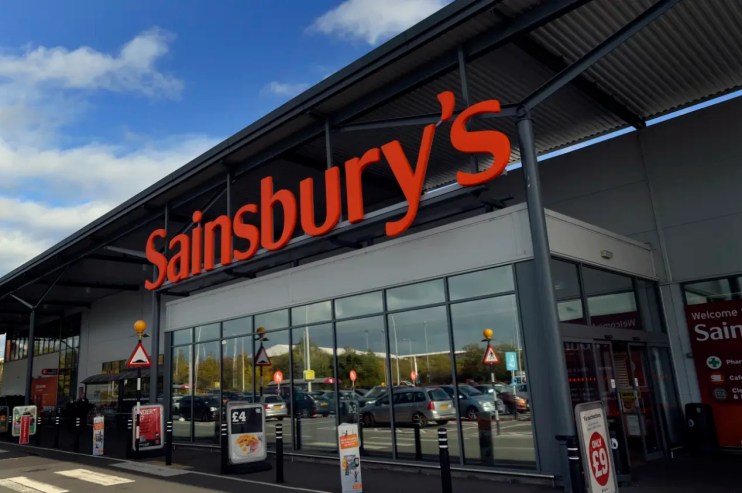
Sainsbury’s is set to update the market on its latest numbers this week. But the City has one thing in mind: merger talks with Morrisons, writes Felix Armstrong
As Sainsbury’s boss Simon Roberts gears up to face the market later this week, business hacks will be getting used to the usual riposte: no comment.
The one thing the grocery chief executive is desperate to swerve is the main point he’ll be quizzed on: why his supermarket walked away from merger talks with Morrisons and whether it can rule out going back to them.
Sainsbury’s has been making steady market share gains, cementing its position as the UK’s second biggest supermarket chain, far beyond the reach of discounters Lidl and Aldi as they put pressure on Morrisons and Asda.
The orange-liveried grocer has been putting on decent share gains too, adding 20 per cent to its market value across the last five years. The stock has performed especially well this month, putting on five per cent to approach its highest level in a year.
Stay in the know
Three daily briefings with the key market moves and top business and political stories.
SUBSCRIBE HERESince Roberts became Sainsbury’s boss in June 2020 he has sought to drive a relentless focus on the company’s food offering. A few months after he took the reins, the grocer announced 420 Argos store closures.
Sainsbury’s completed its retreat from the click-and-collect retailer in July this year, when it was sold to Swift Partners, a newly-formed group of retail experts for £120m – a fraction of the £1.4bn it paid for it.
“Having rebuilt the core strengths of our food business, this agreement allows us to focus all our resources and investment on the significant opportunities ahead,” Roberts said at the time.
The grocer has also withdrawn from its cafe operations under Roberts, shutting all its in-store outlets in January last year, to the tune of more than 3,000 job losses.
Sainsbury’s finds market share gains ‘expensive’
Months ago, the Sainsbury’s boss would have earmarked this Thursday’s first-half results as an opportunity to talk up the supermarket’s efforts to cut the fat and focus on its food aisles.
But this was made impossible when it emerged earlier this month that Sainsbury’s had held talks with Morrisons, its smaller rival, over a potential merger.
This new grocery conglomerate would have put fresh pressure on Tesco’s market dominance and marked the biggest sector shake-up since Sainsbury’s failed takeover of Asda in 2019.
A potential merger with Morrisons could fuel Roberts’ push towards food, industry experts have said. One of Morrisons’ major assets is its in-house manufacturing arm, Myton Food Group.
“Winning market share organically is becoming increasingly difficult and expensive,” said Retail Economics analyst Nicholas Found. “Acquiring Morrisons would deliver an immediate leap in scale, strengthen its food manufacturing capabilities and expand its convenience footprint – narrowing the gap with Tesco.”
But this was not to be, at least for now. The bigger supermarket decided to ditch the discussions in February this year following a disagreement over price, the Financial Times reported.
Roberts will face a barrage of questions on Thursday about why Sainsbury’s felt the need to explore such a takeover, given its relatively steady share price and solid position in the UK’s grocery market.
Richard Hyman, an independent retail analyst, argued that the talks were more likely an “opportunistic” play by Clayton, Dubilier & Rice – Morrisons’s private equity owners – than a proactive effort from Sainsbury’s.
“[Sainsbury’s] holds all the cards. This isn’t necessarily the end of the story, but I very much doubt that Sainsburys will say anything about it at all or want to discuss it,” he said.
The merger talks, whether or not they are revived, indicate that consolidation in the grocery sector is far more feasible than it was seven years ago, when Sainsbury’s takeover of Asda was blocked over fears it would reduce competition.
Food inflation looms
Some industry insiders believe the emergence of Aldi and Lidl as serious competitors to Morrisons and Asda means the UK’s competition watchdog would be far less likely to bat an eyelid if another deal was on the cards today.
Just as Roberts will not be keen to spill the beans on Sainsbury’s’ talks with Morrisons, neither was Ken Murphy, the boss of rival grocer Tesco.
Quizzed on the news earlier this month, he said: “I spend nearly all my time thinking about what’s right for Tesco customers and the Tesco brand, and how we can keep growing this business, irrespective of what’s going on externally. Because at the end of the day, we can only control the controllables.”
Though Tesco, which is sitting on a commanding 27.8 per cent share of the UK’s grocery market, is untroubled by the prospect of a Sainsbury’s merger, it will be on the lookout for its rivals’ comments on food inflation.
The surging energy and supply chain costs caused by the Iran war are expected to put pressure on food prices, with industry figures expecting prices to rise by as much as six per cent year-on-year by July.
Earlier this year, Roberts said food inflation had not been as bad as it had been feared but he will be keen to prove that Sainsbury’s is competing with its rivals to keep a lid on prices.
After Tesco declared itself the UK’s “cheapest full-line grocer” a few weeks ago, its longstanding rival will be keen to prove that it doesn’t need Morrisons to keep up.