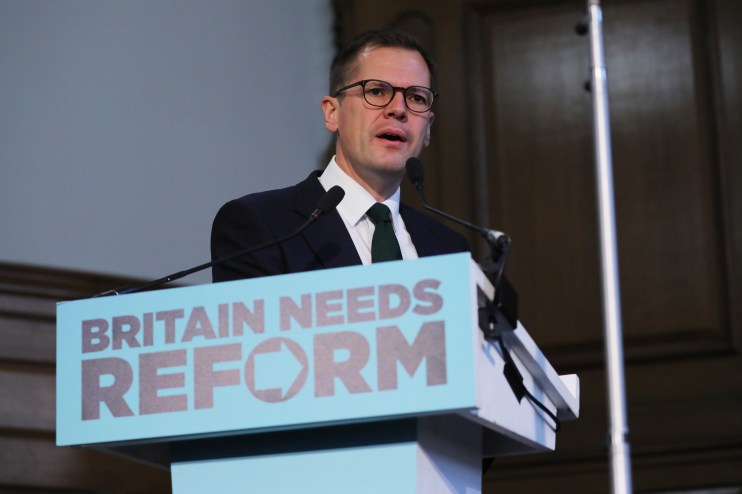
Robert Jenrick, Reform UK’s shadow chancellor, says markets can’t be lectured into trusting Britain. Only a credible plan for spending cuts can restore confidence
Andy Burnham infamously declared he didn’t want to be “in hock to the bond market”. Six weeks into his premiership, his bold claim has aged like milk. The bond markets are having their say anyway.
Yesterday, ahead of his first Prime Minister’s Questions as Prime Minister, ten-year gilt yields hit their highest level since the financial crisis. Thirty-year yields touched levels not seen since 1998.
This wasn’t an act of God. It was the damning verdict on an economy that has stubbornly high inflation and a government that lacks fiscal credibility.
Yes, all advanced economies are being punished right now for reasons largely outside of the government’s control, but why are our yields higher than our neighbours?
Inflation is one culprit. Prices have long risen faster in Britain than in the Eurozone. Lenders need compensation for the declining value of sterling – so they ask for higher interest rates.
Borrowing is another. Before Labour took office, the OBR forecast borrowing of £39.4bn in 2028-29. It is now forecast to be £86bn. Yesterday at PMQs Burnham had a golden opportunity to send a clear signal that he will cut profligate spending, but he refused.
It’s little wonder the OBR is also forecasting debt-interest costs of £137bn by 2030. That would be a disastrous outcome. Unless we change course, tens of billions of pounds that could otherwise be used to improve public services, strengthen our infrastructure or reduce the tax burden will instead be spent servicing past borrowing.
Thankfully, Reform UK offers a clear alternative to put our economy on stabler footing.
Economic credibility
We believe in sound money and fiscal responsibility. So we will be a government which lives within its means. Markets cannot be lectured into confidence.
Confidence comes from credible plans and a willingness to make tough decisions before those decisions are forced upon us. That’s why last month I set out the most comprehensive plans of any political party to cut the welfare bill by £51bn a year. And why we have announced extensive cuts to net zero subsidies, civil service headcount, foreign aid and handouts for migrants.
We also believe in taming the cost of living pressures that drive up yields further. Our supply-side reform agenda – covering energy, housing, infrastructure, the labour market, and the financial markets – will give the economy breathing-space, and ensure that we bring inflation down, even amidst repeated global shocks.
At the end of the day, the choice is increasingly clear. We can continue pretending that spending can rise without consequences and that markets will simply accept whatever politicians decide. Or we can restore fiscal discipline before circumstances impose it upon us.
At the end of the day, the choice is increasingly clear. We can continue pretending that spending can rise without consequences and that markets will simply accept whatever politicians decide. Or we can restore fiscal discipline before circumstances impose it upon us
Reform UK believes Britain should choose sound money, responsible government and economic credibility. That is what the City needs. As Chancellor in a Reform UK government, that is exactly what I will deliver.
At our party conference this week, we will set out the next step in our plan for the economy.
Including how we will cut red tape such as cumbersome data protection laws which are strangling small businesses to death and reverse Rachel Reeves’s job’s tax on British workers.
Meanwhile, my colleague Richard Tice will announce detailed plans on how we will revive Britain’s high streets and get the country building again in our major cities.
Above all, we will offer a determined, pro-enterprise agenda that puts growth first. For businesses in the City, that means a government serious about controlling borrowing, reducing the pressure for ever-higher taxes and creating a stable environment in which firms can invest and plan.
The City succeeds because it looks to the future. Britain needs a Reform government that will do the same.
Robert Jenrick is Reform UK shadow chancellor