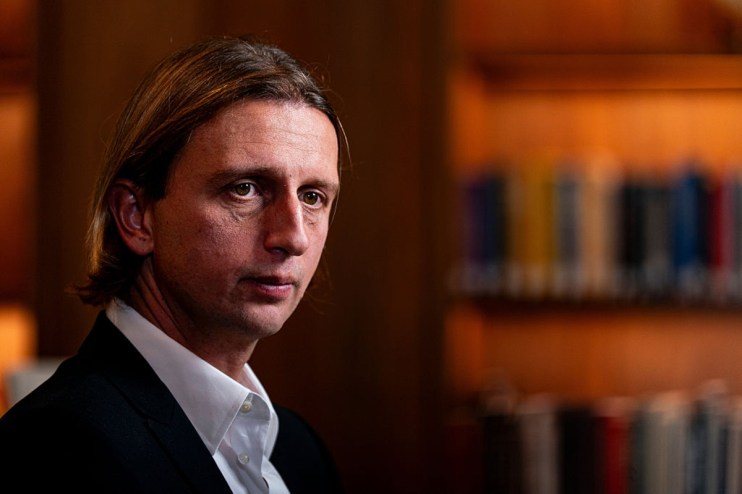
The billionaire founder of Revolut said the fintech is aiming to reduce hiring after leveraging AI for automation across the business.
Nik Storonsky, chief executive of the digital banking giant, told the Cheeky Pint podcast that the group began using AI to “optimise customer support” around two years ago.
He said now it was in “almost every single area of the company” and the company was “trying to create an AI employee end to end”.
“Technically one person can accomplish much more now… you can have one person doing all aspects of the product,” Storonsky said, but added the size of teams at Revolut have not changed yet.
“We’re just trying to automate a lot of things… hopefully when automation is done we can start hiring less people,” he said.
Stay in the know
Three daily briefings with the key market moves and top business and political stories.
SUBSCRIBE HEREStoronsky has launched his own AI-driven venture capital firm called Quantum Light, powered by an in-house machine learning system dubbed Aleph. The model tracks billions of data points across venture-backed companies to spot high-growth 10x startups with minimal human bias.
Revolut boss: KPIs might be ‘redundant’ due to AI
In Revolut, Storonsky said he “optimised a lot of things just based on people, based on advantages and disadvantages of people.”
He added systems built around performance indicators and management “might all be redundant because of AI in two to three years time”.
The group, which now commands a price tag of $115bn after a recent secondary share sale, has become known for its intense corporate culture. Insiders have previously referred to the style as “radical candour”.
In its 2025 annual report, it adopted a points-based system to track employee compliance, dubbed ‘Karma’.
The system intends to “evaluate engagement with risk and compliance processes, resulting in employees gaining and losing points that will ultimately affect bonuses”.
Storonsky said “incompetency” was the easiest way to annoy him during a product review, adding he gets irked when products are “below [the] quality” expected.
As part of the podcast appearance, he renewed ambitions for a public listing in the not-so-distant future.
“I hope its 2028 in two years time, subject to market being good,” Storonsky said.