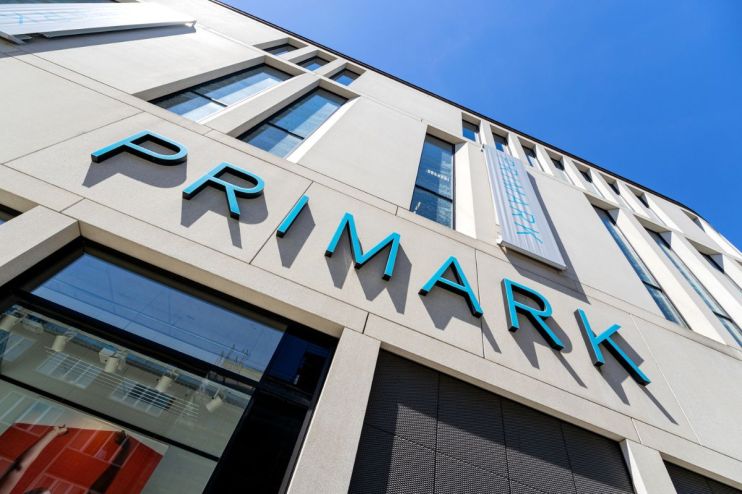
Primark has seen its sales slip as its owner, Associated British Foods, races to shape up the fast-fashion retailer ahead of its exit from the group next year.
Like-for-like sales at the retailer slipped by 2.6 per cent in the year to September, dragged down by “weak” consumer confidence and less advanced turnaround efforts in its European market.
Consumer giant ABF is racing to put Primark on a solid footing ahead of its demerger in December next year but told shareholders on Tuesday that these efforts are coming up against a “challenging consumer market”.
ABF’s overall performance was dragged down by a heavy loss at its sugar arm, as the FTSE 100 group slipped to a pre-tax profit of £1.3bn, 10 per cent lower than last year.
Primark’s drop in like-for-like sales was blamed on a 4.7 per cent dip in Continental Europe. This is the retailer’s biggest market, accounting for 47 per cent of its sales.
Stay in the know
Three daily briefings with the key market moves and top business and political stories.
SUBSCRIBE HEREThe group said its sales declined in this market because “consumer sentiment remained weak and we are at an earlier stage in our commercial recovery and in the development of our capabilities in brand, marketing and digital capabilities”.
Primark’s sales in the UK and Ireland grew by 0.5 per cent across the year, though its like-for-like takings declined by 0.1 per cent in the second half, suggesting a drop-off in consumer spending.
The group is working to improve Primark’s womenswear offering and its presence in the UK, it said. In September, the retailer announced it will roll out home delivery for the first time.
ABF said Primark came up against a “challenging consumer environment in most markets”. But the group said its franchise stores in the Middle East, which include locations like Dubai and Bahrain, are performing ahead of expectations.
Hot weather hits tea sales
Chief executive George Weston said the group’s food operations were “impacted by US consumer weakness in certain categories and lower European sugar prices”.
ABF’s sugar arm, which has been at the centre of the group’s woes in recent months, slumped to an adjusted operating loss of £47m due to lower sugar prices.
Across ABF’s grocer businesses, its revenue climbed by three per cent in the year to £4.2bn, as adjusted operating profit slipped by 10 per cent to £383m.
Weston said the headline profit dip “masked encouraging growth across a number of brands and businesses, supported by continued investment in product innovation, marketing and targeted acquisitions”.
The group recently bought bakery giant Hovis, and said it expects to make “significant cost synergies” as it merges this company with its own Allied Bakeries division.
Analysts at stock broker RBC said ABF’s update was “cautious on consumer sentiment” as Primark faces a “tougher macro and competitive backdrop in major markets, particularly outside the UK”.
ABF’s majority shareholder is Wittington Investments, a trust controlled by the billionaire Weston family. Last month, Wittington bought high street giant Boots for £6.7bn.
Shares in ABF lost 2.6 per cent to 1,891.5p in early trading.