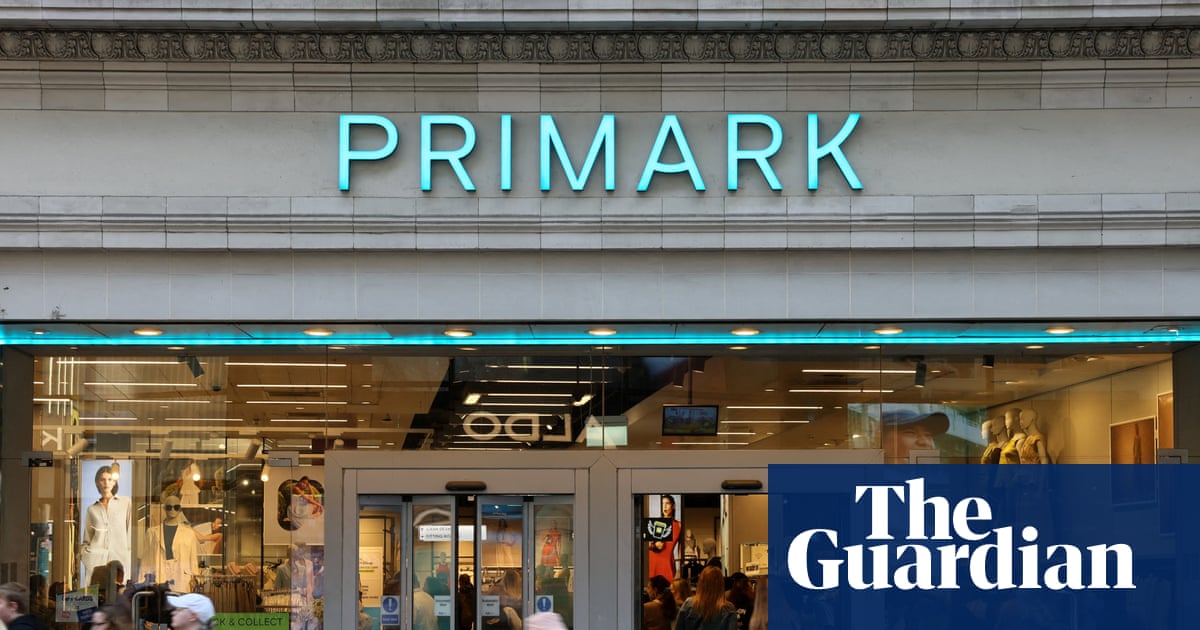
Primark is to begin making home deliveries by the end of next year as it aims to win new shoppers after a slide in profits.
George Weston, the boss of the cut-price fashion chain's owner Associated British Foods (ABF), said it had brought forward the launch of Primark's home delivery plans by about two years.
The company was able to speed up the process by snapping up a robot-assisted warehouse in Sheffield from Debenhams, the owner of Boohoo, PrettyLittle Thing and Karen Millen.
Primark will take over the warehouse by the middle of next year and is working on preparing its suppliers to provide stock suitable for sending out to individual shoppers as well as the usual bulk orders for stores.
Primark already offers a click and collect service in the UK which it has gradually rolled out since 2022. The service is not available to its stores in mainland Europe.
The chain, which has 511 stores across 21 countries, will launch home deliveries in the UK by December next year. It intends to offer the service in mainland Europe after that, but has not set out a timeframe.
Primark has previously said it could not make money by selling fashion for home delivery, but Weston said the economics had changed with delivery and returns charges that could cover most of the logistical costs now common across the industry.
He added that the group's research had shown it could attract new customers, rather than just substituting a sale in store for a less profitable one online.
"We now know there's a group of shoppers who don't reject Primark but just don't use us very often as they are too far away from a store or prefer to shop online," he said.
The move comes as Primark faces tough competition from the rise of cut-price online specialists such as Shein as well as the supermarkets' clothing ranges and the likes of H&M and Zara, all of which sell online and in stores.
Weston insisted that Shein was not grabbing more than a "little bit" of market share from Primark, and that there was more competition from those who could mix online and stores.
Sales at Primark rose 4% to £9.8bn in the year to 12 September led by new store openings. Sales at established UK stores rose just 0.5% and sales at established stores in mainland Europe slumped 4.7% and in the US were down 2.6% as shoppers reined in spending on clothing amid higher energy and fuel bills.
Primark said performance in the UK had been helped by improved ranges, action to cut prices and more marketing, tactics that are now being rolled out across Europe. However, that action saw profits drop 10% to £1bn.
ABF intends to spin off Primark in December 2027, separating it from its sugar and food business that includes brands such as Twinings teas, Blue Dragon flavourings and Jordans cereals.