“The gambling known as business looks down on the business known as gambling”, said the American author and journalist, Ambrose Bierce. Yet gambling is a big business: the gambling sector could achieve global annual sales of $700 billion by 2028, according to the World Health Organisation (WHO). At the same time, it is undergoing unprecedented disruption.
A key positive change is the rapid liberalisation of gambling laws in the US. But while demand may be growing, “the problem is who keeps the money, as more of every dollar goes to the state, and the most profitable bets are moving to prediction markets”, says Joao Mourato, former professional gambler and now head of iGaming Product at VIP-Grinders, a poker and iGaming affiliate. However, investors should not overlook the industry.
The gambling industry is booming in the US
There are several pockets of strong growth in the gambling industry around the world, such as in Turkey and Eastern Europe. But “by far and away the biggest story in the global gambling industry has been the decade-long boom in the United States”, says Dan Wasiolek, a senior equity analyst for investment platform Morningstar. Ashley Akin, senior contributor at proprietary trading group Prop Firm App, says US commercial gambling revenue reached $78.7 billion in 2025, with sports betting up 22.8% to $17 billion and online casinos 27.6% to $10.7 billion.
Start your trial of MoneyWeek today
Get unparalleled financial insight, analysis and expert opinion you can profit from.
Start your trial
Sign up for MoneyWeek’s free twice-daily newsletter.
Join more than 165,000 subscribers and keep yourself informed with latest financial news, insights and expert analysis to help you understand what really matters when it comes to your finances.
Join more than 165,000 subscribers and keep yourself informed with latest financial news, insights and expert analysis to help you understand what really matters when it comes to your finances.
Jamie Gold, who won the 2006 World Series of Poker (WSOP) Main Event, argues that while there “has always been a massive interest in gambling” in the US, it was restrained by the fact that “there were just not that many legal or seemingly legal opportunities for betting, especially online”. Yet when the US Supreme Court effectively struck down the federal ban on sports betting in 2018, leaving the matter up to individual states, a large number of them quickly bowed to public pressure and legalised betting. The upshot? People “now have instant access on devices and unlimited markets to place a wager on”.
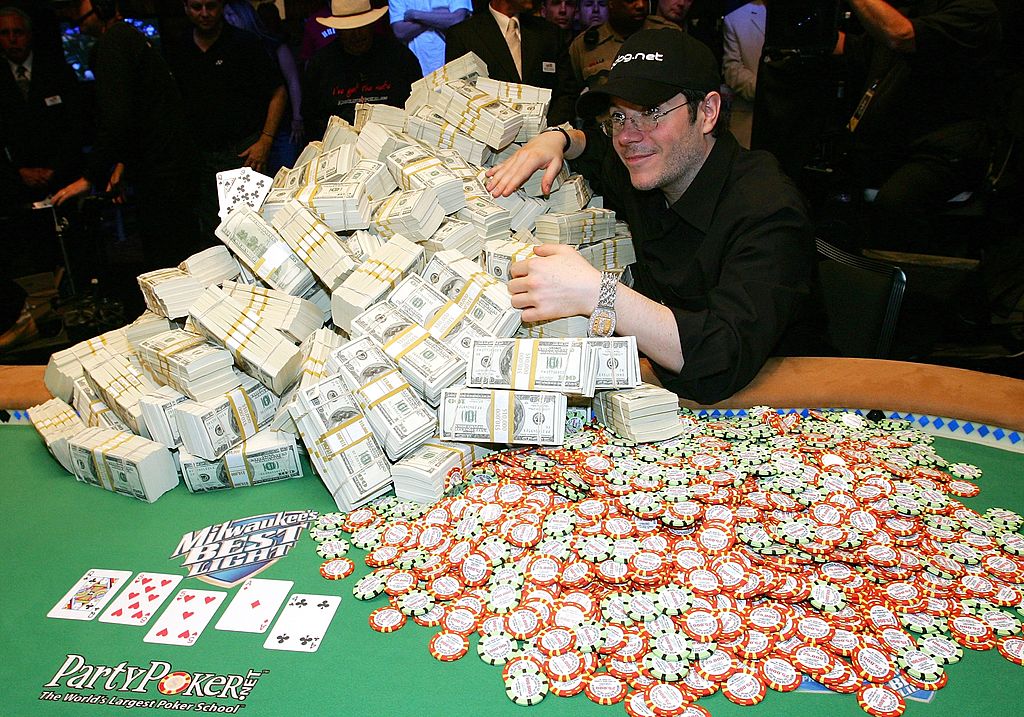
Adam Small, founder of digital media group Third Planet Media, thinks the explosion in demand was also driven by the fact that once gambling became legal, the mainstream media, “particularly sports media, felt empowered to put gambling content into broadcasts at an unprecedented level”. So, now when “you watch a baseball game, you can track your bets on screen and are regularly shown betting odds on not just the game outcomes, but also what will happen [when the next player bats]”. This has created a cycle where more betting means more coverage, leading to more betting.
How long can this boom continue and how far can it go? Gold argues that “we're not even close to the peak”. While the vast majority of states now allow some form of gambling, far fewer have no restrictions at all. At the same time, a few major holdouts, notably California and Texas (which together account for 20% of the US population), still also ban most betting, including sports betting. If those two states changed their mind, however, “it would mean major growth for the industry”.
Overall, Wasiolek is moderately bullish, although he admits that there is considerable uncertainty about how the industry will grow. However, even in the US states where gambling is now legal, you would expect “good, or even single-digit, growth”. So, if you then add to this the “handful of additional states that are expected to allow online casinos or sports betting in the near future”, the industry's medium-term prospects in North America look very encouraging.
Competition from prediction markets
One big reason investors have soured on many gambling stocks, especially those related to US online bookmakers, is down to the uncertainty generated by competition from prediction markets. Prediction markets are essentially a new form of betting exchange, which match punters on either side of the bet.
However, unlike British betting exchanges such as Betfair, they are regulated as financial products by the Commodity Futures Trading Commission (CFTC). This allows them to bypass state regulations and “gain direct access to America's financial infrastructure, including integration with every broker, every trading platform, every fintech app”, says Edwin Dorsey, founder of investment newsletter .
While this designation is being contested, with a coalition of 39 states supporting a legal challenge arguing that prediction markets should be regulated at the state level, Dorsey argues that they have the potential to bring genuine economic benefits. For example, instead of insuring your property against hurricanes, which can be “very expensive and very inefficient and lead to disputes involving adjusters, lawyers, and potentially litigation”, residents in a state such as Florida could simply bet on whether a hurricane will occur in their own area.
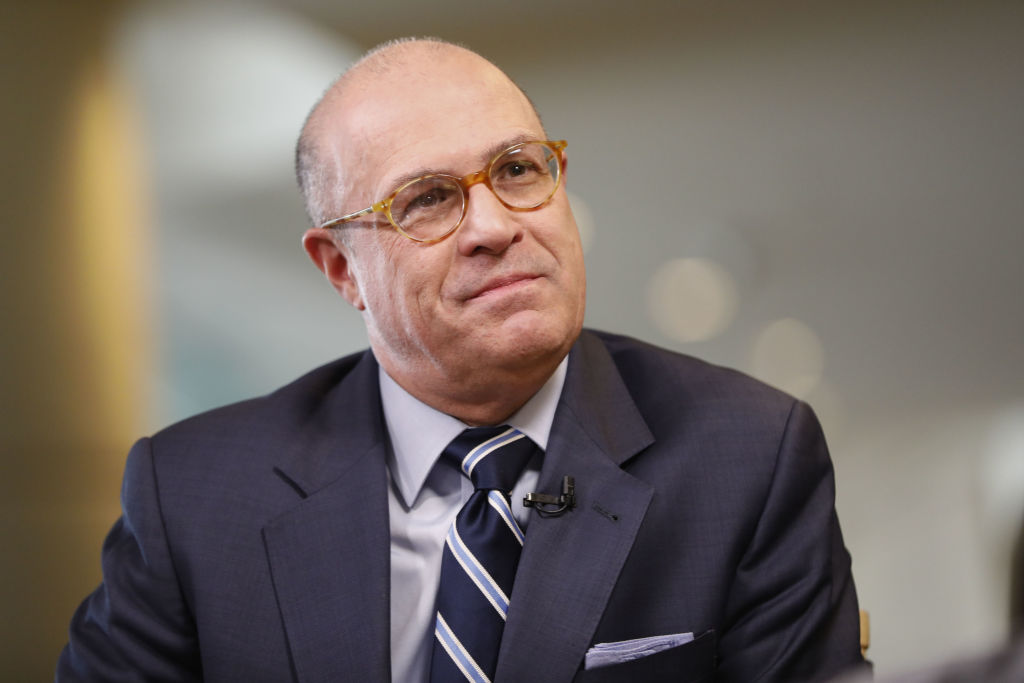
J. Christopher Giancarlo, the Chair of the CFTC between 2017 and 2019, argues that prediction markets can also bring other benefits. For example, he thinks that the incentive it gives those taking part to be right “gives [these markets] the potential to be more accurate in predicting the outcome of events like elections than polling” does. While he acknowledges that while they aren't infallible, and will need to be regulated properly, they are so accurate that “once prediction markets catch on, we'll be using them to judge the probability of events, just as we use weather forecasts to predict the weather”.
Of course, the big question is how prediction markets will affect more conventional betting companies. Some people are pessimistic about the latter. “If running a sports-betting operator means paying high ‘sin' taxes and dealing with heavy regulatory burdens, while running a prediction market means relatively little oversight and being taxed as a financial-services provider, it's hard to see how the former can compete with the latter,” says Small. Mourato says prediction markets offer a better experience, including not limiting successful gamblers' bets (something bookies in general are notorious for).
There is increasing evidence that prediction markets are already starting to steal customers from betting outlets (known as sportsbooks in the US), says Mourato. Betting consultancy H2 Gambling Capital estimated that prediction markets took about 27% of legal US sports-betting volume in the first month of the World Cup, up from 9% at the start of the year. Worse, they are also starting to make inroads into the more profitable areas, such as parlay bets (bets that only pay out if two or more events happen), “which typically yield sportsbooks 22 cents on each dollar wagered, compared with only six cents for straight bets”.
However, others are more optimistic that prediction markets and traditional betting firms can coexist. Russ Mould of investment platform AJ Bell thinks that most of the people attracted by prediction markets “tend to be those who were more used to spread betting on CFDs or financial markets”, and is less convinced that they can attract people “more interested in a wager on a three-mile horse race”. Wasiolek notes that while the major US sports-betting companies briefly saw their revenue fall at the start of the year, possibly due to competition from prediction markets, revenue has managed to bounce back. He also notes that some, such as DraftKings, are even launching their own prediction markets. Overall, he expects them to keep growing, but at a slower rate than previously.
Leo Barker, VP Commercial-EMEA of OpticOdds, one of America's leading sports-data providers, thinks “it's too simplistic to view prediction markets purely as a threat to sportsbooks, as [they] are also introducing an entirely new audience to the idea of trading on real-world outcomes”. He thinks the bigger story is convergence, whereby “consumers increasingly expect to move seamlessly between sports, financial markets, entertainment and other real-world events”. So, the question “is less whether prediction markets replace sportsbooks and more how the two categories evolve alongside each other, particularly as regulators determine where the lines between them ultimately sit”.
Regulation is on the rise
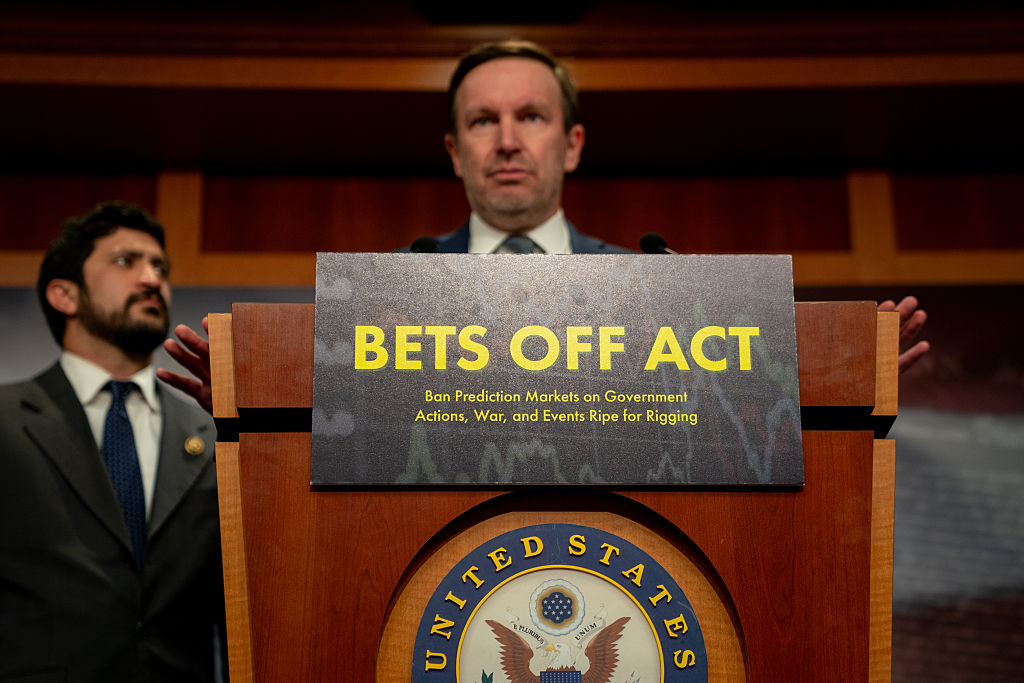
Another factor weighing on gambling shares has been a sense that while the US may be loosening regulation, elsewhere the regulatory tide is shifting against the sector. Darragh McGee, an associate professor in the Department for Health at the University of Bath, thinks this is long overdue. In his view, the gambling industry has been able to rebrand itself “as just another leisure activity”, while aggressively promoting products that encourage addiction. This doesn't just affect the increasing number of problem gamblers, but also those around them. McGee cites research claiming that every gambling addict has a negative effect on up to eight people around them, and that the total costs to society far outweigh the tax revenue generated by the sector.
Rather than an outright ban, McGee hopes for an approach “that would permit gambling, but not rapaciously promote it in the manner that we currently see”. However, whether you agree with him or not – Mould thinks “it is easy to see why the industry's behaviour has upset some people” – McGee believes that the mood has definitely changed. So investors need to be aware that “ineffective disclaimers” on bookies' websites won't be enough to satisfy public opinion and the amount of tax and regulation will only increase. Government action isn't the only risk. Several Facebook-style class-action suits against the leading US gambling companies are in the pipeline.
“[Heavy] regulation doesn't stop people gambling, but just moves them to unlicensed sites that offer worse value and fewer protections,” according to Mourato. Still, he agrees about the overall direction of travel in the regulatory backdrop. He notes that the UK increased the rate of remote-gaming duty from 21% to 40% in April 2026, while online-betting duty will rise from 15% to 25% in April 2027. In 2023, Australia introduced a National Self-Exclusion Register, whereby people concerned about their gambling can block themselves from online-betting outlets for at least three months. Online gambling with credit cards was banned a year later.
Mourato even thinks that outright bans of certain betting products aren't off the cards. For example, European regulators have launched action against prediction markets (which remain banned in the UK), while Brazil banned gambling by presidential order a few weeks ago. Overall, he thinks that regulation represents the biggest threat to the industry outside the US. He is so worried about further changes “that I don't own any gambling shares myself”.
However, others think the risk of regulatory crackdowns has been overstated. Sergio Paulino, founder and CEO of All Bettors, a prediction platform, says that Brazilian president Lula's decision to ban gambling was a “political stunt” that didn't prevent (and might well have caused) his poor showing in the first round of the presidential election, demonstrating that such moves have limited electoral appeal. Wasiolek suggests that while both additional regulations and tax rises “may hit revenue for a few quarters”, their long-term impact will be limited. Gambling companies are increasingly geographically diversified, allowing them to shift investment towards expanding operations in more friendly jurisdictions.
Regulation could even create opportunities for systems that can help companies and platforms detect problem-gambling behaviours, says Marc Fernandez, chief strategy officer of Neurologyca, a neuroscience and AI firm. For example, since technology “can now pick up on signs that someone's stressed or not thinking clearly, a platform could step in at the right moment, maybe with a quick ‘take a breather' prompt or a temporary limit, just for the person who needs it, and leave everyone else alone”. The same signals can “also help spot people trying to game or manipulate the markets, which is another big worry for regulators”.
Casinos will continue to cash in
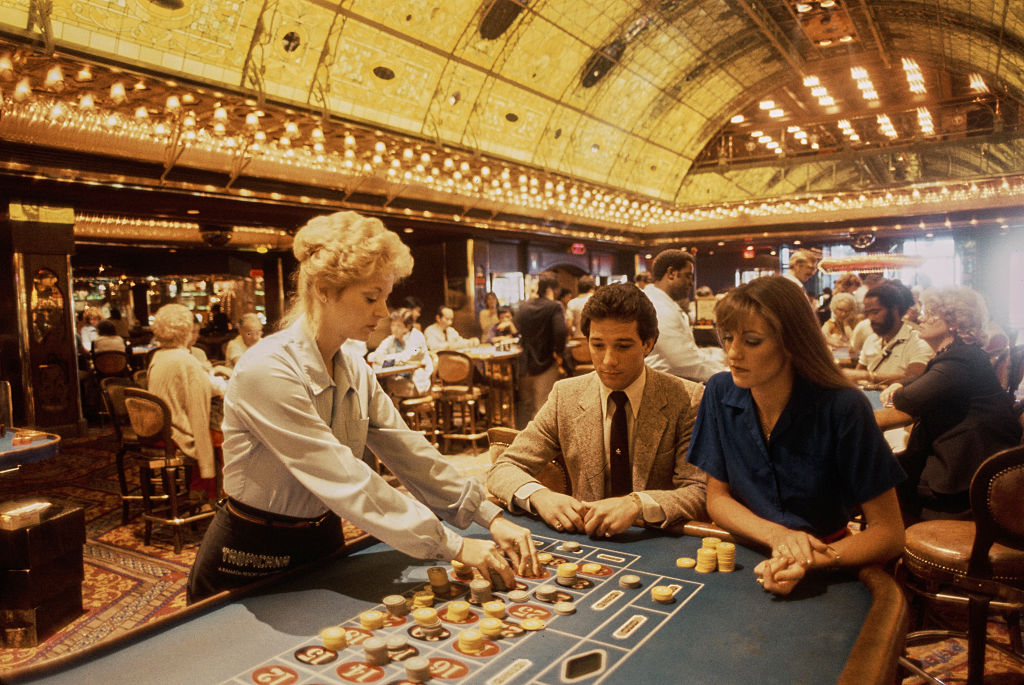
Whatever happens to online gambling, there is a general agreement among experts that physical casinos won't disappear any time soon. It's “been proved that online availability of gaming does not take away from the profitability of live gaming”, says Jamie Gold. As an avid poker player, sports bettor and casual casino player, Gold still enjoys “all ways of playing” and his trips to live casinos “have not gone down because of online” casinos.
Christina Lindley, a former professional poker player and founder of VPRG Consulting, similarly “does not see online gambling eliminating physical casinos”. She was recently at G2E (the global gaming expo) in Las Vegas “and the floor was full of technology designed to improve casino operations, retention, and customers' experience”. At the very least, this suggests casinos are optimistic enough about their future to keep investing in new equipment.
Casinos will remain attractive, even in a digital age, because “many people go to casinos for entirely different reasons than they gamble online”, says Adam Small of Third Planet Media. Modern casinos are not just about gambling, “you can get a meal, have some drinks, see a show and, at the nicer casinos, you can even go shopping and go to the spa”. Las Vegas's casinos have shifted their business model from gambling towards general entertainment. They now make so much money from the latter and convention activity “that gambling now only accounts for a third of revenue” – a model that regional casinos are also looking to emulate. While this doesn't make them recession-proof, as there is evidence that higher fuel prices are leading people to cut back on trips, he thinks the casino industry “should roughly follow the growth of the US economy”.
Gambling investments to buy now
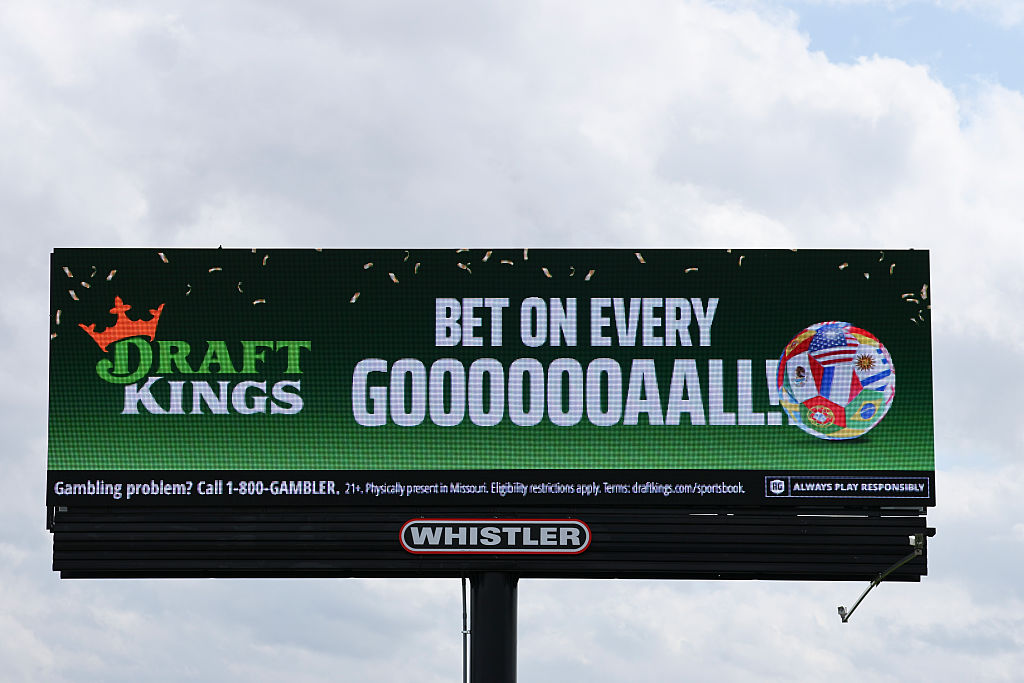
One of the big winners from the US gambling boom has been . Originally, it focused on fantasy sports leagues (where people would predict which players would do best in return for cash prizes). However, after the regulatory changes in the US, the group pivoted to online betting, running digital sportsbooks and online casinos.
Sales grew nearly tenfold between 2020 and 2025. While the share price has recently taken a beating owing to fears about prediction markets, it now offers its own, and Wasiolek thinks the stock is underpriced at 22 times expected 2027 earnings.
While Wasiolek prefers DraftKings, he also thinks that there is value in , which has seen its share price fall by 66% in a year. Like DraftKings, Flutter has also experienced strong growth, with revenue nearly tripling since 2020.
While Flutter admits that it sees prediction markets as a net negative, it has engaged with the sector by acting as a market maker (it also owns the UK betting exchange Betfair). Even though both its revenue and earnings are expected to continue growing strongly in the short term, Flutter trades at a bargain-basement level of 10.5 times 2027 earnings.
Value investors may also like . Sports betting makes up around 75% of sales, with the rest from online casinos. Entain's share price has fallen by half in the last year, pushing the company out of the FTSE 100, owing to concerns about tax rises and regulatory changes in the UK.
However, while AJ Bell's Russ Mould doesn't have an overall view on the company, he thinks that it “certainly has [the] potential to be a cash-generative business”. It currently trades on a 2027 price/ earnings (P/E) ratio of seven and offers a dividend yield of 5%.
When it comes to physical casinos, Wasiolek is very positive about . Contrary to what its name implies, Las Vegas Sands does not in fact operate any casinos in the US, instead focusing on the Chinese region of Macao and on Singapore.
Wasiolek acknowledges that both areas can be very volatile, but their relatively high rates of medium-term growth, as well as restrictions on the numbers of overall licences (and therefore potential competitors), should ensure healthy long-term prospects. Even though revenue is still growing strongly, Las Vegas Sands trades on a 2027 P/E of 11 with a yield of 3.5%.
owns at least 17 gambling resorts in the US and elsewhere, including properties in Brazil, the UK, China and Japan. But unlike Las Vegas Sands it also has exposure to the sports-betting and online-gaming markets through BetMGM and MGM Digital.
Revenue continues to grow strongly, while there is still a chance that it could become an acquisition target again. MGM also looks promising from a value perspective, as it trades as just under 15 times 2027 earnings.
Many of the operators of prediction markets, such as Kalshi, are currently unlisted. However, online-trading platform recently branched out into prediction markets. Although these account for only a small portion of revenue, they are growing at a rapid pace.
Sales grew tenfold year on year in the second quarter. While RobinHood is priced aggressively at 38 time 2027 earnings, revenue has grown fourfold since 2020 and is expected to keep expanding by double-digits.
This article was first published in MoneyWeek's magazine. Enjoy exclusive early access to news, opinion and analysis from our team of financial experts with a MoneyWeek subscription.