As the automotive landscape shifts toward electrification, the global supercar market continues to be dragged, perhaps reluctantly, in the same direction, writes Tim Barnes-Clay.
Once ruled by raw mechanical power, modern supercars are increasingly judged on innovation, alternative fuels, and, in some cases, scarcity through limited production runs.
The 2026 Paris Motor Show, held at the French capital’s Expo Porte de Versailles, showcases these factors.
Not all supercars are on display, but the extensive exhibition still offers notable highlights.
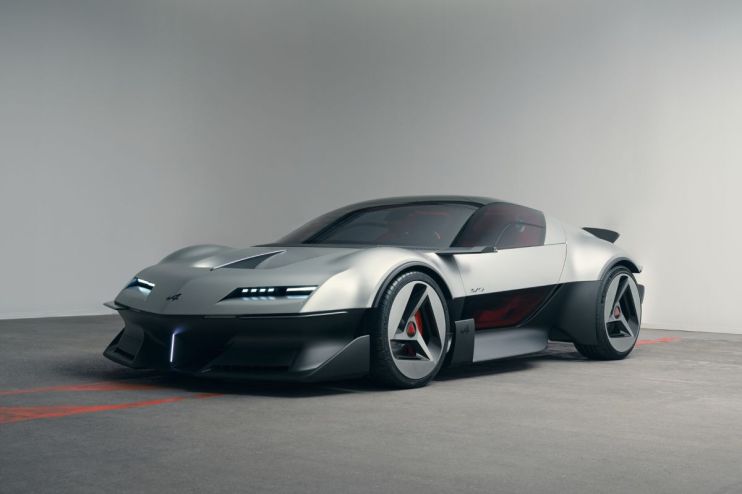
For high-net-worth collectors, the Alpine A310 Vision could be a future investment.
Until the Paris Motor Show, it was only known by its codename: PS1 (‘Projet Spécial 1’ – the missing ‘c’ in ‘Projet’ is not a misspelling).
As its codename suggests, Alpine discarded its rulebook when conceiving it.
Designed as a modern-day homage to the classic 1970s V6 A310 sports car, this new launch underscores Alpine’s ambition to create a range of ultra-exclusive, low-volume cars.
Drawing heavily on its experience as a Formula One constructor, the A310 Vision features F1-derived chassis dynamics and carbon-composite construction, aiming to whet the appetites of private collectors and motorsport purists.
Its launch is part of a bigger story, though: the French manufacturer’s debut of its new in-house ‘Special Projects’ division.
This department is designed for high-end models beyond the reach of most owners of Alpine’s mass-production vehicles.
With a decidedly modern take on a retro theme, the sharpened front end looks at home in the 2020s while strongly evoking a story from decades earlier.
Its space-age rear features a glowing Alpine ‘A’ badge, bulbous shoulders that exude muscular vibes, and the first letter in Alpine’s name even appears on its enormous alloy wheels as a dominant triangular pattern.
It may only be a concept car for now, and unlike the 1970s supercar it’s based on, this one is only a two-seater, but Alpine has strongly indicated it will use the A310 as a starting point for future, highly exclusive projects.
Denza Z Coupe: The Supercar Disruptor
BYD has quickly become a global powerhouse in electric vehicles.
Its reputation is justified: it recently became the world’s largest EV manufacturer, surpassing Tesla.
Denza is its new high-tech luxury offshoot brand, carrying the quality that has quickly earned BYD a steadfast reputation, with the Z Coupe among several new vehicles with excess power.
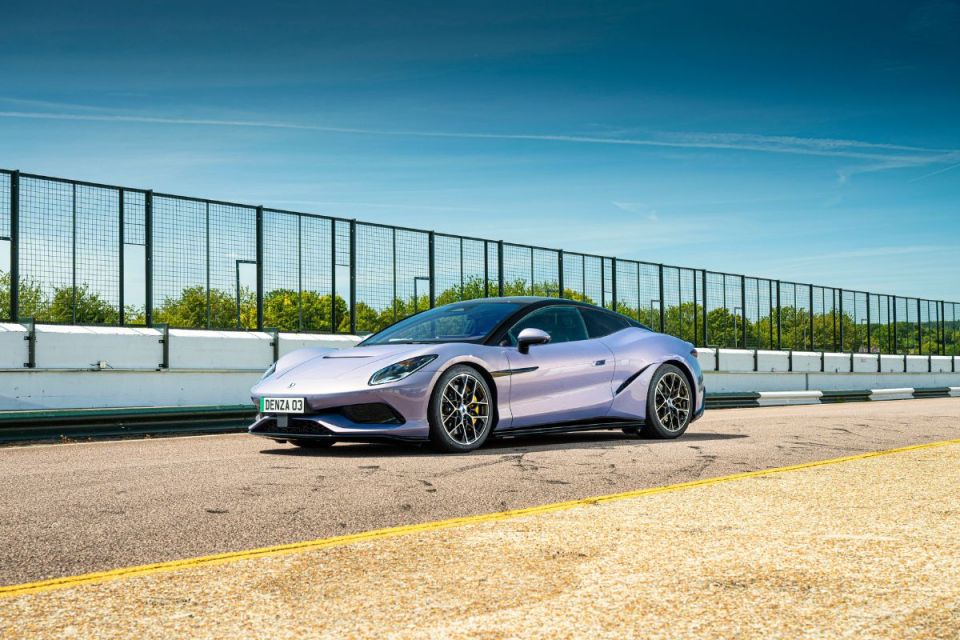
The Z Coupe produces an astonishing 1,603PS, capable of taking you from 0-62mph in a truly space-age 2.25 seconds.
There’s even a Racing edition with a gargantuan rear wing and semi-slick tyres that cuts the time to a scarcely comprehensible 1.96 seconds.
Aesthetically, it blends McLaren, Porsche, and Ferrari, with a nod to its Far East roots in a rear end that hints at many a raucous Japanese performance car.
Denza may not have the brand recognition of Koenigsegg or Pagani, let alone Lamborghini or Ferrari. Still, the Z Coupe represents China’s biggest assault to date on Europe’s traditional supercar segment.
Denza’s arrival threatens to disrupt the supercar market, but it’s not the only unfamiliar name hoping to offer a tempting alternative to the usual suspects.
There’s a quite exquisite catch, though: all is not as it seems, because while Denza is utilising cutting-edge technology, JAS is firmly going back to the 1990s.
Linguistically, the ‘Tensei’ name certainly suggests Far Eastern origins and, indeed, means ‘rebirth’ or ‘reincarnation’ in Japanese, clearly signalling what’s to follow.
JAS is European, Italian in fact, but it has been an official Honda motorsport partner since 1998.
Its ‘new’ supercar will be among the rarest, with production limited to just 35 examples, and it comes with a rather unusual requirement if you want to own one.
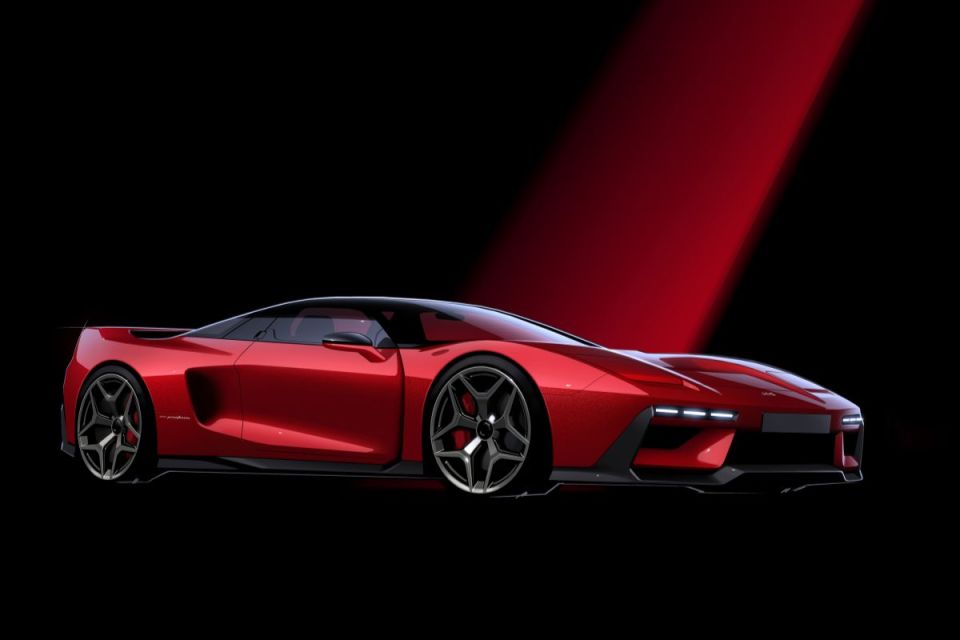
The Tensei is a reincarnation of the legendary Honda NSX, to the point that you’ll need to own an NSX to acquire a Tensei, because the latter is literally a rebodied version of the former, with your NSX serving as the donor car.
Pininfarina, the revered Turin-based vehicle styler that has lent a delicate hand to many a Ferrari over the years, has now dreamt up a new body and interior for the NSX.
It features a naturally aspirated engine based on the original block, heavily modified by British racing developer Judd Power, paired with a six-speed manual transmission.
These are key ingredients to preserving the analogue soul of the legendary Japanese supercar.
As improbable as its genesis may sound, the Tensei is poetry in motion, a revival of a long-lost era, and a love letter rewritten by a happy couple decades after it was first penned.
A simply beautiful combination of Japanese soul, British racing steel, and timeless Italian luxury design, presented in the howl of a V6 at 8,200rpm.
Driving in London? Check whether your car is ULEZ compliant with Regit’s free checker.