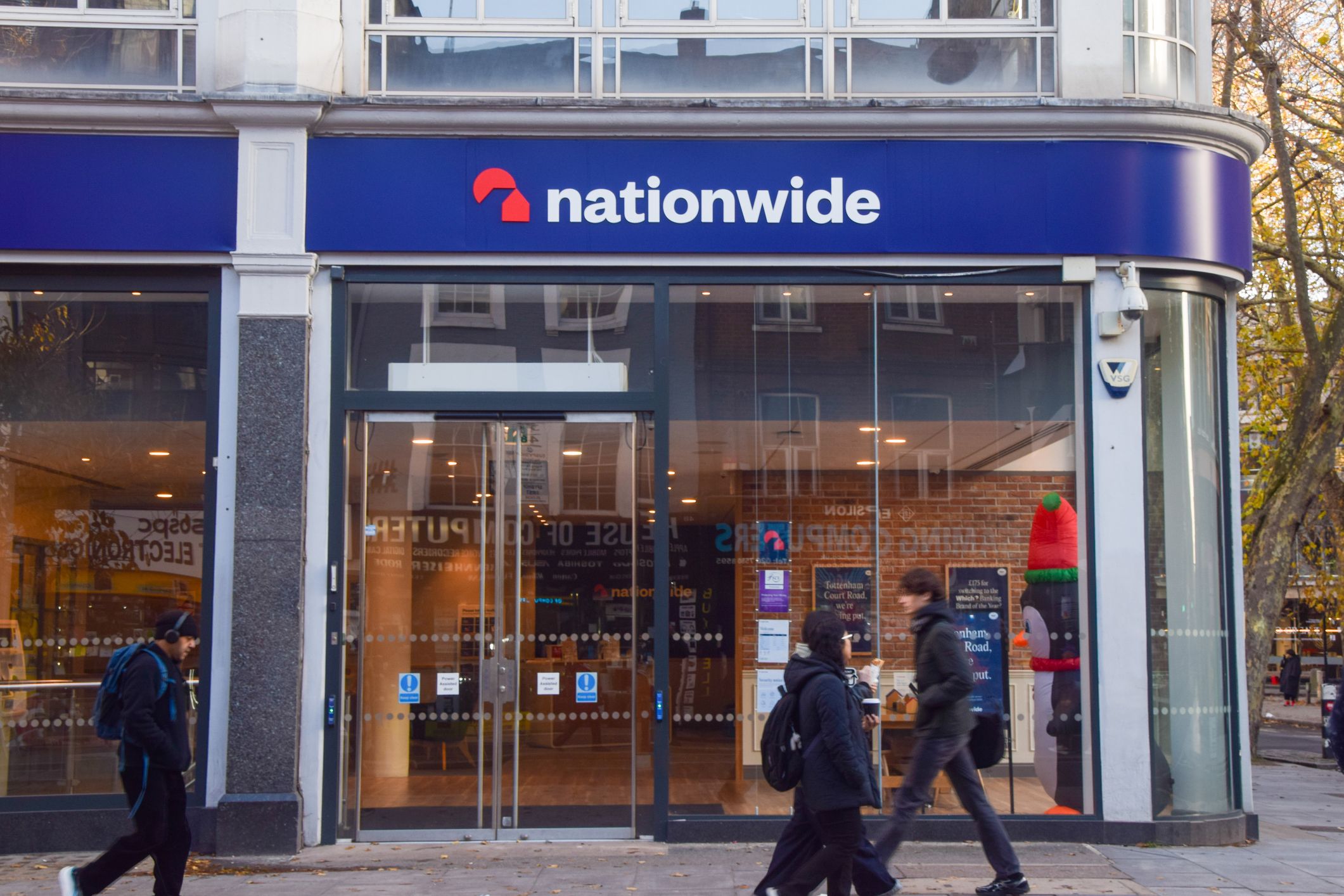
Nationwide has launched an exclusive fixed-rate savings account offering a 5.3% interest rate, which is the highest-paying option on the market right now.
The building society’s new 30-month Member Exclusive Bond is available to existing Nationwide and Virgin Money customers.
You need to have had a personal current account, mortgage, savings account or business savings account or loan open with either of the two brands since November 2 2026.
Start your trial of MoneyWeek today
Get unparalleled financial insight, analysis and expert opinion you can profit from.
Start your trial
Sign up for MoneyWeek’s free twice-daily newsletter.
Join more than 165,000 subscribers and keep yourself informed with latest financial news, insights and expert analysis to help you understand what really matters when it comes to your finances.
Join more than 165,000 subscribers and keep yourself informed with latest financial news, insights and expert analysis to help you understand what really matters when it comes to your finances.
Anna Bowes, personal finance expert at financial planning firm The Private Office, said: “It’s good to see a provider rewarding loyalty rather than paying the best rates to new customers only.
“We know that not enough savers regularly switch providers, so having the chance to earn a market-leading rate as a loyal customer is refreshing, especially from a high street brand.”
Savers can add a maximum of £10,000 into the Nationwide bond, which can be opened via the Nationwide website or through internet banking. You can also open an account in a branch, known as the Member Exclusive Branch Bond Issue 2.
Money must be deposited into the account within 14 days of opening it and you can only open one account per person.
Interest is credited annually and paid at the end of the 30-month term. Once opened, you can’t access the money inside the bond until it matures.
How does Nationwide’s bond compare?
Nationwide’s 30-month bond has the highest rate of all three-year fixed-rate bonds currently on the market, based on data from price comparison website Moneyfactscompare.
Afin Bank, GB Bank and Secure Trust Bank come close, offering rates of 5.28%, 5.28% and 5.27%, respectively. All of these accounts are FSCS-protected.
Nationwide’s bond is also joint-top of the best buy tables across two-year fixed-rate bonds, with RCI Bank UK’s account paying 5.3% and Afin Bank and GB Bank’s two-year deals both paying 5.28%.
The 30-month bond also currently has the top headline interest rate compared to four-year bonds. Market Harborough Building Society is offering a four-year bond with a 5.25% rate and Aldermore has a four-year fixed deal paying 5.17%.
Jessica Sheldon, deputy digital editor, , said: “The tax rate on savings interest is rising by four percentage points from April 2027, making it all the more important for savers to consider if their money is better in an ISA, even if it means missing out on a higher headline rate.”
Would it be better to open a top-rate ISA?
Nationwide’s 30-month bond might be top of the market, but any savings interest you earn is taxable. If you are likely to exceed your savings tax allowances, it could make more sense to put the money into an ISA.
Based on calculations by wealth management firm Evelyn Partners, someone putting £10,000 into Nationwide’s 30-month bond on November 3 would earn £1,381.92 in gross (pre-tax) interest, with the bond maturing in May 2029.
Using the new savings tax rates announced in the 2026 Autumn Budget which take effect from April 2027, this is how much tax would be owed in May 2029 depending on your marginal tax rate:
|
Total tax payable |
Total interest earned after tax |
|
|
Basic rate (24%) |
£91.66 |
£1,290.26 |
|
Higher rate (44%) |
£388.04 |
£993.88 |
|
Additional rate (49%) |
£677.14 |
£704.78 |
Source: Evelyn Partners. Calculations are based on tax rates and allowances remaining unchanged, the individual staying in the same tax band and no other interest using up their personal savings allowance.
Based on research, there are no 30-month fixed-rate ISAs on the market to directly compare to Nationwide’s 30-month fixed-rate bond.
However, at the time of writing, one two-year and three three-year fixed-rate cash ISAs are on the market paying 5.15%.
If you instead put the same £10,000 into a two-year ISA which paid 5.15% annually, with interest compounded yearly, you’d earn £1,056.52 in interest tax-free over two years.
Meanwhile, if you put £10,000 into a three-year ISA at the start of the term, and it paid 5.15% annually, with interest compounded yearly, you’d get £1,625.93 interest tax-free over three years.
This means a higher rate and additional rate taxpayer would actually receive more interest, after factoring in tax, from the two and three-year fixed-rate ISAs paying 5.15% interest.
David Little, partner in financial planning at Evelyn Partners, said: “Nationwide's 5.30% bond looks attractive on paper, but savers need to consider what they will actually keep after tax.
“For higher and additional rate taxpayers, a slightly lower headline rate within a cash ISA could ultimately deliver a better tax-free return. The highest advertised rate is not necessarily the most rewarding once tax is taken into account.”