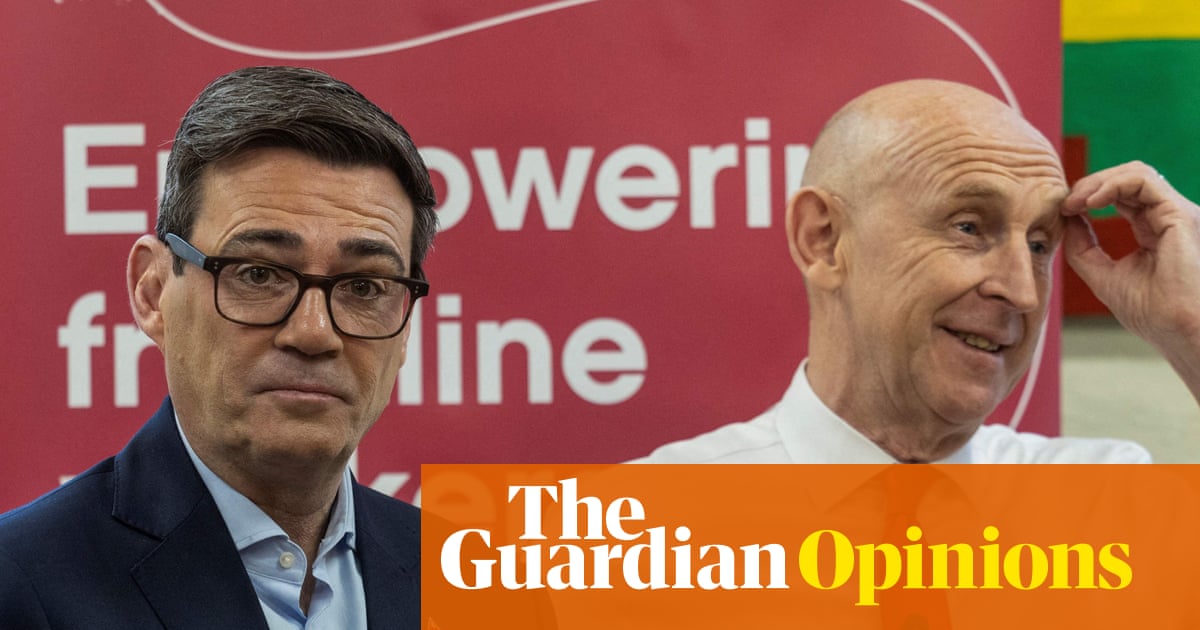
Vibes matter. We live by how we feel – an idea that orthodox economics gets wrong and Andy Burnham's first budget looks set to get right.
This walking good-vibes maestro is spreading a confetti of small good deeds. These may not shift the dial yet on 40 years of neoliberal economics, but they show the way he's heading. Eyecatching everyday things – from capping bus fares to that small but resonant sum of £45 VAT on average off electricity bills – get people talking, alongside bigger plans for a national care service, electoral reform and a possible journey back to the EU.
Though his first budget is billed as unradical, one tax rise stands out for its Burnham vibes. After years of no penalties, no apologies, no payback for their bailout from the crash they caused, banks face a tax rise. The Tories' cuts to the bank levy and bank profits surcharge were left in place by Rachel Reeves. No longer.
UK profits from the country's four biggest banks were reportedly £13bn for the first half of this year, 16% up on last year.
Don't undervalue the toughness it takes to ignore bankers' intimidation, as the boss of their pressure group UK Finance writes to the chancellor saying a tax rise will encourage banks to move to competitor countries. The group's claim that London has the highest bank taxes is a fabrication: only Ireland has a lower rate among western European countries. Paris's is far higher, according to the authoritative Tax Policy Associates.
Jamie Dimon, the chief executive of JP Morgan, has said that any move against bank profits could cause him to scrap plans for a £3bn London headquarters, a tower in Canary Wharf to house more than half of the bank's 23,000 UK staff. He threatened Reeves likewise, and announced the tower go-ahead only after she left banks in peace in her 2025 budget.
Pause here to examine Dimon, the essence of the business power that Labour governments are always up against. Forbes lists his net worth as $3.1bn, and he took home $43m last year. In 2009, when the then chancellor, Alistair Darling, imposed a 50% levy on bankers' bonuses over £25,000, Dimon called him to protest. In his memoir, Back from the Brink, Darling recalled that a "very, very angry" Dimon had threatened that JP Morgan might reconsider its UK investments. "He said that his bank bought a lot of UK debt and he wondered if that was now such a good idea." And, yes, again Dimon reportedly warned that he might not build a new London office.
This year, documents released in the Epstein files revealed how the then business secretary, Peter Mandelson, had urged Dimon to "mildly threaten" Darling over the tax. That's their milieu and how they operate. But Darling didn't back down, though he was besieged by bankers with identical scripts. He stood firm, and JP Morgan built its London office and didn't stop buying UK government debt. The BBC's Faisal Islam recounts that episode as told him by Darling as "an incredible live example of the relative power of government and financial markets, of the actual dynamics of the 'bond vigilantes'".
The bank payroll tax raised an estimated £2.3bn in four months. But it was dropped. Are you surprised to learn that what was billed as a bonus levy was paid by the banks, never by the bankers? Or by their lack of shame or collective responsibility as they bargained squalidly over bonuses even in the aftermath of a crash they caused?
Officially the bank bailout cost the public £23bn, after some asset sales. But that's trivial compared with the colossal lasting damage right across the economy. Official estimates cite a loss of up to 7.5% of GDP; others suggest double that amount.
Bankers hiss at any hint of plucking a few feathers off them, but we wait to know how much John Healey dares take. Dimon visited No 10 last month to warn them off a tax raise, but Burnham only "dropped into the meeting briefly".
So, how much? Returning the corporation tax surcharge on banks to its original 8%, from the 3% to which the Tories cut it, would yield £2bn. It's a puny sum, and the banks owe the country much more. But nonetheless, Burnham resisting their bullying would send a self-confident message.
TUC polling finds strong support for a bank windfall tax, as it does for higher gambling and wealth taxes. Raising capital gains tax is popular, too. In the air, more long-term, is a money-raising idea backed by the Institute for Fiscal Studies and Resolution Foundation, to merge national insurance and income tax and no longer exempt pensions, rent and share income from NI.
Burnham knows the trick to raising tax is linking it to good spending, such as ending the triple lock to invest in social care. So banks, shedding jobs by the thousand, could be funding Alan Milburn's upfront costs to get Neets (young people not in education, employment or training) into work.
Good vibes greet this budget. Though inflation is up, so is employment, growth, business investment and average pay. Earnings inequality jumped up for the first time in a decade, but from Friday, trade union reps get the right to recruit in every workplace, a gamechanger in anti-union companies. Union membership is the surest way to raise pay, by a reported 4-5%, so ignore Tories raging about the "red tape" of workers' rights.
A budget signals a government's way forward. Willingness to defy bank bullying, even a bit, is a good early sign. Watch out for more Burnham emblems.