Squeezed by inflation and rising geopolitical tensions, the historic insurance market Lloyd’s of London suffered a hit to its profit in the first half of the year. Nowhere was this impact more acute than in its marine business, which faced severe pressure at the height of the US war with Iran.
Over the past six months, the world’s largest insurance market has navigated a rapidly evolving and increasingly volatile global landscape, driven largely by conflict in the Middle East. The marine sector faced severe pressure, with reports of thousands of vessels trapped in the Persian Gulf at the height of the US war with Iran.
The Strait of Hormuz closure and strikes on vessels in the waterway forced the London Joint War Committee, a group of marine insurance experts run by the Lloyd’s Market Association (LMA) alongside the International Underwriting Association (IUA), to expand its designated high-risk areas to include the coastlines of Bahrain, Qatar, and Oman, prompting a sharp rise in premiums as insurers priced in the risk of attack.
In June, Lloyd’s had to step in to ensure ships could access cover in the Strait with a $400m (£316m) war-risk facility.
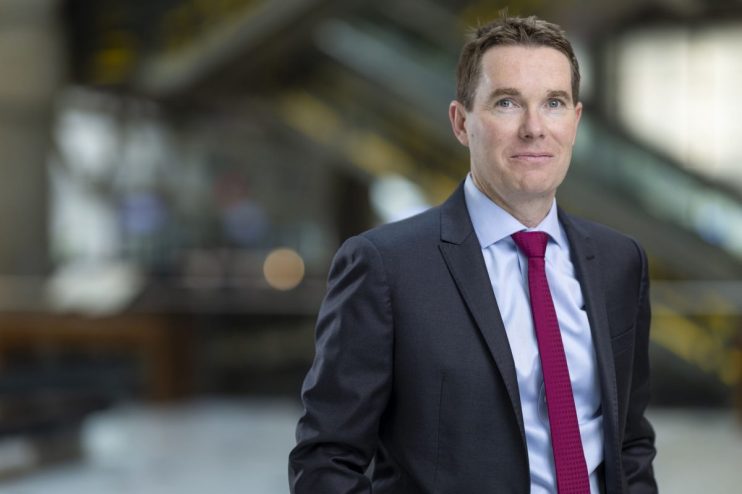
Speaking to , chief executive Patrick Tiernan argued that every major risk is now “disorderly at the same time” and the industry must move from trying to predict specific risks to being prepared for all eventualities.
“Last year we were talking about natural catastrophes, but this year, we’re talking about man‑made catastrophes,” he added.
Because the threats are so deeply interconnected, he said the industry can no longer rely solely on traditional probability models that try to predict specific disaster scenarios. The strategy must shift from predicting what will happen to being broadly prepared for anything that could happen, he said.
“It is difficult to be in the prediction game. You just got to be in the prepared game,” he said.
Lloyd’s reported on Thursday that it took a 16.7 per cent hit to its pre-tax profit of £3.5bn for the first six months of 2026. Its core business improved, with the market reporting an underwriting result of £1.9bn, up from £1.5bn.
Navigating the soft market
The insurance market is in a softening cycle, Tiernan said. “We’re very cognizant of the fact that we are in a period where there is softening in the underlying prices”, he said, adding that the board is closely monitoring the underlying business to ensure it continues hitting its targets.
When an insurance market softens, it is driven by abundant capital and high insurer profits from previous hard-market cycles, but this reduces premium rates and compresses profit margins for insurers.
Tiernan said: “We’re seeing those who are here already doing more business with us, or retaining more of their business and then we’re seeing some of those new entrants, those very high-profile insurance companies from Europe, the States, and further afield, now joining the Lloyd’s market.”
Jim Bichard, chief financial officer, told : “A lot of that is because of the capital advantage which we believe is unique in Lloyd’s in terms of how much risk you can take, if you like, for every dollar of capital, and we think you can shoulder more of that risk here in Lloyd’s than you can anywhere else.”