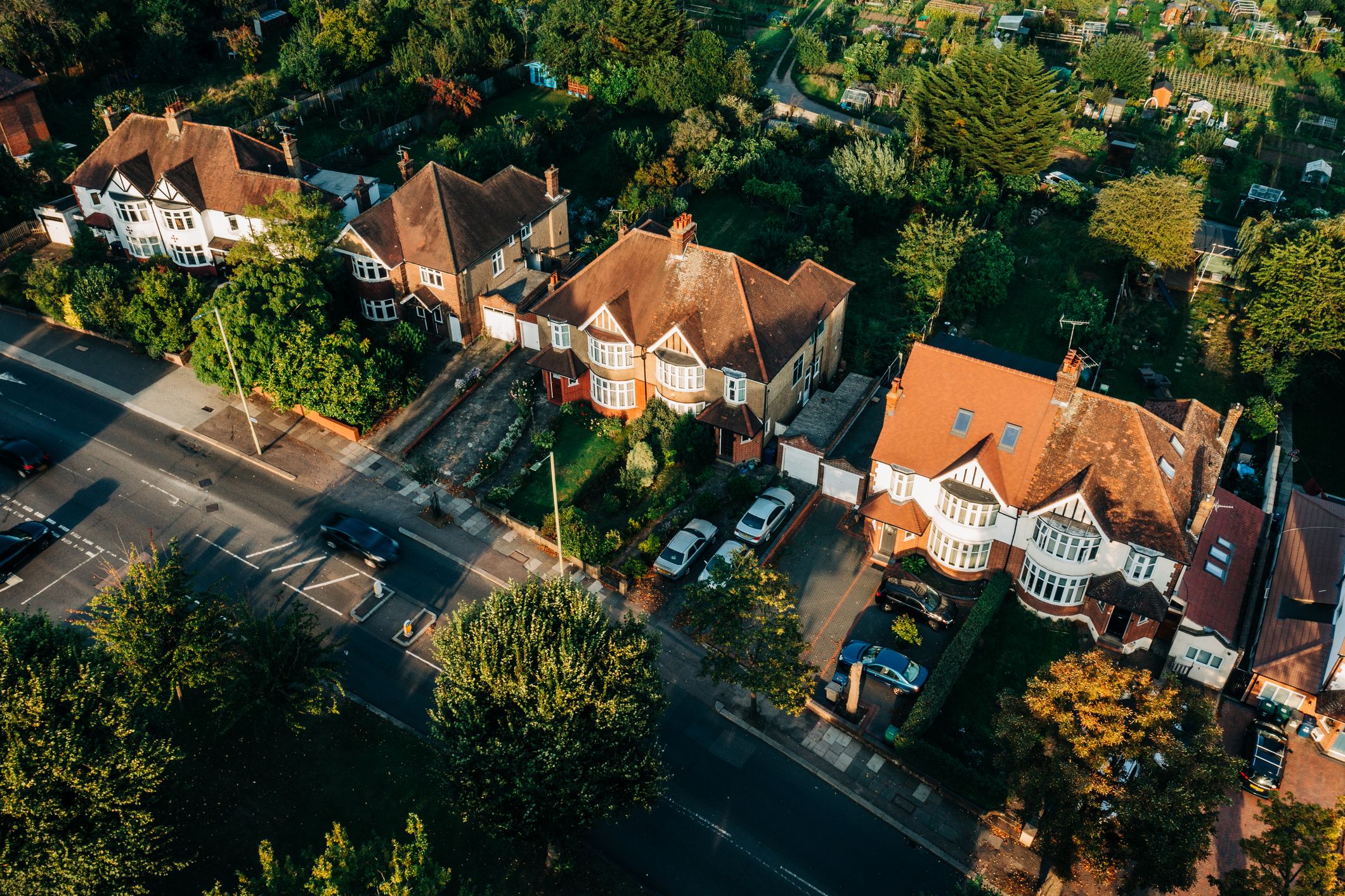
Average UK house prices fell 0.4% in the year to August 2026, with prices down 0.2% over the previous month, according to Lloyds Bank.
The average UK property price dropped from £299,569 a year ago to £298,468, according to Lloyds’ latest house price index (HPI).
Prices fell during the month of August from an average of £299,153 in July.
Try 6 free issues of MoneyWeek today
Get unparalleled financial insight, analysis and expert opinion you can profit from.
Start your trial
Sign up to Money Morning
It is the first time annual house price growth has trended negatively since November 2023, according to Lloyds’ data, and comes amid rising mortgage rates and lack of demand in the market.
Mortgage rates have ticked up in recent months as lenders have passed on higher wholesale costs to consumers due to the conflict in the Middle East.
The average two-year fixed-rate deal is 5.63% as of 7 September, up from 4.83% on 27 February, according to data firm Moneyfacts, the day before the US first launched airstrikes on Iran.
Andrew Assam, mortgages director at Lloyds, said the housing market was being stifled by these higher mortgage costs and sellers holding out for higher offers.
“The housing market has faced a more difficult backdrop in recent months, with the impact of global events on inflation and borrowing costs creating greater economic uncertainty,” said Assam.
“What we're not seeing is a rush of homeowners cutting prices. But more are choosing to sit tight, with sellers reluctant to accept offers they feel are too low, while some buyers are waiting to see how conditions develop. As a result, fewer homes are changing hands.”
North-South divide remains
There continues to be a strong regional divide when it comes to how well house prices are performing, according to Lloyds.
House prices in Northern Ireland were up 6.9% in the year to August, with the average property price now sitting at £231,245.
Scotland also continues to see strong growth, with prices rising 3.5% to an average of £223,437. Property values in Wales rose by 0.6% in the year to August to £230,282.
In contrast, the story is much less positive across southern England and London.
The average house price in the South East fell by 1.6% in the year to August to £381,729, followed by Greater London where the average property value dropped by 1.5% to £534,177 over the same time period.
The South West and Eastern England both recorded annual house price declines of 1.2%, with average house prices now sitting at £298,807 and £331,410, respectively.
Jonathan Hopper, chief executive officer of search agent Garrington Property Finders, said a glut of supply in London and the South East of England was “attracting too few serious buyers” which was dragging prices down.
Hopper added: “High property values in these areas mean that many buyers need a large mortgage in order to afford the home they want, and the jump in interest rates over recent months has squeezed the amount they can afford.
“This has made buyers highly price-sensitive. As a result many are asking for, and getting, reductions on the prices of properties that have been on the market for a while.”
In contrast, the market was more “free-flowing” in northern England and Scotland, Hopper said, “with prices there still ticking up amid more balanced supply and demand”.
What could come next for house prices?
Tom Bill, head of UK residential research at estate agent Knight Frank, said that whether or not that trend played out this year will depend on any pre-Budget speculation and how the conflict in the Middle East, and any possible inflationary impact, unfolds.
Sarah Coles, head of personal finance at investment platform AJ Bell, added: “If the market grinds to a halt and prices remain depressed, it will make life even tougher.
“It’s difficult to muster enthusiasm for a purchase when you’re faced with having to pay higher monthly mortgage costs for a house that could lose value. It means more buyers are likely to sit tight.
“At that point there’s a decent chance that the market could suffer even more. We could see more widespread falls, as sellers are forced to cut prices. Alternatively, we could see the property market stall entirely, as nobody is prepared to blink.”