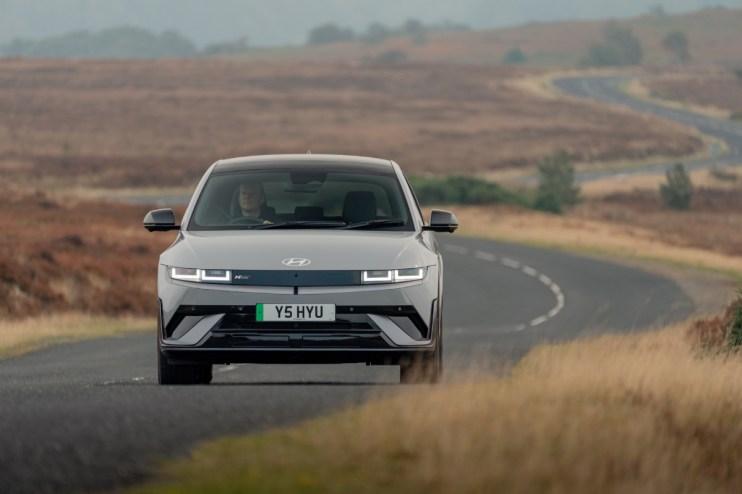
The Hyundai IONIQ 5 starts at £40,695, offers up to 354 miles of range and still charges faster than most rivals. Five years after it first landed, here’s which version makes the most sense.
There are plenty of electric cars that make more sense on a spreadsheet than they do in a showroom, but the Hyundai IONIQ 5 has never really been one of them. It still looks like a concept car that escaped from a motor show, it has a huge amount of space inside and it uses charging technology that was ahead of much of the market when it first arrived in 2021.
The latest version starts at £40,695 in the UK, rising through Premium, N Line and Ultimate trims, with a choice of 63kWh and 84kWh batteries. The bigger one manages up to 354 miles on the official WLTP test in rear-wheel-drive form. That puts the IONIQ 5 in an interesting spot, more expensive than a mainstream EV but well short of BMW or Mercedes money, and Hyundai is betting that buyers will happily pay for clever engineering and space without a premium badge on the bonnet.
The range opens with the Advance at £40,695, which gets you the 63kWh battery, a 170PS rear-mounted motor, 19-inch alloys, a 12.3-inch touchscreen, heated front seats and steering wheel, and a heat pump. Spend £44,195 and the same Advance trim comes with the larger 84kWh battery and a 228PS motor, and that’s the version I’d be looking at first.
Premium starts at £43,255 with the smaller battery and adds LED headlights, part-leather upholstery, a sliding centre console, rear door blinds and a powered tailgate. Above that sit the N Line from £48,255, with sportier styling and 20-inch wheels, and the Ultimate from £50,255, which adds a head-up display, a digital rear-view mirror and extra parking and safety tech.
Stay in the know
Three daily briefings with the key market moves and top business and political stories.
SUBSCRIBE HEREThere’s a point where I’d stop spending, though, and it isn’t only about kit. Electric cars with a list price over £50,000 now pay the £440-a-year Expensive Car Supplement on their road tax for five years, so the Ultimate, and any well-optioned N Line, quietly picks up an extra £2,200 bill over that time. The IONIQ 5’s appeal is that even the basic car already feels like an expensive piece of technology, so paying more for leather and bigger wheels doesn’t make the underlying car any better.
The 63kWh car has an official range of up to 273 miles, while the 84kWh rear-wheel-drive version manages up to 354 miles. You can have the bigger battery with four-wheel drive too, although range drops depending on the version and wheel size.
As ever with an EV, the WLTP figure needs a little context. Cold weather, motorway speeds, heating and air conditioning all eat into it, and Hyundai itself says real-world range will vary. For most buyers, though, 300-plus miles of official range is enough to take the worry out of long journeys, and there’s a good reason not to obsess over the number anyway.
The IONIQ 5 runs on an 800-volt electrical system, and that’s still one of its biggest selling points. Hook it up to a suitable 350kW rapid charger and Hyundai says it can take up to 260kW, although battery temperature, charge level and the charger itself all affect how quickly it actually fills up. It also works with both 400V and 800V chargers, so you aren’t limited to one type.
That matters because charging speed is often more useful on a long trip than an extra 50 miles of theoretical range. If you’re heading from London to Manchester, the real question is whether a short stop gets you moving again, and the IONIQ 5 is unusually good at that.
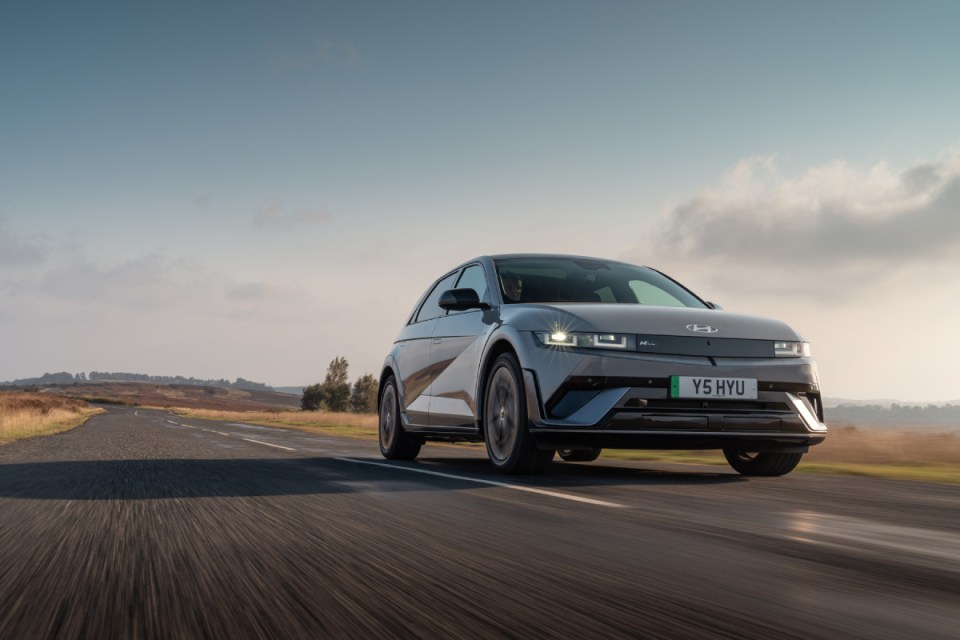
The IONIQ 5 is bigger inside than its retro-futuristic styling suggests. A 3,000mm wheelbase and a flat floor give it plenty of room, and the rear seats slide so you can trade legroom for luggage space. Hyundai quotes 520 litres of boot space with the seats up and 1,580 litres with them folded, plus a small front boot of up to 57 litres on rear-wheel-drive cars and 24 litres on four-wheel-drive versions.
Regit’s Tim Barnes-Clay recently drove the high-performance Hyundai IONIQ 5 N, and even in that most hardcore form he found the cabin felt properly premium, with excellent materials and well-damped switches, and plenty of room in the back for tall adults. The N gives up a little boot space to the standard car, at 480 litres, but it shows how well the basic package stands up.
There’s plenty of tech too, including twin 12.3-inch screens, wireless smartphone connectivity and Hyundai’s Bluelink connected services. Every IONIQ 5 also has Vehicle-to-Load, which lets the car power other devices. It sounds like a gimmick until you’re charging a laptop on a campsite or running a pressure washer off the driveway.
Hyundai IONIQ 5 rivals and company car tax
The IONIQ 5’s closest rival is its own sister car, the Kia EV6, which shares the same 800V underpinnings in a sleeker, lower body. Beyond that, the Tesla Model Y and Skoda Enyaq are the obvious alternatives, and both are bigger names on most shopping lists. The Hyundai’s case against them is the combination of charging speed, cabin space and a design that still looks nothing like anything else in the car park.
The badge is doing more of the work than it used to, too. In Regit’s most recent brand perception survey, Hyundai came second only to Kia, its sister brand, among the brands whose reputation has improved the most. A few years ago, plenty of buyers would have balked at spending £40,000-plus on a Hyundai, and that’s clearly changing.
It’s also worth knowing what the IONIQ 5 doesn’t qualify for. The Government’s Electric Car Grant only applies to cars under £37,000, so even the entry-level Advance misses out. For company car drivers, though, that hardly matters. Electric cars sit on a 4% benefit-in-kind rate this tax year, so the £44,195 84kWh Advance carries a taxable benefit of around £1,770 a year. That works out at roughly £350 a year in tax for a basic-rate taxpayer and around £710 for a higher-rate one, or about £60 a month, which is remarkably little for a car of this size and a big part of why so many IONIQ 5s end up on salary sacrifice schemes.
Is the Hyundai IONIQ 5 good value?
At £40,695, the IONIQ 5 isn’t an impulse buy, but even the entry car comes with a heat pump, heated seats and steering wheel, 19-inch wheels, a big touchscreen and the same 800V charging as the most expensive versions.
To my mind, the £44,195 84kWh Advance is the one to have. For around £3,500 more than the entry-level car, you get the bigger battery, 228PS and up to 354 miles of official range, which makes it a car you could keep for years without wondering whether you should have gone bigger. Premium makes sense if you really want the extra equipment, but once you edge towards £50,000 you’re shopping in a part of the market with some serious competition, and a tax bill to match.
If the IONIQ 5 is on your shortlist, motoring platform Regit can put you in touch with a Hyundai dealer near you for a test drive and the latest offers. Book a Hyundai IONIQ 5 test drive with Regit.
What’s good – 800V charging that’s still quicker than most rivals – Huge, flexible cabin with sliding rear seats – Strong standard kit, including a heat pump, on every version – Very cheap to run as a company car – A brand whose reputation is rising fast
What’s not – Entry price misses the Government’s Electric Car Grant – Top trims tip over the £50,000 road tax threshold – Rivals like the Tesla Model Y offer more official range – Front boot is tiny on four-wheel-drive versions
The IONIQ 5 has aged well, with a design that still turns heads, a cabin that’s properly useful and 800V charging that gives it an advantage you can’t see from the outside but will notice on every long trip.
I’d take the 84kWh rear-wheel-drive Advance, keep the spec sensible and spend the money saved on actually going somewhere. For an electric family car that’s distinctive without being difficult to live with, the IONIQ 5 is still one of the smartest choices you can make.