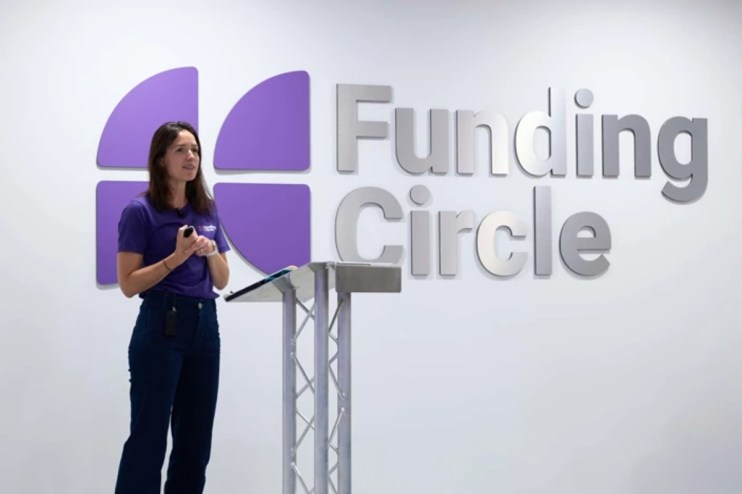
Lisa Jacobs has overseen a tumultuous time at the helm of London-listed fintech Funding Circle. After she announced plans for her exit, Samuel Norman takes a look at Jacobs’ tenure in this week’s column.
As she announced plans to bow out from fintech firm Funding Circle on Tuesday, Lisa Jacobs was desperate to play down her role in steering its revival.
“The nice thing about being CEO is you get to take credit for these things,” she told me after announcing her decision. “But obviously there is a whole team that has delivered.”
Investors, however, view Jacobs as less replaceable than she views herself. After she confirmed plans for her departure in late 2027, the fintech’s stock sharply dropped 10 per cent at open and closed down 8.7 per cent at 210p.
“The timing is likely to come as a surprise to investors,” analysts at Investec said. Researchers at Cavendish agreed, adding that Jacobs’ exit would likely “take some gloss off” the firm’s booming first half.
Jacobs acknowledged the shock factor: “There’s never a time to leave when I think it possibly won’t be a shock – unless things are going badly.”
For the small business lender, which has been remade under Jacobs’ leadership, the tide has turned.
Redrawing the circle
The fintech chief joined the lender back in 2012, but would wait a decade until January 2022 to properly take the reins. She did so at a company that was down 75 per cent since its IPO four years prior and facing pressure as it transitioned away from government-backed lending schemes during the pandemic.
Total income dropped to £206.9m in 2021 from £222m the year prior. It would fall even further in Jacob’s first year to £148.7m whilst the company made a headline loss of £12.9m.
She introduced her ‘Medium-Term Plan (MTP)’ in 2022 that sought to rebuild Funding Circle into a multi-product financial platform and evolve from just small business loans.
Launched at the beginning of the year, the plan pumped cash into its buy now, pay later offering, Flexipay, and kickstarted an international expansion. But just two years later, Jacobs was forced to abandon a large part of those plans. Struggling under a different capital structure to its operations in the UK, Funding Circle banked a £10m gain after offloading its US business for £33m in a major retreat.
Simultaneously, she bore the axe in the UK with a cull of 120 roles to help deliver £15m in annual cost savings.
“The reduction in roles is not a decision we took lightly,” she said at the time.
By the end of that year her efforts were beginning to bear fruit and investors were rewarding the stock. In two-and-a-half years shares rocketed over 500 per cent. But it still trails far-behind its IPO price of 440p – a sight not seen since that day.
At the time of its public float, some suggested the firm was overvalued with its £1.5bn price tag. By the end of its first trading session its market value had fallen to £1.25bn in what was seen as a damning assessment of the London market’s enthusiasm to get behind growth stocks. The company is now valued at just under £600m.
But now, analysts point to the fintech being undervalued. After a glowing half-year update on Tuesday, where the firm upgraded its profit forecast following and revealed a 50 per cent rise in revenue, Investec hiked its target price to 280p. The investment bank said the firm trades at a “material valuation discount to peers across a range of metrics” averaging 20 to 30 per cent.
“We think these discounts fail to reflect the much-improved revenue outlook,” analysts added.
Some investors may have been hoping Jacobs would stick around to see the fintech claw back more of its post-IPO losses.
“I think there’s a huge amount more to come… I feel very confident in the opportunity ahead of us,” Jacobs said. Investors may see the value inherent in Funding Circle, but after a bumpy few years, her successor will have to work hard to earn their trust.