House prices in London’s most sought-after areas continued to plummet in August as confidence across the country’s housing market slumped on the back of rising mortgage rates brought on by the Iran war.
Areas at the centre of the capital’s prime property market shed value in August as house prices across the capital slipped by 2.2 per cent year on year, according to the Office for National Statistics.
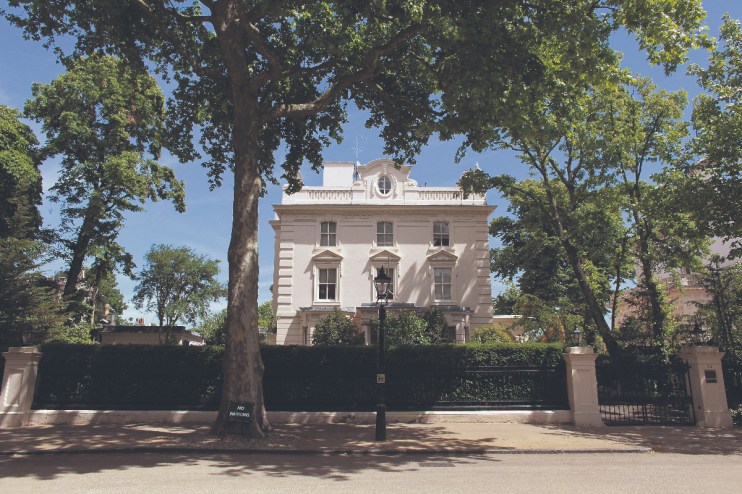
In Westminster, which covers sought-after postcodes like Belgravia, Mayfair and Maida Vale, the average house price slipped by 14.3 per cent in August, to £887,000.
House prices slumped by 13.8 per cent to £1.2m in Kensington and Chelsea in the year to August, and by 10.6 per cent to £798,000 in Camden.
London’s luxury property has shed value in recent months, as prospective house sellers in this sector of the market bear the brunt of sky-high stamp duty and council tax costs.
Stay in the know
Three daily briefings with the key market moves and top business and political stories.
SUBSCRIBE HERESoaring mortgage rates caused by the Iran war have begun to knock house prices across the country, as sellers are forced to push down prices in order to shift their homes.
The average two-year fixed mortgage rate has risen to 5.55 per cent, up from 5.29 per cent last month and 4.25 per cent since before the Middle East conflict began, according to homes portal Rightmove.
Property market in ‘wait-and-see mode’
House prices growth in the UK slowed for the fourth consecutive month to 0.9 per cent in August, the ONS revealed on Wednesday.
This comes as mortgage approvals fall to their lowest level since 2023 and transaction numbers are lower by month-by-month and compared to this time last year.
Paige Tao, an economist at consultancy PwC, said falling consumer confidence has left the housing market in “wait-and-see mode” ahead of the Budget.
The government’s revived Help to Buy scheme is expected to deliver some relief to the market but economists say Labour must restore fiscal credibility at the Budget to soothe fears of rising borrowing costs.
“Fiscal credibility matters because gilt yields directly feed into the cost of mortgage finance. A Budget that unsettles markets could push borrowing costs higher and further delay transactions; one that restores confidence could do the opposite,” Tao said.
Tom Bill, head of UK residential research at Knight Frank, said house price growth in the UK has “ground to a halt this year,” with declining mortgage approvals pointing towards further subdued activity later this year.
He said: “The outlook for the UK housing market hinges uncomfortably on an overseas geopolitical risk, but downward pressure on prices could reverse quickly if the unpredictable Middle East conflict de-escalates or ends. As affordability constraints bite, it is no surprise to see the biggest price impact in London.”