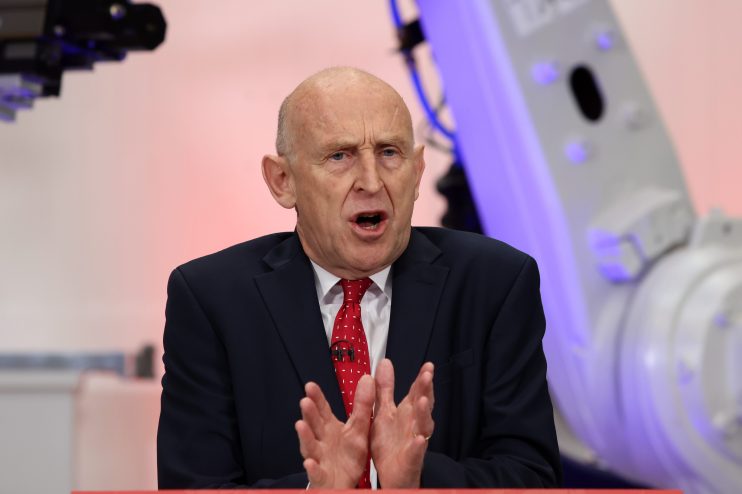
Chancellor John Healey said he will “not speculate” on expected tax rises at his maiden Budget next month as he said growth was at the “heart of fiscal challenges” facing the UK.
In his first major speech as Chancellor in Coventry, Healey batted away questions about whether businesses and households were set to face another wave of tax rises in October.
Healey laid out his focus on boosting growth “in more places” and its importance in securing the public finances. Answering media questions, the former defence minister promised the government was “keeping” Labour’s 2024 manifesto pledges that ruled out hikes to income tax, VAT and national insurance.
But he added: “I’m not going to speculate on questions of tax. If I respond to those questions, I’m only going to fuel more speculation.”
The Budget is just over seven weeks away. Analysts at Pantheon Macroeconomics and multiple City institutions believe tax rises are highly likely as higher government borrowing costs due to higher gilt yields, as well as state expenditure pressures relating to defence and welfare, are set to narrow the headroom available to the Chancellor.
The ‘sustainable pathway out of indebtedness’
In his speech, Healey said that growth was “indivisible” from fiscal stability.
He explained that higher growth would be the UK’s “sustainable pathway out of indebtedness and into prosperity”. He backed Sir Keir Starmer’s promise to cut business administration costs by 25 per cent by 2030 and to reform planning rules to boost nuclear energy production under the Fingleton Review.
The government would also launch a review into railway costs and re-write Treasury rules to prioritise more long-term investments in public infrastructure, it was announced.
“People who elected us expect us to get on with it,” Healey said. “Legal risk is not the be all and end all of government decisions.”
Along with job creation and investment, innovation was a key feature of Healey’s first speech as he said there would be a new target to double the number of unicorn startup companies in the UK, those that are valued at over $1bn. One index by Dealroom states that the UK has 205 unicorns.
The Chancellor also indicated that devolution would be central to his first budget in order to get growth “in more places” beyond London.
Healey ‘failed to end uncertainty’ on taxes
The speech is the first of a string of public appearances Healey will make before the Budget on 28 October.
The Treasury has set a deadline on Wednesday night for business chiefs to send in proposals and ideas for the Budget.
The British Chambers of Commerce urged the Chancellor to replace the triple lock pension and cut employers’ national insurance contributions for all under 25-year-olds in order to tackle high levels of youth unemployment.
The triple lock, which ensures the state pension rises each year by whichever is highest out of wage growth, inflation or 2.5 per cent, has been labelled “unsustainable” for public finances by economists from across the political spectrum. The Office for Budget Responsibility (OBR) said it would cost £15.5bn a year in extra costs by 2030.
Labour promised to keep the triple lock in its manifesto. The BCC is the only major industry body to call for the triple lock pension to be scrapped.
In response to a question about the triple lock pension, Healey said he agreed with the BCC that youth unemployment was a “blight” on the country but he would base plans around proposals made by Alan Milburn, who will complete his review on joblessness later this year.
Shadow chancellor Andrew Griffith said that “warm words about growth will not make growth a reality or cover up the enormous damage” from previous tax rises on businesses and households.
“Healey failed to end uncertainty by ruling out more tax rises, failed to set out a serious plan to reform welfare, and failed to commit to funding defence properly – the very issue he resigned over as defence secretary,” Griffith said.
“Even as Jaguar Land Rover cuts jobs, he offered no pause to Labour’s job-destroying employment red tape and no measures to get ruinously high energy bills down.”
As the Chancellor finished speaking, the carmaker confirmed it would cut around 4000 jobs in a push to slash around £1.7bn from its cost base.