Shares in GSK slid on Wednesday despite the UK drugmaker reporting better than expected financial results, as investors were unnerved by weaker sales of its respiratory syncytial virus (RSV) and shingles vaccines and recently launched medications.
Britain's second-biggest pharmaceutical company reported a 19% decline in pre-tax profit to £1.9bn in the July to September quarter and £318m of restructuring charges, with more to come. Core operating profit and core earnings per share rose 5% and 1% respectively, however, beating analysts' expectations.
Shares dived as much as 7% at one point on Wednesday, and despite later paring back such losses to a 3.8% drop, it was the second-biggest faller on the FTSE 100 index of blue-chip businesses.
Luke Miels, who took over from Emma Walmsley as GSK's chief executive in January, has announced a number of acquisitions, including a £7.9bn US cancer specialist and a major cost-saving programme in July to speed up drug development.
GSK said turnover in the third quarter was £8.9bn, a 5% rise compared with the same period last year thanks to strong sales of its HIV, cancer and lupus medications.
Vaccine sales, however, dipped 2% to £2.6bn, with sharp declines for the shingles shot Shingrix, down 5%, and the RSV vaccine Arexvy, down 24%, partly the result of tough year-on-year comparisons, while sales of meningitis vaccines rose 12%. Sales of the recently launched asthma drug Exdensur also disappointed analysts.
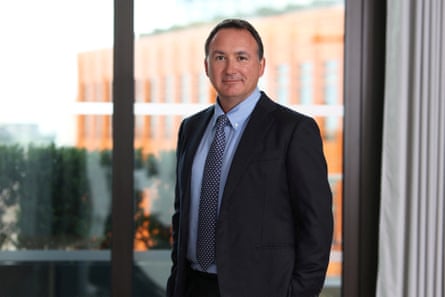
Referring to Arexvy, Miels said: "When we look at our market share versus Pfizer, we still have leadership there. We are getting good orders outside of the US, so I think we need to just see what happens over the next couple of months to have the full picture."
Investors are also worried about the loss of patent protection for GSK's blockbuster HIV drug dolutegravir towards the end of the decade, which means other drugmakers can make cheaper, generic versions.
GSK has set a goal of generating more than £40bn in total annual revenue by 2031 as it rebuilds its cancer business.
Miels said the company was slightly ahead on its three-year cost reduction plan to save £1.9bn a year, which involves simplifying operations to invest more in research and development (R&D). The restructuring will cost the company £2.4bn, and most of these charges will come this year and next.
The impact on the UK was relatively limited, Miels said, with some cuts to support jobs such as in human resources and procurement at its headquarters in central London and in hubs in Poland and India. "You never want headquarters to be too big; I want people on the bench in the lab," he said.
GSK is also reorganising its vaccine business in Belgium, with increased use of digital tools and automation expected to lead to about 1,200 job losses, but the country will continue to produce the bulk of its vaccines. GSK had nearly 67,000 employees globally at the end of last year, its annual report showed.
GSK stuck to its annual forecasts, with R&D spending set to grow faster than sales. It expects to begin 22 late-stage studies of new medications by the end of the year.
Miels said Shingrix had the "potential to grow next year", describing it as "a remarkable product". He pointed to two large studies of the vaccine to assess the reduction of dementia risk, as well as its effects on major adverse cardiovascular events such as heart attacks and strokes, with the first data available in 2029 and 2027 respectively.
Both studies could be "transformative" for the shingles vaccine, he added.
Britain's high street chemists have reported a rise in demand for the shingles vaccine after studies showed a correlation with a reduced risk of dementia. "We've got a lot of studies that show a correlation. We're trying to demonstrate causation," Miels said.