The Independent Football Regulator has improving English clubs’ failing finances in its sights but its treatment of Manchester City is what will likely define it, writes Ed Warner.
What word or phrase to you best describes the state of English football? Would broken, bust or (morally and/or financially) bankrupt fit your bill? A tad sensational, maybe.
Or you could be a free marketeer to the core, happy to luxuriate in the quality of the players and matches available to a global audience every weekend, regardless of the competing teams’ finances. Perhaps then brilliant or beautiful might describe the game as you personally experience it.
The now-not-quite-so-new Independent Football Regulator has just published the draft of its inaugural State of the Game report. Unsurprisingly short on hyperbole – positioned neither at the broken nor beautiful end of the perception spectrum, it being the work of a regulator, after all – the financial facts the report lays out nevertheless speak for themselves.
The IFR does, though, allow itself one punchy statement in a suitably hefty font: “English football is underpinned by contradictions. It is simultaneously the richest, best and most deeply competitive in the world, but it’s also standing on the edge of a financial disaster.”
Dress these facts up however you wish, any reader of the IFR’s analysis must surely recognise that football in England relies almost entirely on the assumed willingness of new investors being prepared to bolster or bail out current owners of loss-making clubs. The greater fool theory is writ large across 116 men’s professional teams.
Forget their P&Ls; marvel at the intangible asset values instead.
It would be easy to dismiss the economics of this industry as nuts, but you could have been saying the same thing for many years. Yet club valuations continue to inflate, fresh buyers emerging – whether tech bros, private equity titans, luvvies, sport stars or local fans made good in business – to validate the rising values.
On a club by club basis, the music does occasionally stop, and the last buyers of failing enterprises are then exposed as the greatest fools. But there is no sign yet of a bursting of the collective bubble.
Think any of the many potential investors circling clubs today will be put off by the IFR’s report? Think again. Nor, remember, do clubs often disappear, in spite of their precarious finances. Very rarely, in fact.
How, then, are we to judge the success of the IFR in the years ahead? I’ve written before that I don’t consider it a necessary creation. Partly this is the result of my innate free market tendencies – show me a genuinely effective regulator in any industry, please – but also the belief that football should have the ability to organise and police itself.
The football regulator is here now, though, and so I’m happy to align myself with its proponents to wish the IFR every success in pursuing its remit. Whether we will all be able to agree on its KPIs is another matter.
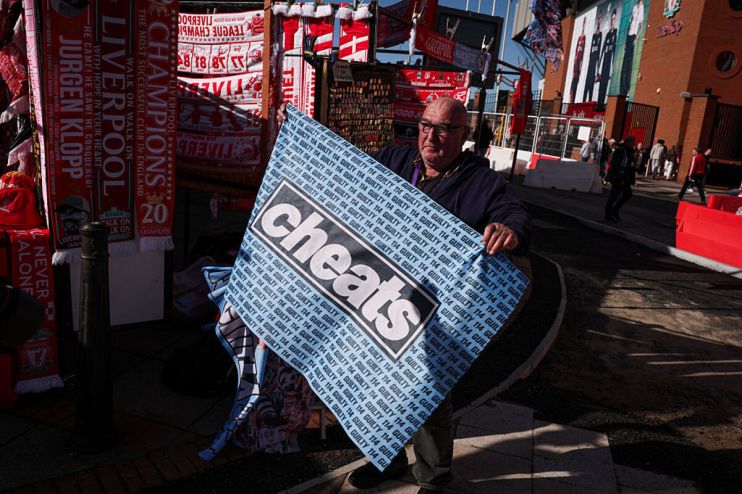
It is possible that the IFR’s reputation will be forever set in stone according to its handling of the Manchester City case. Footballing and financial penalties will be levied by the Premier League, and possibly in turn by the FA. However, football fans will doubtless look to the regulator to opine on whether Man City’s leaders and owners are fit stewards of the club in the light of the guilty verdicts adhering to it – and by extension them as individuals.
“I’m not going to comment on any actions we might take until we have had a chance to assess it.”
David Kogan, IFR chair
Parallel universes do not exist – or if they do, it’s only Hollywood that can access them – so we’ve no way of knowing whether an IFR would have ruled against the Abu Dhabi United Group’s purchase of Manchester City back in 2008.
Nor, had the takeover been waived through, whether it would still have required the hacking of emails to unearth the club’s financial misdemeanours; whether the regulator would have got there first instead; or whether its very existence would have proven sufficiently threatening to prevent the rule-breaking in the first place.
Without the opportunity to have proven its chops, the new regulator now has one shot at establishing its governance oversight credentials. As we have seen in the past couple of weeks, the Man City case has political and diplomatic dimensions, meaning any decisions the IFR might make will take on an import far beyond the stewardship of a single football club – albeit the dominant one in the English game for the best part of two decades.
It is probably fair to say that however long the regulator exists for, it will never handle a more significant case. Quite the baptism of fire.
David Kogan, the IFR’s chair, might secretly wish his organisation had been established a little while after the Man City resolution rather than just before the guilty verdicts. Rest assured that every single decision he and his colleagues make in the years ahead will be viewed through the prism of the conclusions they reach about City.
What of those other KPIs? Root out dodgy owners, save honest but over-enthusiastic ones from folly, play a role in a financial rapprochement between the Premier League and EFL, create greater awareness and understanding of football’s economics among the sport’s fanbase, and encourage greater and better engagement between clubs and their supporters. Some of that will be spreadsheet-jockey work; much of it down to communication and suasion. Easy on paper…
The state of the game? Neither broken nor beautiful. Bonkers sums it up for me. There resides the IFR’s challenge.
Signed in (clean) blood
I was fascinated to read Sean Ingle’s piece in The Guardian this week about the women’s marathon world record, set by Ruth Chepngetich at the 2024 Chicago marathon and still held by the Kenyan in spite of a failed drugs test just five months after the event. A clean test after the race means she can’t be stripped of her mark.
A solution to the sport’s apparent embarrassment isn’t beyond the wit of mankind. Back in the day, at UK Athletics we introduced a new clause to the Team Member Agreement for GB athletes. By signing the agreement they recognised that if they were ever subsequently found guilty of a serious doping offence they accepted that they were no longer eligible to be selected for British teams.
At the time lawyers quaked, citing double jeopardy. But of course, no athlete refused to sign. Why would they? If clean, they would have nothing to fear. To my knowledge, UKA has never had to invoke the clause, although I believe in the intervening years it has been dropped from the TMA (I guess the quaking lawyers won out).
Could this, however, provide a blueprint for World Athletics? Decide a sensible period within which any failed drugs test would invalidate a record (two years perhaps) and then either require athletes to sign up to the new regulation ahead of any eligible competition, or perhaps more simply require a signature from them after a record is set as a condition to it being admitted into track and field’s record book.
There you go, job done (until the lawyers start to quake).
Red, red whine
Day one, first Test between South Africa and Australia. Top two red-ball nations in the world at Durban’s 25,000 capacity Kingsmead stadium. Attendance? Just over 4,000, many of them Aussie tourists.
We get a bigger crowd than that for a T20 Blast match on a Hove Friday evening with none of the ‘sandpapergate’ PR build-up that this Test garnered. Is it any wonder South Africa had played just six Test matches since winning the ICC World Test Championship final in June 2025 – none at home – before the current series?
Or if the Proteas had played more often, might there have been greater local interest. Out of sight, out of mind…
Ed Warner is chair of Sussex Cricket and GB Wheelchair Rugby and writes his sport column at sportinc.substack.com