Family businesses in this country are not just widely ignored, they are frequently looked down upon. But they are among the most innovative and longest standing companies around, says Nigel Cope
In discussions about how business can help deliver economic growth in Britain, family businesses rarely get a look-in. The talk is of big corporates, or small firms. Of start-ups and scale-ups. Or of specific sectors, such as Fintech or AI. But family businesses are worth a closer look. The sector is much bigger than people might think, it is more successful than people might think, and the approach these companies take to business, with their long-term thinking, conservative financing and close links to their local communities, could have popular appeal.
First, the size of the sector. There are more than 5m family businesses in Britain, employing more than 15m people. Together, their combined annual sales are £2.8 trillion. But you’d be forgiven for missing this. Mostly small and privately owned, family businesses tend to stay out of the spotlight, leaving the big PLCs to grab the headlines. Family firms keep their heads down and just get on with the day-to-day job of running their businesses, employing people, paying their taxes and doing their bit in the local community. They hide in plain sight. But they are the backbone of the UK economy, it’s hidden engine.
Second, performance. Family businesses in this country are not just widely ignored, they are frequently looked down upon. It’s a sleepy, underperforming backwater, the critics say. This isn’t necessarily true. Many family firms have a broader definition of success. For example, a key priority is simply to continue, so the business can be passed on to the next generation. But even on financial measures, there is plenty of evidence to suggest that, particularly over the longer-term, family businesses do just as well as their non-family counterparts, and sometimes better.
Thirdly, the way these firms operate, sets them apart. For example, research has shown that, during the Covid pandemic, family businesses in the UK were less likely to lay off workers. They are also more likely to be involved in their local communities because they have been involved with them for so long, and having the family name over the door means there is a personal element to their commitment. All this has knock-on effects. At family enterprises, CEOs stay in post for longer, staff turnover is lower, and, crucially, the businesses last for longer too. For the ordinary worker, who just wants to put food on the table for their family and pay the rent or mortgage at the end of the month, this kind of stability and continuity can be important.
Old doesn’t mean stale
In my book, , I’ve looked at a dozen of Britain’s oldest family businesses and examined the reasons for their long-standing success. After all, if a company has lasted for 100-200 years or more, and survived two world wars and countless recessions, they must be doing something right. The aim is to draw out the common denominators. The list includes Britain’s oldest family firm, a butcher in Dorset called RJ Balson, which was first established as a market stall in 1515. There is Hoare’s Bank, a seventeenth century private bank which is older than the Bank of England, and whose famous former customers include Samuel Pepys and Jane Austen. There is a 300 year old chain of funeral directors and a London hat shop, Lock & Co, whose previous clients include Lord Nelson and Charlie Chaplin (and, more recently, Sir David Beckham). Also on the list are firms that many might not realise are still family-owned, such as Barbour, the clothing company, and Walker’s Shortbread.
But although these companies may be old, they are more innovative than you might think.
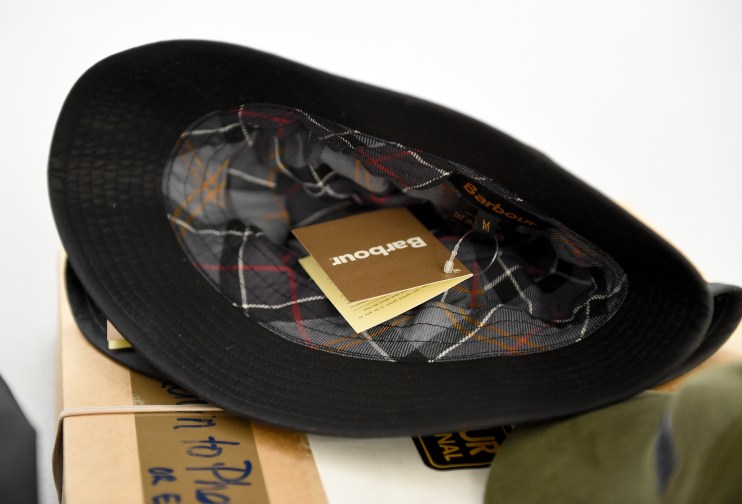
Barbour, the clothing company has transformed itself over the last 20 years from a somewhat conservative maker of waxed jackets, into an international fashion business. At the brewer and pubs operator, Shepherd Neame (est. 1698), the company is constantly launching new beers to compete with funky craft ales and IPAs. As CEO, Jonathan Neame, says: “We’re not here because we’ve always been here. We’re here because we change and adapt.”
If we are serious about driving economic growth in this country, we should be paying closer attention to family firms. But some things need to change. Family firms could do a better job of communicating their strengths to the wider world. The government could do more to understand this under-appreciated part of our economy.
Andy Burnham talks about wanting growth in every post code. Well, family businesses are in every post code in a way few other types of business could match. They would be a good place to start.
The Great Survivors: Can Britain’s oldest family businesses show us a new way forward? by Nigel Cope is out on 3rd September (Eye Books, £20)