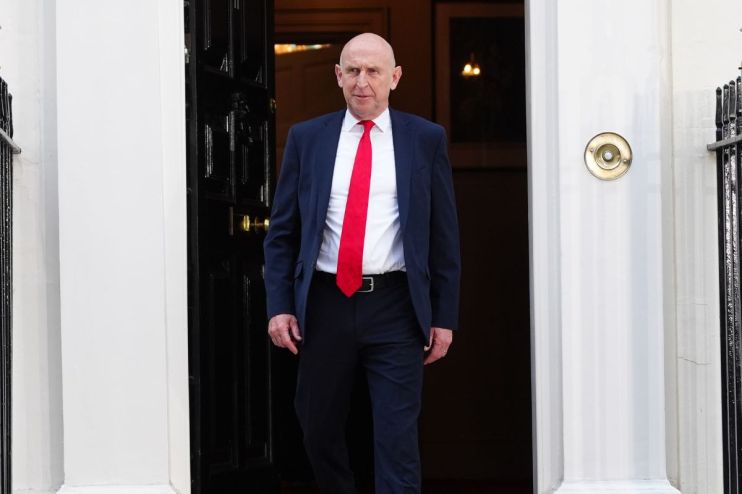
John Healey’s potential tax raid on family businesses could make handing down companies to the next generation a “disaster” and damage the economy, advisers have warned.
The Chancellor is reportedly considering proposals to levy income tax when business owners hand down to their children, potentially almost doubling the bill.
Under current rules, transfers can be structured in a way that allows them to attract capital gains tax (CGT) which is charged at a lower rate, but Healey is debating a shake-up in a bid to increase revenue in his maiden Autumn Budget.
Tim Stovold, head of tax at Moore Kingston Smith, said: “If the proposals in the consultation are implemented as law, a number of transactions used to return value as a capital gain to a retiring generation, allowing their children to take over the ownership and running of the business, will become much more difficult or impossible.”
Investment appeal
Healey is debating shutting off a possible route owners frequently use to dodge a substantial one-off tax bill. Instead of selling the family business, partners convert holdings to ‘redeemable shares’, which the business can buy back using its own profits.
Stay in the know
Three daily briefings with the key market moves and top business and political stories.
SUBSCRIBE HEREAdvisers warned that cutting off the CGT route could affect the economy as well as giving families a hefty tax bill. Andy Oury, tax partner at Oury Clark, called it a “disaster” that would damage the attractiveness of the UK as an investment destination.
“It would stop people investing in the UK and stop people building businesses,” he said.
“If people spend 10 years building a business and find at the end of it they will lose 50 per cent then the sums just don’t stack up. It would mean people don’t want to sell their assets and then the economy stops.”
Passing down the business
Others warned increasing the tax burden would not only discourage owners from transferring ownership but could force them to reconsider how to do so.
“The reported Budget changes may close one potential exit door, but various options should still be available to pass on a family business which trigger a capital gains tax bill, rather than a large income tax liability,” said Chris Etherinton, tax partner at RSM UK.
One route could be to structure a sale to a family member in a similar way to a ‘management buy-out’, he said. This would commonly involve family members establishing a new company which then buys the shares of the individual exiting the business.
“Assuming there are good commercial reasons for the takeover then it is common for HMRC to confirm in advance that they will not apply certain income tax anti-avoidance rules,” he added.
Etherinton said that gifting shares to the next generation should “still be effective” and can be achieved without an immediate CGT bill.
Nicholas Smith, head of tax at Duncan & Toplis, noted that farming families and other asset-rich businesses would be particularly sensitive to the changes following Rachel Reeves’ upheaval of the IHT system in her maiden Budget.
“With significant wealth often tied up in land, property or business assets, additional tax liabilities can create serious financial pressures,” he said.
“Coming on top of the inheritance tax changes already announced, further restrictions risk making it increasingly difficult for family businesses to plan confidently for the future.
Ending tax dodging
The changes are likely to be presented by Healey as a stricter approach to tax avoidance rather than a raid, but some advisers said firms will look for more ways to swerve the tax as they are battered by costs associated with new legislation like the workers’ rights act and the war in the Middle East.
“The changes suggested in the consultation are understandably designed to counter abuse of the system,” Stovold from Moore Kington Smith said. “But some sort of carve out for generational shifts in business ownership would be welcome to avoid the only alternative being a sale of the business outside of the family.”
Others urged business owners to not rush into any decisions before Healey delivers his Budget on 28 October, warning making decisions based solely on speculation “could have lasting consequences”.