Every Sunday night, the chancellor, John Healey, slips next door to Andy Burnham's Downing Street flat where they order a curry and chew over politics on the prime minister's sofa.
An Indian takeaway is one of the totemic issues in British politics, a "treat" fewer people can afford, like a pint at the football or soft play for the kids.
Healey has promised to give Britain's battered consumers "breathing space" in next week's budget, but three months after taking on the job, the new chancellor also hopes to buy himself time.
Key decisions will be postponed until a spending review at some point next year – including when the UK will spend 3% of gross domestic product on defence: the issue that prompted Healey's resignation as defence secretary in June, hastening Keir Starmer's departure.
The weekly curry summit is a chance, as some aides see it, to separate Healey from cautious Treasury officials, and get him to kick around the politics.
With just a few days to go before the budget, every adviser and official remarks on how closely the prime minister is involved: not just in decision-making, but in the process and politics – unlike Starmer.
"Keir wanted to be presented with three ideas and then pick one," one aide says. "But, actually, in politics, sometimes you need to bash things around and come up with ideas. And that Sunday night is a bit of that – wrestling with some of Britain's problems."
The budget on 28 October – and the public response – will set the course for what comes next. Much of the Burnham project depends on how it is received. "After this we will be in election mode," one aide says. That may not mean an imminent snap election, but few people believe Burnham will go longer than May 2028.
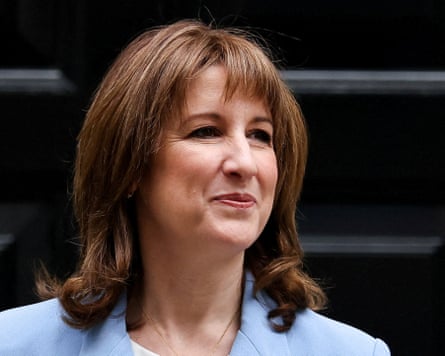
There will be another big presence in the budget – Rachel Reeves. More and more Labour strategists mention a growing gratitude to Healey's Treasury predecessor, who had often been previously seen as a symbol of the party's missteps.
"She made the mistakes, yes, but she left us a Labour Treasury," one adviser says. "It's a very different ballgame to stepping straight into a Conservative Treasury, I think we realise that now.
"And she had to take those massive decisions early on and do a big tax and spend budget because public services were on their knees and it was a crisis we had to start to fix. But from that point, now we can start to think about other priorities."
In Bangkok last week, where Healey attended the International Monetary Fund annual meetings, Reeves's tax and spending plans meant the UK was praised as the only G7 country with a plan to tackle its budget deficit – and urged to "stay the course".
The IMF also revised up its forecast for UK growth for 2026 – reflecting the economy's better-than-expected performance, despite the effects of the Iran war.
Healey's presence in Thailand was brief. He eschewed the public discussions on the state of the global economy that Reeves enjoyed, leaving speechmaking to the foreign secretary, Ed Miliband, who took the opportunity of the global gathering to set out Britain's plans for its presidency of the G20 next year.
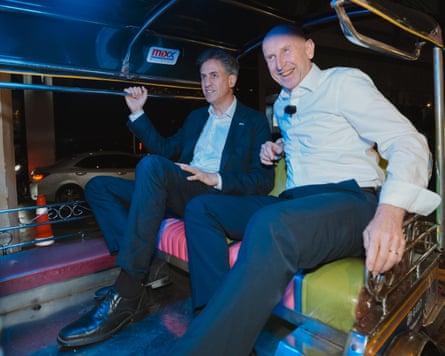
Healey, who as ever travelled with a bottle of HP sauce in his luggage, managed to find time to film an excruciating social media video with Miliband, riding a tuk-tuk through the hectic night-time streets of the Thai capital while discussing their favourite snacks.
Back in the UK, he has told Treasury staff that when he is drafting the budget he is thinking about people in the small towns and villages in his constituency in South Yorkshire. But there is a particular character to those smaller towns – home to small businesses and self-employed sole traders, rather than big industry or public services.
It is these people, in particular, say sources close to Healey, whom he hopes to protect and give "breathing space" – perhaps a veiled acknowledgment that small businesses have borne too much of the brunt of some of Labour's tax and regulations in the early years of this parliament.
"He has spent a lot of the time thinking about the cost of business and cost of doing business – something that's driven him quite heavily," one source says.
Treasury insiders say Healey is more formal in meetings than Reeves; and that his past stint in Whitehall's most powerful department means he understands how to manage its bright civil servants.
He has urged officials to come up with innovative solutions to the challenge of handing over more tax revenue to regional mayoralties – an idea first announced by Reeves, but given impetus by Burnham's pro-devolution agenda. "It's the biggest challenge that they've had for a really long time. And you can see the groupthink sometimes – but you can also see the spark in these really clever people," says one adviser.
When it comes to economic strategy, Healey has inherited some of Reeves's advisers, including the tax expert Spencer Thompson, and hired Ravinder Athwal, the author of Labour's 2024 manifesto. Healey's chief of staff, Will Straw, a senior figure in the Remain campaign back in 2016, is viewed as a canny political operator.
Yet like Reeves before him, Healey seems to lack a figure who combines economic expertise with political heft: the equivalent of Ed Balls in Gordon Brown's Treasury, or Rupert Harrison in George Osborne's. Burnham's No 10 is also advertising for political advisers with economic backgrounds, including a specialist in macroeconomics and growth.
Though aides are keen to stress the closeness of Burnham and Healey, their different approaches have led to early whispers about tensions in their partnership. "I am not sure how we reconcile the end of 40 years of neoliberalism and the approach of this chancellor," one Labour adviser says.
A government minister adds that the central question Healey has to answer in drawing up the budget is how much tax and spending policy should be adjusted in response to the damage wreaked on the public finances by the Iran war.
The chancellor's answer appears to be: as little as possible – with the hope that by the time of a spending review, the geopolitical situation has improved, and with it, the public finances.
Donald Trump's Middle East adventure has pushed up inflation, and in turn the interest rate the UK government must pay servicing its £3tn debt-pile.
These higher interest costs are likely to have more than offset the benefits of higher-than-expected economic growth in bumper tax revenues – perhaps halving the £24bn headroom Reeves had built up against Labour's fiscal rules.
Healey is expected to allow the headroom to take some of the strain and opt for a low-key budget statement – raising a few billions in taxes, including on banks, and giving some of that away again to households.
He is likely to opt for a relatively modest energy support package, of perhaps £1.5bn – "targeted and temporary", as the IMF has urged.
But with the Bank of England widely expected to raise interest rates the following week, hitting mortgage borrowers; inflation expected to top 4% in the new year, and the energy price cap rising by perhaps another 16% in January, consumers may not feel particularly grateful.

Some senior Labour figures have urged Healey to be more blunt about the connection between rising costs at home and Trump's Iran war.
Advocates of more generous energy support argue it could cut bills – and hence inflation – alleviating some of the pressure on the Bank to hike interest rates and convince voters Burnham is making a fresh start.
"He needs to do something big and bold enough for the public to think, this is why we've got a new prime minister and chancellor," says Michael Jacobs, an emeritus professor of political economy at the University of Sheffield and a former adviser to Brown. "I think the public will be bewildered by a steady as she goes budget."
Sanjay Raja, the chief UK economist at Deutsche Bank, says it will not have gone unnoticed in Downing Street that the riots on the streets of France have been partly driven by the soaring cost of living.
"If you're the Treasury, if you're the prime minister, you're certainly looking across the pond at the growing unrest around the cost of living, tensions on that front," he says. "Clearly we're in a different place to France but if there are some low-hanging fruit – temporary measures – across the next two or three-quarters, it could go a long way."
The latest consumer confidence data, which was published on Friday, shows a sharp slide into pessimism, amid what the consultancy GfK, which collects the figures, calls "relentless cost-of-living pressures", even before winter bites.
If cash-strapped households have to start cutting back on little pleasures like that occasional takeaway, there must be a risk the "breathing space" voters seem to have been prepared to offer Burnham's government, may not last much beyond the budget.