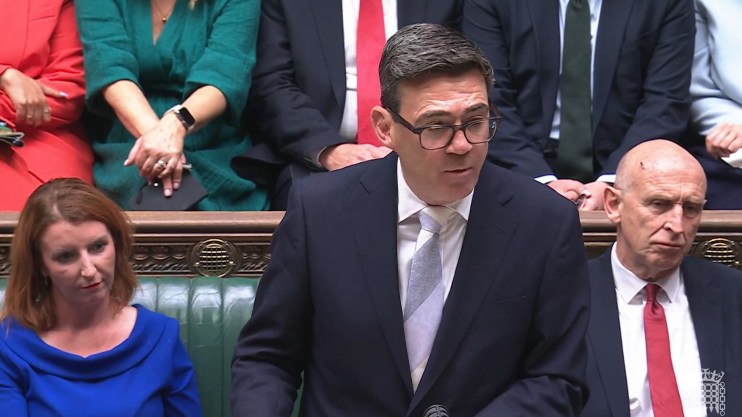
Andy Burnham once said this country shouldn’t be in hock to the bond markets, so it was unfortunate that his much-hyped return to the House of Commons yesterday was overshadowed by the surging cost of servicing government debt.
The yield on the ten-year gilt has hit its highest level since 2008. The longer term 30 year bond yield is at a level not seen since 1998. Our national debt is approaching £3tn. Spending is out of control. We’re on a borrowing binge and we’re haemorrhaging more than £130bn a year just on the interest. No wonder the Chancellor, John Healey, looked a bit peaky sitting next to the new Prime Minister.
Should we be reassured that he has emailed all staff at the Treasury – including the IT department and civil service apprentices – inviting them to send him ideas for his first Budget? Probably not.
Meanwhile, his boss delivered a confident performance to MPs but one that seemed entirely at odds with our current reality. He was right to say that “Britain is not where any of us would want it to be” but the alternative he went on to promise was one of more public spending, more debt, bigger government and higher taxes.
Economic growth will evaporate in H2
He claimed to have “a clear theory of growth” before telling us it was based on the “triple helix approach to economic development.” This refers to a harmonious arrangement of the state, universities and the private sector all working together, boosted by the wisdom and energy of local government leaders who will soon be empowered to impose an “overnight visitor levy.” This tourist tax was touted by Burnham as a fine example of “fiscal devolution.”
Will any region be able to use these powers to lower the tax burden, as the Tory mayor of Tees Valley would like? No, that won’t be allowed.
Burnham’s optimism and his doubtless sincere desire to make life easier for people and businesses is a welcome contrast to the tone of the outgoing Member for Holborn and St Pancras, but it won’t move the dial. Economists expect what little growth we’ve enjoyed so far this year to fall away in the second half, and an agenda of subsidies, nationalisations and a reorganisation of Whitehall will not bring it back.