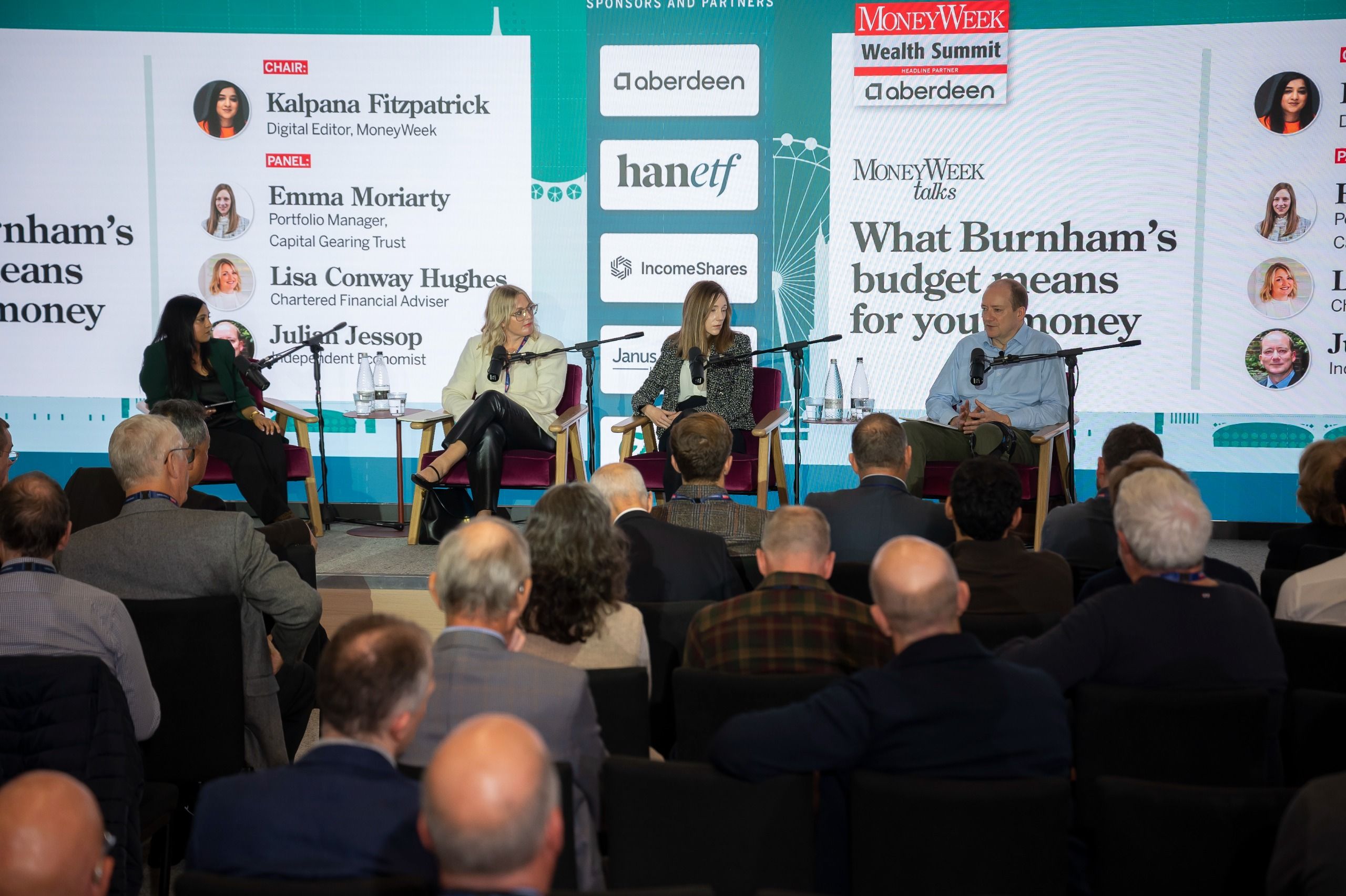
Households should brace for a fall in purchasing power caused by higher prices brought on by conflict in the Middle East, a leading economist has warned.
Speaking at a live recording of the podcast, which is also available to watch on YouTube, Julian Jessop said peoples’ real incomes will take a hit over the coming year due to rising inflation.
Inflation has remained high due to rising energy prices and the Bank of England now expects it to peak at 5% by mid-2027.
Start your trial of MoneyWeek today
Get unparalleled financial insight, analysis and expert opinion you can profit from.
Start your trial
Sign up for MoneyWeek’s free twice-daily newsletter.
Join more than 165,000 subscribers and keep yourself informed with latest financial news, insights and expert analysis to help you understand what really matters when it comes to your finances.
Join more than 165,000 subscribers and keep yourself informed with latest financial news, insights and expert analysis to help you understand what really matters when it comes to your finances.
Jessop said: “Over [the last] couple of years, real household incomes have been growing at a decent pace and job security has been okay.
“Over the next year, lots of people are going to see their real incomes, their spending power, fall because of higher prices. I think the next year is going to be particularly tough.”
Jessop’s comments follow John Healey’s inaugural Budget in October, which was generally well-received by markets, but has left some economists, including him, underwhelmed.
Jessop said it was a “do no harm” Budget that still disappointed “a lot of people”.
“If you look at the responses of the business community…they're all quite critical about it. And for what it's worth, I think almost the entire economics community was against it as well.
“All the major think tanks from the left and the right, from no political position whatsoever, were not keen and saw it as if anything as a missed opportunity.
“However…we weren't the audience for this Budget. The audience was basically the voters, with half an eye also on not scaring the bond markets.”
What will the bond markets do?
Healey has managed to keep the bond markets calm, but what is the outlook and should investors be nervous?
Emma Moriarty, fund manager at Capital Gearing Trust, who was also speaking on the episode, said there were some long-term concerns.
“The major spending issues around defence, bits of social care, infrastructure, and so on haven't actually been addressed yet, and we've sort of been told, oh, you know, ‘there's going to be a spending review, and this is going to come out in a 10-year plan, and that's going to be available at some time next year’, but what that means right now is basically we're on a much higher debt trajectory than we were on beforehand, and probably what comes with that is a lower growth trajectory," Moriarty said.
Moriarty said funding these projects could lead to higher interest rates “unless there is some major turnaround in growth”.
“Without knowing what these major policies are and how we're going to meet them, you get into this very kind of vicious macroeconomic and financial market cycle where there is a lot of uncertainty hanging over us.
“Businesses put off investment, households put off spending decisions, and growth starts to contract. So I think, sort of stepping back from the immediate reaction, there are some things that need to be thought through, and they're not necessarily gilt market positive.”
“A bit more” to Budget than at first glance
Major tax changes, as well as macroeconomic challenges, will be at the forefront of peoples’ minds over the coming months too.
Unused pensions are set to form part of estates for inheritance tax purposes and tax rates on income from property and savings will rise by four percentage points from April 2027.
It is these future changes that households will be bracing for, Lisa Conway-Hughes, chartered financial planner, said on the podcast.
Echoing Jessop’s comments, Conway-Hughes said her clients’ initial reactions to the Budget were that it “wasn’t that painful”, but they had since realised that combined with changes announced at previous Budgets, some major estate planning was needed.
“When you take a step back and actually digest the changes to savings rates and rental property income rates from next year, coupled with pension changes…there's a lot on people's plates.
“I think initially, they were quite relaxed, but actually once you dive in a bit deeper there’s a bit more to it.”
This episode of MoneyWeekTalks was recorded live at the MoneyWeek Wealth Summit. You can listen on any podcast platform .
About the podcast
is a podcast that helps you unlock the secrets to financial success. Editors Kalpana Fitzpatrick, Andrew Van Sickle and Cris Sholto Heaton are joined by influential guests – from CEOs and entrepreneurs to economists and fund managers – to share their top tips on managing money, investing wisely and building wealth.