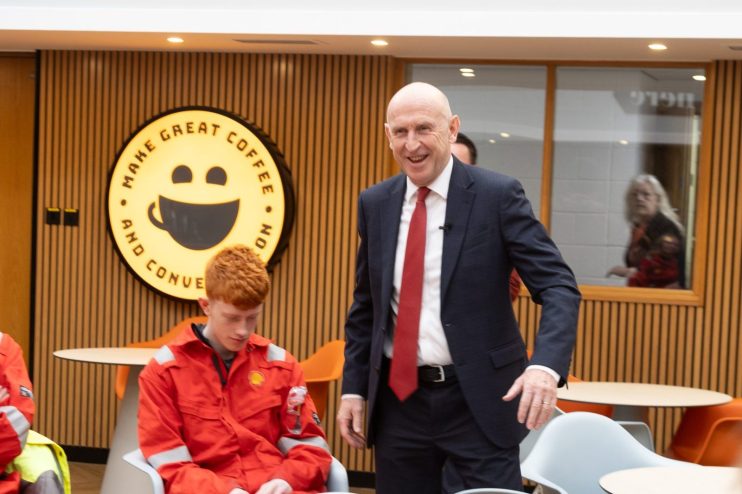
John Healey is set to deliver his first Budget although business chiefs, trade unionists and bond traders are still unsure of what to expect. Maurício Alencar reports on whether he can assert his authority on Wednesday.
In the period between Sir Keir Starmer leaving Number 10 and Andy Burnham taking over, ambitious Labour figures vied for the keys to Number 11. One researcher, who specialises in economic planning, said that both Wes Streeting and Shabana Mahmood’s teams had been in touch to talk about their respective economic visions.
But just four days after broadsheet papers reported that Mahmood had been chosen as Rachel Reeves’ successor, a certain John Healey was announced as Chancellor. The decision left trade unionists, business owners and City investors scratching their heads – not to mention Healey on the back foot to set out his economic philosophy.
With the Budget on Wednesday, each interest group remains largely left in the cold. While Reeves had years in opposition to build up close relationships with banking figures and win over big business figures, Square Mile analysts and Westminster think tankers speaking to anonymously have spoken of Healey’s apparent preference not to offer special treatment to different pressure groups.
Healey’s three major speeches so far have been designed to win over each interest group. At Bloomberg’s offices in July in the first week in the job, the former defence secretary pledged to maintain a fiscal buffer and boost market confidence. At a manufacturing centre in Coventry, he said he backed wealth creation and further investment in the private sector. Later that month at the Labour Party conference, Healey pledged to put unions at the forefront of his push for re-industrialisation.
Stay in the know
Three daily briefings with the key market moves and top business and political stories.
SUBSCRIBE HEREMessages laid out by the new Chancellor have not necessarily been contradictory, though they have raised more questions about his ability to seize the moment. Healey said banks were the “jewel in the British economic crown” just hours before media reports suggested he would increase a tax on them. He resigned from Starmer’s government over a lack of a plan for an uplift in defence spending, but he has delayed a decision to say the UK would get to three per cent as a share of GDP by 2030. Budget observers have been led to believe the upcoming statement will be “steady-as-she-goes” although ministers speak about the need for radical solutions to solving financial problems around the cost of living, Thames Water, inequality and infrastructure.
The Budget may allow Healey to assert his authority. Political analysts have suffered from a certain amnesia by forgetting that he previously served as a Treasury minister with his own economic convictions. In 1998, Healey wrote papers with Ed Balls – then an adviser to Gordon Brown – on devolution, which led to local investment bodies being created in the noughties before being scrapped by George Osborne. While most chancellors would feel aggrieved by growth policy being extracted from the Treasury and placed in Number 10 North, Healey’s devolution drive is one way he could lead on a transformative change for Britain’s political and economic system.
Healey’s time to shine
Managing to deliver a Budget that “meets the moment”, as he promised, could also boost his reputation. Whereas Starmer delegated economic responsibilities to Reeves, Burnham has taken a more hands-on approach, stealing the spotlight on more popular policies. A Budget that shows Healey is willing to keep public finances intact without rattling Britons would also be likely to cement his favourability. Controversial decisions could similarly inflame tempers. For most months of /Freshwater Strategy polling between 2025 and mid-2026, Reeves was the least popular UK politician surveyed.
He delivers the Budget from a difficult position. As a result of rising global bond yields and higher energy costs caused by the Iran war, Healey’s fiscal buffer is estimated to have halved to around £12bn. Like any of his predecessors, he is at the whim of the Office for Budget Responsibility’s mathematical tweaks. Relatively small changes to forecasts around migration, government receipts or wages – among several other data points – could lead to huge swings in his buffer levels by tens of billions of pounds. Although improvements in growth data could make markets become more optimistic about the UK’s public finances after years of gloom, the central figures could disregard this year’s surge. Pressures on welfare and defence are structural – with or without the UK’s better-than-expected performance this year.
RSM UK economist Thomas Pugh told a banking tax adding £2bn to government revenue each year is expected to be the largest revenue-raiser. Pugh’s colleague Chris Etherington, a tax partner at the City consultancy, said he expected there to be a collection of smaller levies via online retailers or land around infrastructure projects, plus gambling and potentially other “sin” goods such as junk food.
This makes it largely unclear how far Healey will go in raising taxes after two years where government income was cumulatively raised by nearly £70bn – especially if he is to deliver on promises to provide “breathing space” to households and businesses. The government’s plan could largely depend on a bid to reduce the tax gap of around £59bn, which is the difference between the theoretical amount of tax that should be paid to HMRC versus what is actually paid. Reports on the weekend suggested that the tax body could be given powers to take cash from people’s bank accounts.
Give-and-take Budget?
Meanwhile, Budget plans could rely on reformulating the tax and spending regime. It has also been suggested that changes on reliefs offered to business owners selling assets could fund extra reliefs for entrepreneurs opening start-ups. This echoes an approach on business rates, as some businesses not operating on high streets could face bigger bills to fund cuts for pubs and nightclubs. Similarly, not only will government departments have to find about £10bn in savings over the next four years to fund defence investments, new cash for the National Wealth Fund (NWF) could reportedly help boost defence expenditure figures.
Reeves’ ‘Great British Summer Savings’ campaign also offers the government a template for offering cost of living and business support. The Treasury incurred short term borrowing hits from a freeze on fuel duty plus VAT reductions on children’s meals while a stricter tax regime on energy profits would bring back funds in the long-term. Healey could rely on support being “temporary” in order to keep the fiscal buffer level largely protected. has also reported, followed by other media outlets, that the government was considering offering a NICs holiday to employers who hire young people out of work and education, thereby limiting the cost incurred by the government in the long term.
The government could also look to exploit borrowing rules to shield long-term growth ambitions from brutal cuts or distortive taxes. In his business speech in September, Healey specifically said that so-called ‘Pufins’ – short for public financial institutions, which are treated separately from other parts of the government’s balance sheet under the fiscal rules – could help boost industry as public-private partnerships are bolstered. Reports over the last two months suggest an extra £20bn borrowing from 2029 will allow the British Business Bank and NWF to deploy more capital in AI, clean energy and manufacturing.
Kicking the fiscal can down the road
For most budgets, it is often the days after the speech itself that turn out to be the most important. Precarious details on taxes and spending often unravel, forcing the government into embarrassing U-turns. Reeves’ changes to business rates for pubs and inheritance tax for farmers were both abandoned after heavy opposition. Healey may be relieved to hear that bosses at Barclays and Lloyds suggested they could absorb hits from higher levies.
This time, however, the real problems will only emerge next year. The Spending Review next year looks set to be a crunch moment for the Burnham government as ministers are tasked with finding multi-billion pound cuts each year to fund a new welfare plan and extra defence spending. The ‘no news’ Budget has also put City bankers and analysts on alert. Public briefings by executives at UBS suggested that less radicalism at the Budget could heighten the risk of a General Election next year, especially since Burnham’s Labour conference agenda centred on his long-term plans for a manifesto rather than short-term fixes to the economy.
It’s Healey’s task to ensure that there is a driving force behind his maiden fiscal statement. Tory leader says a Budget with little policy could be more damaging for the country given long-term pressures, but Healey may also be aware that perceptions of inaction could be problematic for his own political fortunes.