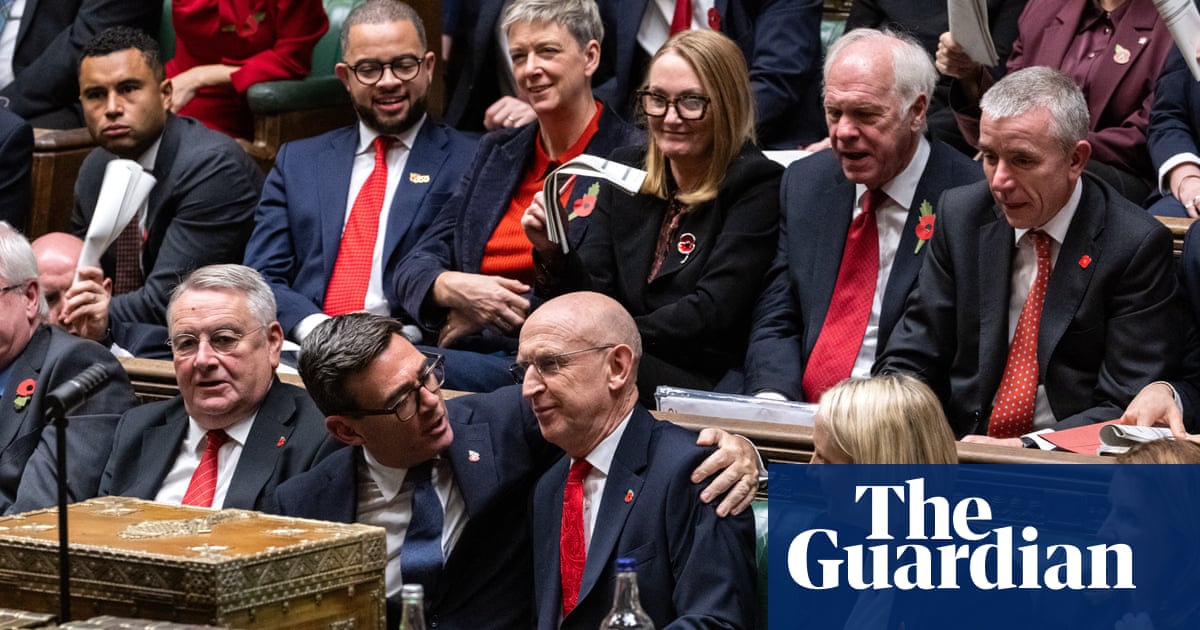
John Healey raised taxes on banks and landlords to fund a £100 winter handout for 20 million families as official forecasts made clear there is no end in sight for the cost of living crisis.
In his first budget, the chancellor blamed "global economic storms" for the grim outlook, as the war in Iran drives up oil and gas prices.
But he also faced criticism for failing to squeeze more money from profitable banks, punishing savers and not giving enough help to the poorest.
In a low-key speech designed with febrile bond markets in mind, Healey was at pains to stress he was sticking to Labour's self-imposed fiscal rules, and there were few surprises in his hour-long address to MPs.
But with households facing soaring energy prices, and mortgage bills rising amid higher interest rates, Healey offered a £100 cost-of-living payout, which will be sent to all English households in council tax bands A-D.
It formed the centrepiece of a cost of living package, which he said would "take the pressure off in the coldest months, and see people through to the spring".
The £2.6bn cost of the £100 giveaway includes funding for the Scottish and Welsh governments, which Healey said he hoped they would use to implement a similar scheme.
"I know that with the conflict in the Middle East, rising energy bills are a real worry. I know that people look to government at times like this, not to solve all their problems, but to give them a bit of breathing space," he said.
But the government's independent forecaster warned households face a "grim picture" on living standards, as it slashed the outlook for the economy in 2027 and said there was "virtually no growth" in disposable income for households.
Healey also came under fire for an unexpected 2p increase in tax rates for income earned on property or savings. As well as hitting savers and landlords, the Office for Budget Responsibility (OBR) said it risks "leading to a steady rise in rents", by deterring landlords from the market and cutting supply, as well as passing on costs to tenants.
Ruth Curtice, the chief executive of the Resolution Foundation thinktank, criticised the £100 handout, arguing it would have been better to give more generous support to the poorest consumers.
"The chancellor has missed the mark with badly targeted support that has left families facing a tough winter as energy bills rise," she said.
As expected, the chancellor also cancelled fuel tax rises planned by Rachel Reeves, and extended the VAT cut on electricity prices previously announced to next summer.
Healey announced several measures intended to cut businesses' costs – including raising the rates relief threshold from £12,000 to £18,000 for companies in the retail, hospitality and leisure sectors. The change would be funded by higher taxes on gambling and vape shops, he said.
The cost of the household support measures will be met by a doubling of the additional levy banks pay on their profits, to 6%; as well as the higher taxes on income from property and savings.
The additional bank tax will only last for 15 months and marked a less significant rise than some in the industry had feared. Banks' share prices were among the highest risers in the blue chip FTSE 100 index on Wednesday.
Laura Suter, director of personal finance at AJ Bell, said: "Savers will be hit with another hefty tax rise on their savings interest, adding to the squeeze on their savings over the past few years."
She added that the higher tax on rental income "could be passed on to tenants, with rent hikes a potential lever for landlords to mitigate any increase in tax".
"Equally, we could see yet more landlords selling up, in favour of investing their money in other assets that have lower taxes and less government tinkering," she said.
The New Economics Foundation thinktank accused Healey of failing to be bold enough. Hannah Peaker, its deputy chief executive, said: "As households prepare to be hit by a wave of price rises this winter, the chancellor has shown the right instincts but not yet the right scale.
"The £100 support with energy bills will provide some welcome relief, but the chancellor could have been braver in the face of what we are up against."
Energy provider EDF predicts that the Ofgem price cap – which determines consumer bills – is set to go up by £466 in January. And despite Healey's promise of a "breathing space," in the teeth of the crisis, official forecasts published by the OBR alongside the budget pointed to a challenging winter.
Presenting the forecasts, the OBR's David Miles highlighted a "pretty grim picture" for household finances, as inflation rises to almost 4%.
Even by 2030-31, it only expects real disposable household incomes – its favoured measure of living standards – to be 2% higher than before the Covid pandemic. It now expects anaemic economic growth of 1% next year, about half a percentage point lower than expected in March.
Healey said higher inflation and interest rates had hit the government's finances too, ratcheting up the government's interest bill by £14bn this year alone, but promised to stick to Labour's fiscal rules.
The OBR said Healey would meet the most important rule – to balance day-to-day spending with tax revenues – with a diminished headroom of £15bn by the target date of 2029-30, against the £24bn Rachel Reeves had built up in the spring.
Borrowing is scheduled to be higher than expected in the short term, but the chancellor promised to rebuild the buffer against the rules to £22bn by the end of the five-year forecast period.
"That is what a buffer is for. Use it when you need it, rebuild it when you can," he said. Bond markets appeared unruffled by the higher-than-expected borrowing.
The deferral of some important decisions to next year's spending review prompted the Conservative leader, Kemi Badenoch, to argue Burnham was keeping his options open on an early general election.
Burnham doubled down on his promise not to call one, however, telling reporters on Wednesday that he could rule one out for at least 12 months. "I'm not thinking about my own party and its prospects. I am thinking about people, and I'm thinking about what I can do to help them."
Badenoch said Britain had "overspent, overborrowed and overtaxed", and criticised Healey for delayed decisions on defence spending and welfare cuts. Healey has said he will tackle welfare after reports from Alan Milburn on youth unemployment and Sir Stephen Timms on disability benefits, expected next month.
Helen Miller, the director of the Institute for Fiscal Studies, warned that by sticking to the tight spending plans bequeathed by Reeves, Healey could be storing up trouble for the spending review due next year.
"History warns us to be sceptical of tight spending plans in later years of the forecast. Next year's spending review will be a crunch point, and looks very tough for many departments, whose budgets will be squeezed by higher inflation forecasts," she said.
"The plans for overall spending set out in the budget mean that spending choices at next year's spending review will be much harder than those made so far this parliament."
Buried in the budget was a hint at an easing of some migration restrictions, including some industries that will be allowed to lower the salary thresholds for visas to allow companies across the country to hire international talent.
Among the winners was London mayor Lord Sadiq Khan, who received new powers to extend the Bakerloo line in London and a pledge that cross-Channel trains will now also stop at Stratford International in east London. There was also cash to explore hosting the Olympics in "a northern city" – and former Greater Manchester mayor Burnham may have a candidate city in mind.