
John Healey is not expected to rock the boat in his maiden Budget next week. Looking at the combustible bond market, that’s probably just as well, writes Ali Lyon.
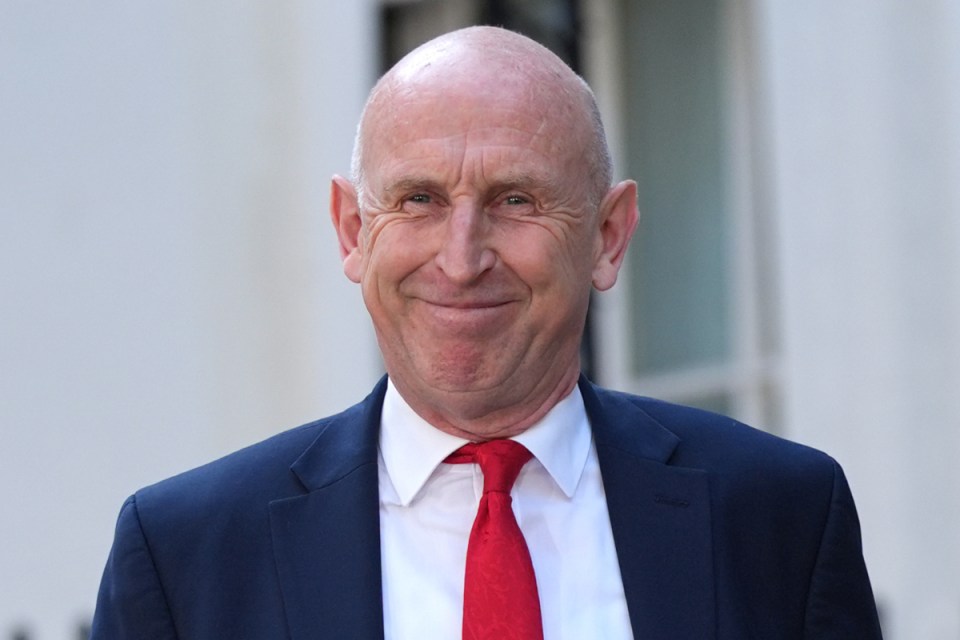
John Healey is, the well-worn cliche goes, walking a tightrope.
Boxed in from three directions, the Chancellor could certainly have hoped for an easier backdrop in which to give his maiden Budget. From his left flank he will have to bat away the incessant demand for more public spending from backbench MPs and defence hawks. From his right, he will encounter the country’s business owners and workers, ensuring he makes good on his promise not to raise income tax, national insurance or VAT. All the while, he must stick to his predecessor’s fiscal rules and leave “a buffer against uncertainty” – or risk a market revolt.
With bond yields across the developed world sitting around multi-decade highs, it is this latter group that poses the most immediate risk to the Chancellor’s fate. Investors still – despite France and the US’s relentless profligacy – demand a higher interest rate for holding the UK’s debt than any other major economy. And that means that the Exchequer is now forced to fork out more than £110bn a year just to pay the interest on its insatiable appetite for the bond market’s cash.
Next to none of that, it should be said, is down to decisions made by Healey himself. Almost every recent occupant of No. 11 Downing Street, no matter their political creed, must shoulder part of the blame: after all, one’s interest bill is always going to be higher if the UK has more debt attracting that interest. Just as responsible, though, is the succession of inflationary geopolitical shocks – be that Russia’s invasion of Ukraine, the fiscal stimulus used to carry us through the pandemic and the US’s invasion of Iran – that leaves Healey battling against global forces pulling in the wrong direction. But that doesn’t change the fact it is the current Chancellor, now only in his 14th week in post, who must maintain credibility with the dispassionate, fickle investors willing to lend him their cash.
Stay in the know
Three daily briefings with the key market moves and top business and political stories.
SUBSCRIBE HERE“The market is very tense,” says Cavendish’s head of equity strategy, Roger Lee. “It’s febrile. The public finances are such that… the scope for additional borrowing – certainly at any sort of reasonable rate – is virtually none.”
The upshot is that, speak to any fixed income investor or economic analyst, and they will tell you that this must be a Budget that takes a fiscal Hippocratic oath: over and above anything else, it must do no harm.
“I would certainly prefer a Budget that avoids the temptation of having to raise taxes for the sake of doing something, and stick with the plans as as they are for now,” RSM UK’s economist Thomas Pugh tells . “And I think that’s roughly where we are. Above all, we need to convince markets that the UK is not the next France, while also giving some support to households and businesses over winter.”
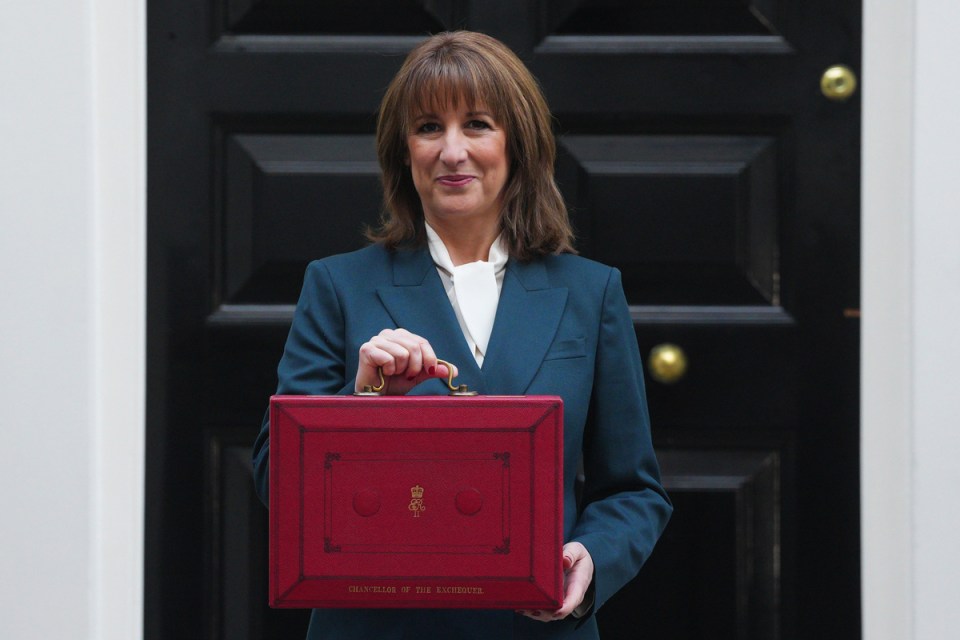
Pugh’s sentiment – very much the consensus view among investors – is largely the product of several recent Chancellors giving Healey helpful examples of what not to do. Especially instructive are the two hamfisted fiscal events overseen by his immediate predecessor, Rachel Reeves.

Her favoured ‘smorgasbord’ approach, of raising a mixture of small taxes while juicing borrowing for investment, generated unreliable revenues and cultivated a wave of sentiment-sapping speculation. Her maiden attempt in 2024 triggered a large gilt sell-off, as bond investors adjusted to £30bn of additional borrowing implied by her plans.
Simultaneously, the spectre of Liz Truss’s ignominious 2022 mini-Budget still haunts the corridors of the Treasury. The radical overhaul, for which she and Chancellor Kwasi Kwarteng dispensed of the Office for Budget Responsibility’s oversight and increased borrowing by £72bn, remains the undisputed pin-up for what can happen when you take the bond market for granted.
Inaction today may be unappealing to a new Prime Minister eager to improve living standards for the median voter. But, in the straitened, logic-bound world of fixed income, there is plenty to be said for, basically, doing nothing.
How is the UK economy doing?
Against a barrage of macroeconomic headwinds, the UK economy has been a standout performer relative to its peers. Official gross domestic product (GDP) figures have, almost without fail, beaten economists’ understandably dreary estimates this year. We have enjoyed the fastest growth of any G7 country this year, and even our long-suffering labour market is showing signs of life.
Fiscally, we are off monetary authorities’ naughty step too. Britain’s deficit reduction plan is more ambitious than its spendthrift peers, which James Carter, co-head of fixed income at W1M, says has helped gilts to outperform almost all government bonds going into next week.
“The ‘moron premium’ embedded in UK gilts has been steadily eroding over recent months,” he tells , adding that political and economic woes afoot in the likes France have helped boost the UK’s credibility. “The Budget is another opportunity to reinforce that rehabilitation.”
If a “do nothing, kicking the can” Budget, as Cavendish’s Lee frames it, is what bond market participants want, it is also what they expect. There is a near unanimous belief among investors that Wednesday 28 October will come and go without any significant plans for more bond issuance emerging.
“I suspect we’ll just see chess pieces moving around the board at not a huge amount coming out of it,” says Oliver Faizallah, head of fixed income research at Raymond James, “I feel like Healey and Burnham now get the fiscal situation, and they don’t want to make any rash decisions because they know the bond market will be extremely nervous about it.”
Any rabbit could trigger ’emergency Budget’
As overwhelming as that view appears to be, the precarious state of the UK’s public finances mean that there remain areas of concern. In Faizallah’s eyes, any attempt at breaking “the spirit of the fiscal rules” would risk a negative reaction, even if technically it conformed to them.
Early on in the 12-week Budget preparation period, the Chancellor was rumoured to be considering approving fresh bond market-funded borrowing to fund so-called ‘public financial institutions’, or PuFins. While not a breach of the letter of the spending rules, the gilt investors would “see through that”, Faizallah says.
Worries also abound that Healey may succumb to the age-old tradition of pulling a ‘rabbit out of the hat’, and save an unexpected spending announcement for the speech itself. That could be an uplift in defence spending, bringing the UK closer to its plan to devote three per cent of GDP to defence by 203. Or it could be a step towards Burnham’s avowed goal to bring more utilities into public ownership.
To do anything along those lines would be to miscalculate the bond market’s capacity for more borrowing, warns Lee, even if ministers could technically frame it as investment. “Issuance is issuance,” he says. “I think the risk is also that they mismatch between your tax raising proposal, which has uncertainty in terms of how much it will yield, versus a spending commitment that is certain.”
Were any of that to happen, then the tinder-box bond market could re-ignite to such an extent that Healey is forced to patch it up. “If we do get that, then the bond market will fight back,” says Faizallah. “And I think there will need to be a revision of some sort – going back to the drawing board.
“But that’s not our base case – Healey’s too long in the tooth for that.”