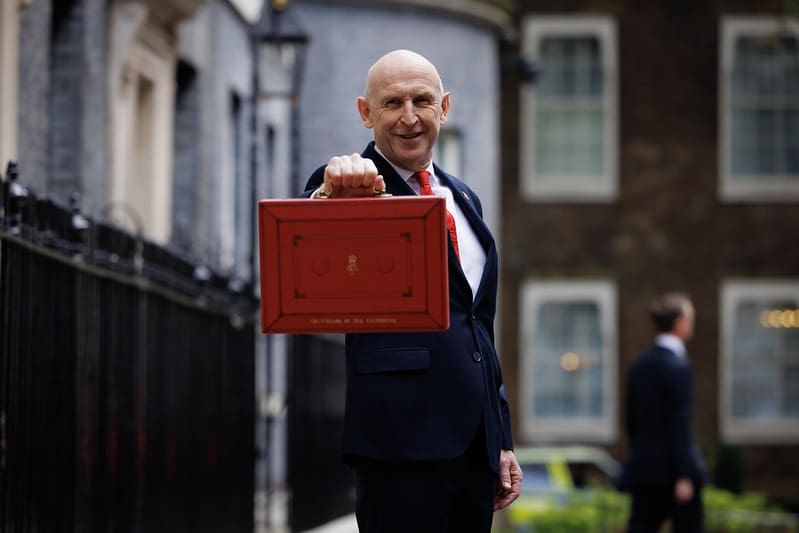
Chancellor Healey has delivered the Budget. What measures will affect small businesses? We have more in the summary below.
Key announcements
Young entrepreneurs will get an allowance that covers a years’ worth of living expenses as part of a government pilot.
Founders’ Relief will be a 10% rate on lifetime gains of up to £10 million for the founders of ‘Britain’s most successful firms’ from April 2027. Note that this one is geared towards higher-growth business.
The point at which new businesses will be required to pay tax will increase from £1,000 to £3,000. This will be introduced through the Finance Bill 2026/27, taking effect from April 6, 2027.
Full expensing maintained
The current full expensing rules are still in place. The main rate of writing down allowance has reduced by two percentage points to 12% from April 2027. The main rate of First Year Allowance is also increasing from 40% to 50%.
Business rates threshold increase
The Small Business Rates Relief threshold for retail, hospitality and leisure (RHL) properties in England is increasing from £12,000 – £18,000. This means an extra 70,000 businesses will be exempt from business rates. For larger RHL businesses the rate threshold for tapered relief is increasing from £15,000 to £21,000. Both of these increases will take effect from April 2027. There will be no above-inflation rate increases for any RHL business.
Of course, this is on top of the 20% rate cut for pubs, clubs and live music venues earlier this year.
The Transitional Relief Supplement will be extended by two years from April 2027.
Business Rates Relief will also be removed from vaping shops and adult gaming centres from April 2027.
A General Anti-Avoidance Rule (GAAR) for business rates in England is currently in the works.
Extending the Supporting Small Business Scheme
For those who were in receipt of the 2023 Supporting Small Business Scheme in England, the scheme will be extended for another year from April 2027.
For the first time, eligible self-employed fathers, partners and adopters will receive parental pay from April 2029.
A 3.9% increase in both National Living Wage and National Minimum Wage has been confirmed from April 1, 2027. the National Living Wage will increase by 3.9% to £13.21 per hour. Meanwhile, the National Minimum Wage will increase by 3.9% to £11.27 per hour for 18 to 20-year-olds and by 3.9% to £8.31 per hour for 16 to 17-year-olds and eligible apprentices. Plus the accommodation offset will rise by 3.9% to £11.53 per day.
Extending motorist tax cuts
The 55p per mile rate on the first 10,000 miles of car and van travel for work will become permanent. The higher mileage rate above 10,000 miles is being increased from 25p to 35p per mile.
The freeze on fuel duty has also been extended to July 2027.
The government is setting out an ‘implementation roadmap’ to make VAT e-invoicing a requirement from April 2029.
Local authorities will get the option to impose an Overnight Visitor Levy (or ‘Tourist Tax’).
Less red tape
For small businesses, it will become simpler to bid for contracts. Plus, the government will streamline ONS business surveys to reduce the number of data requests businesses have to fill out, and implement a ‘Tell us Once’ measure.
Online marketplaces such as Amazon and Temu will be responsible for collecting VAT on sales by UK VAT-registered businesses and any other UK business with a minimum annual sales threshold per platform of £90,000. The rules won’t apply to personal sales, second-hand goods, or business-to business transactions.
What the experts say
Theo Chatha, chief financial officer at Bibby Financial Services, said:
“For small businesses up and down the country, this was a bare minimum Budget. Despite pockets of welcome news, much of what they need to thrive has not been delivered.
“Support for retail, hospitality and leisure businesses is needed. But the UK’s SME landscape goes far beyond those sectors. The manufacturers, construction firms, wholesalers, hauliers and service businesses that make up much of the SME economy are still facing a significant tax burden. They have been left on the same rate, overlooked once again.
“The rise in the National Living Wage and National Minimum Wage will support those who are struggling with the cost of living, and fair pay matters. But once again, this cost has been shifted onto SMEs. Businesses are still absorbing the 2025 employer National Insurance increase. Now they face yet another rise in the cost of employing people, with nothing in this Budget to help them carry it.
“The Government wants growth in every postcode. To get it, SMEs need relief on the cost of doing business and more confidence to invest. This Budget has done little to provide either.”
Kevin Fitzgerald, UK MD, Employment Hero, said:
“There were some welcome measures for small businesses in today’s Budget, but there is much more to do.
“Business rates relief for many more of Britain’s SME is welcome news, especially for businesses in the North we spoke to earlier this month. Alongside those who called for business rates relief, nearly half also asked for support with hiring and training new staff and apprentices.
“Apprenticeships are a great way for young people to get their first foothold in work, so I’m hoping to see more support here following Milburn’s report. We must remember that for a small business, training an apprentice takes time and money before the investment pays off, which is why many are looking for candidates with previous experience. Support that helps SMEs sustain the investment long term can turn an entry-level opportunity into a lasting career.
“A 3.9% increase in National Minimum Wage will make some employers nervous. Everyone deserves a living wage, but the package needs to recognise that wage policy and the wider cost of employing people are closely linked. When the minimum wage rises, so does the cost to the employer, meaning businesses with already tight budgets will feel the squeeze even more.”
Adam Owens, head of tax (UK North & Mids) at Xeinadin, said:
“For employers paying for the minimum wage increase, the higher payroll cost is guaranteed while the extra sales are not. For businesses with little room in their margins, that will mean raising prices, reducing staffing or postponing investment. The danger is that this additional burden may hamper business growth and investment, especially for small and medium sized enterprises.”
13.13: 100% business rates retained in local authorities by the end of the decade. Confirms previously mentioned overnight visitor levy.
13.08: Founders’ Relief, a 10% rate on lifetime gains of up to £10 million for the founders of ‘Britain’s most successful firms’, will be introduced. New trading allowance so that new ventures can earn £3,000, up from the current £1,000, before they have to pay tax.
13.06: Young Entrepreneurs Allowance to be introduced to cover living costs for a year.
12.57: Maintaining full expensing. Threshold on business disposal assets relief in capital gains tax reduced from £1 million to £500,000.
12.54: Business rates cut by 20% for pubs, clubs and live music venues. Increasing business rates threshold for retail, health and leisure from £12,000 to £18,000. An extra 70,000 businesses exempt from business rates. Doing this with 20%-25% duty on higher stakes gambling machines. Alcohol duty relief for small brewers.
12.53: Self-employed fathers and eligible partners to get parental leave.
12.52: National Living Wage and National Minimum Wage is going up by 3.9%. This applies to both 18-20-year-olds and workers aged 21+.
12.51: Extending tax cuts for motorists. Increasing higher mileage rate from 25p to 35p per mile.
12.43: OBR upgraded growth forecast to 1.2% this year and 1.6% in 2031.
12.42: UK economy fastest-growing in G7.
12.39: OBR says fiscal headroom will be £15 billion in 2030. On course to eliminate budget deficit in three years. Debt as percentage as GDP will fall to 81.7% in 31/32. Borrowing to come down by 1.8% by 2030/31.
12.37: OBR says we will pay £14 billion more on debt interest this year.
12.36: Inflation risen. Gas prices nearly tripled since February. Means higher running costs and loan rates for businesses.
12.33: Healey promises a Budget for businesses large and small.