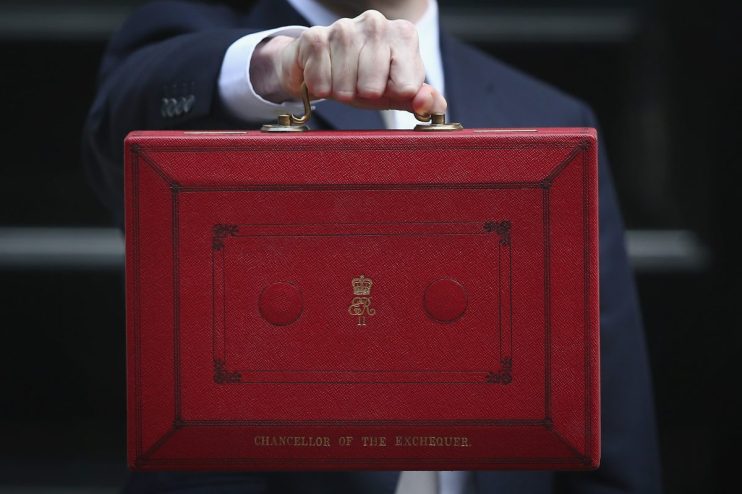
John Healey avoided several icebergs but there are nasty storms on the horizon, says William Nixon
The Chancellor opened his speech by claiming the Budget would help “steer” the UK’s economy through “global economic storms”.
He can be commended for avoiding the twin icebergs of major new tax hikes and pre-Budget speculation that sank Rachel Reeves’ economic expeditions.
But the Chancellor’s ‘steady as she goes’ strategy is simply not sustainable when the economy is adrift at sea.
The nasty ‘storm’ on the horizon – involving both a major energy price shock and multiple rate hikes from the Bank of England – is no excuse for avoiding a fundamental course correction. If anything, it should motivate him to start turning around the ship as soon as possible.
Stay in the know
Three daily briefings with the key market moves and top business and political stories.
SUBSCRIBE HERETo give some context, the recent increase in energy prices and debt servicing costs are on track to reduce households’ average annual disposable income by around £1,000 – reflecting a potent combination of higher fuel prices, a likely 25 per cent rise in energy bills next year and a 1ppt increase in interest rates. The impact on businesses, who are particularly sensitive to surging diesel prices, could be even larger.
Healey’s commitment to reduce VAT on households’ electricity bills for the next 12 months is welcome, but it will only save households around £50 per year – small change relative to the size of the coming shock. Likewise, the new £100 payments to help four in five households with higher energy bills, as well as the commitments to expand mileage-related tax breaks (£8 per household per year), are modest in comparison.
The commitment to temporarily remove tariffs on food imports will similarly only save around £20 per household per year, while the commitments to expand support for unpaid carers and increase parental pay are even smaller and won’t start until the end of the decade.
To be clear, several of these policy tweaks are welcome – indeed, Policy Exchange’s recent tax paper called for the removal of both the cliff edge of Carers’ Allowance and import tariffs – but they are tweaks nonetheless.
Higher borrowing costs
Likewise, the revamped policy for first-time homebuyers in the form of the Your First Home scheme will provide some incremental support for the UK’s softening housing market. But any tailwinds will be tiny in comparison to the emerging losses from higher interest rates and headwinds to investment, including the upcoming ‘mansion tax’ on high-value homes and costly EPC regulations for landlords.
While Chancellor Healey prominently flagged a temporary tax increase on banks, which will likely be passed on through higher borrowing costs, the Budget also detailed a permanent 2ppt increase in the tax rate on property income starting in 2027.
Recent data from Rightmove suggests the number of unsold homes in the UK is currently sitting at a 12-year high. House prices have also fallen around 10 per cent since 2022 after adjusting for inflation. Despite this slowdown in sales, rents have continued to rise strongly, signalling that investors are fleeing UK property in favour of other assets. The incremental tax increases will simply make these problems worse.
The labour market is the other area of major concern. Healey announced the minimum wage for both adults and young people will rise by 3.9 per cent. While it is encouraging to see Healey slow the pace of increase for younger workers – which has clearly contributed to the UK’s NEET crisis – increasing wages by diktat is not a sustainable strategy to revive the labour market. The number of unemployed workers relative to new job ads is now sitting at a multi-year high of 2.5 and there is little prospect of an improvement anytime soon.
In truth, there is little the Chancellor can do to avoid the coming storm completely. But households and businesses would undoubtedly feel more secure if they were confident the UK economy was heading in the right direction.
For example, earlier in the week the government announced it would approve the Jackdaw gas field, unlocking around 40m barrels of oil equivalent. But going a step further and fully lifting the moratorium on new exploration could unlock up to 5bn barrels.
On the labour market, the government could reform the UK’s welfare system, including measures highlighted in recent Policy Exchange work on social housing and disabilities, and use savings to fund a permanent reduction in employers’ National Insurance to get firms hiring again.
On the housing market, the government could remove a range of punitive taxes and mandates – including those related to affordable housing and EPC requirements – that are clearly deterring investment. This would help to support a recovery in both turnover and prices, as well as putting downward pressure on rents.
A ‘steady as she goes’ path is simply not a viable strategy for the UK economy. Healey needs to fundamental reset course, and the quicker he starts turning around the ship, the better.
William Nixon is a senior research fellow in economics at Policy Exchange and a former economist at Goldman Sachs, the Reserve Bank of Australia, and the Australian Treasury