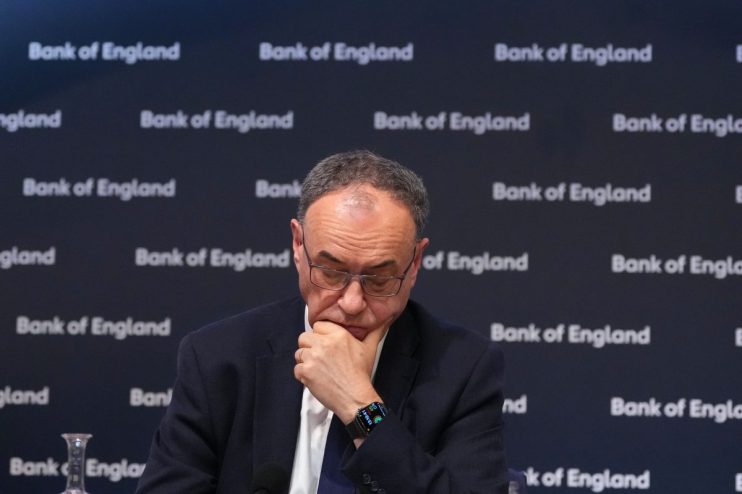
The groundswell of populist politics threatens to undermine central banks’ independence and hamper their ability to protect the long-term interests of the global economy, Andrew Bailey has warned.
In a speech in London, the Bank of England governor accused populist parties of trying to exert increasing levels of influence over monetary authorities the world over, in a move he said would “damage the public interest”.
Bailey warned that central banks were one of several institutions that parties on either extreme of politics were attempting to undermine as part of their claim to represent “the authentic will of the people”.
“Any institution seen to get in the way becomes an unrepresentative elite standing between the people and their will, and thus an obstacle to popular sovereignty,” he said.
“This is a serious challenge.”
“Courts of law, universities, regulatory bodies and central banks all derive authority through forms of democratic delegation set within a framework of that plural society,” he added. “Maintaining the trust that goes with that delegation matters deeply.”
Central bank chiefs under attack
The remarks follow a string of high-profile attacks on central banks, the most prominent of which has been the regular broadsides Donald Trump unleashed on former Federal Reserve chair Jay Powell. The US President’s campaign against Powell, which initially comprised regular calls for him to cut interest rates faster, culminated in the Department of Justice launching an investigation into the central bank chief.
The now-dropped probe ostensibly related to the Fed’s mismanagement of major upgrades to its Washington headquarters. But many, including every living former Federal Reserve chair, condemned it as an attempt to undermine Powell’s authority.
Turkiye’s President Recep Tayyip Erdogan has ousted several of the country’s central bank governors who have opposed lowering interest rates, while Hungary and India have also announced measures to undermine the independence of their central bank.
Speaking on Friday, Bailey argued that efforts to bring central banks under government control tend to backfire. Lawmakers generally pursue “short-term monetary policies that ultimately undermine economic stability” and set off events that make it difficult to control the value of money,” Bailey said.
“The value of money is something upon which every household and every business rely,” he added. “To be effective in the sense of trust and legitimacy in society, support for such a public good should come from the plurality of society rather than any single member group.”