What qualifies for capital allowance and what kind of business expenditure can I claim against? Toby Cotton of Kreston Reeves explains
- Capital allowances are reliefs for ‘qualifying capital expenditure, usually on plant and machinery.
- Most expenditure will be eligible for 100% through the Annual Investment Allowance, which is currently at a £1 million limit.
- Full expensing is another tax relief. It allows limited companies to deduct 100% of the costs from qualifying plants and machinery from their taxable profits during the year of expenditure. It applies to the main pool of qualifying expenditure, must be for new and unused equipment and must not be a car.
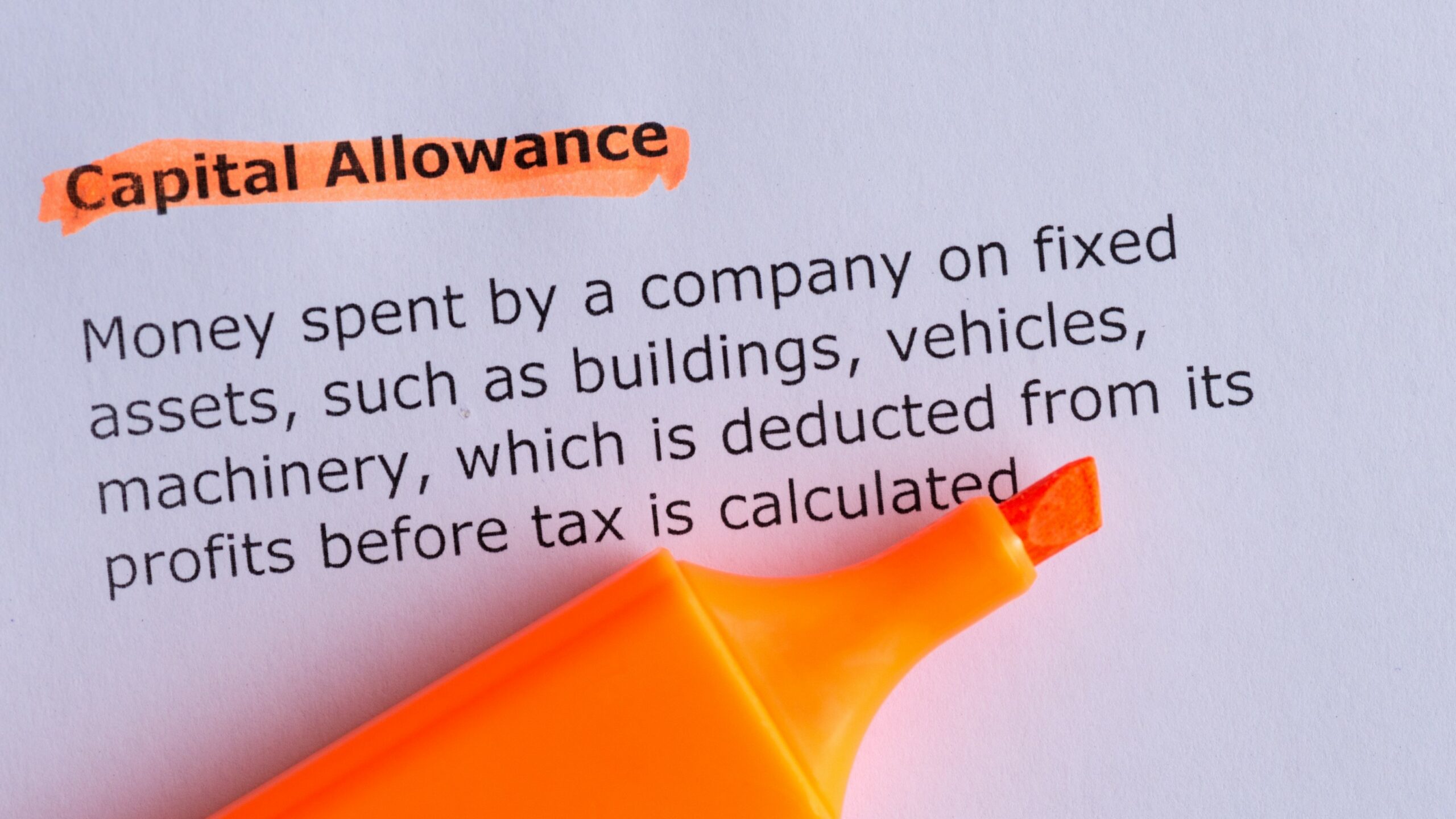
Capital allowances are available on qualifying capital expenditure incurred on the provision of certain assets used in a company or individual’s trade. Not all assets qualify for a capital allowance and the rate of relief will vary. The allowances are deducted from trading profits effectively reducing the tax payable. This would be the income tax for a sole trader or partnership and corporation tax for a company.
In most cases, items purchased which are allocated as “plant and machinery” would achieve 100% relief via the Annual Investment Allowance (AIA). The current AIA limit is £1 million.
HMRC is generous in what it considers qualifying expenditure and includes:
- Computer equipment and servers
- Tractors, lorries, vans
- Ladders, drills, cranes
- Office chairs and desks
- Electric vehicle charge points
- Refrigeration units
However, certain items, such as cars, and items owned before you started a business and items given to you or your business are ineligible for this AIA claim.
Ineligible for capital allowance
There are other items which are ineligible for capital allowances entirely but one of the most complex areas relates to buildings and development expenditure. Here, capital allowances claims are often understated, meaning companies are missing out on significant savings due to missing qualifying expenditure that is eligible for a claim.
Certain expenditure on a building can be classified as plant and machinery under “integral features” which attracts a higher rate of capital allowance than a building. This includes items such as lifts, water heating systems, air conditioning and lighting systems.
Then there are items that are ineligible for capital allowances which includes things you lease on finance, and parts of buildings including doors, gates, mains water and gas systems, and land and structures. The rules regarding what expenditure qualifies as plant and machinery are very complex and are derived largely from case law.
It is not uncommon for businesses to think some items would be ineligible only to find they are eligible under the structures and building allowance, which includes claims on the construction costs such as design fees, renovation, repair, conversion and fitting out works.
Also, it is not uncommon for the costs of a building attributable to the items allowable as plant and machinery to be lost in the overall cost of the building making it very difficult to separate these assets out. Businesses are advised to use a chartered surveyor and/or accountant who is familiar with the qualifying expenditure rules to assist in identifying the costs eligible, checking that the building qualifies, and no previous claims have already been made on the expenditure. They can also make a claim on behalf of you.
Writing down allowance
The writing down allowance is a type of capital allowance that provides tax reliefs on capital expenditure. It works in pools. Most plant and machinery expenditure will be in the main pool (once AIA is utilised), unless it needs to go in the special pool or single asset pools. The special pool, with a rate of 6%, will include your integral features, items with long life, thermal insulation and certain cars with CO2 emissions over a certain threshold. Single asset pools feature items with a short shelf life, or items you use outside of your business if you’re a sole trader.
Rules around the writing down allowance changed off the back of the 2026 Autumn Budget. The changes affect those incurring expenses that qualify for the first year allowance as well as businesses claiming main writing down rate. In the Budget announcement, the rate of first year allowance allowed on qualifying capital expenditure raised from 40% to 50%. This reduces the main writing down allowance rate from 14% to 12% per year. These changes kick in on April 1, 2027 for corporation tax and April 6, 2027 for income tax. The increased rate of first year allowance will apply for purchases made from January 1, 2027.
Full expensing
Full expensing is another tax relief. It allows limited companies to deduct 100% of the costs from qualifying plants and machinery from their taxable profits during the year of expenditure. It applies to the main pool of qualifying expenditure, must be for new and unused equipment and must not be a car.
Full expensing vs AIA
Full expensing is ideal for limited companies looking for short-term cashflow relief and looking to make essential plant and machinery purchases. If you have a short accounting period of less than 12 months, the full relief can still be claimed.
The AIA is more widely available to sole traders and other types of business and can apply used items as well as new (with some exception to items on finance. If you’ve got a short accounting period of less than 12 months then only a pro-rata amount of AIA can be charged.
Capital allowances are tax reliefs that allow business to deduct costs from eligible assets such as plants and machinery from their taxable profits.
You can claim capital allowances on plant and machinery you use for your business. The type of capital allowance you can claim depends on the business you are. Sole traders can’t claim on full expensing, for example.
Yes, they can claim on the Annual Investment Allowance but not full expensing.
Toby Cotton is a manager in the business services team at accountants, business and financial advisers
Further reading
Super-deduction tax break – what is it and how does it work?