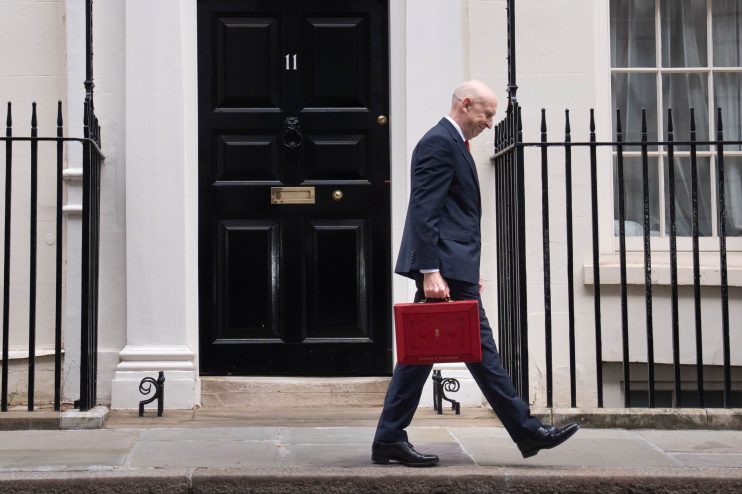
If there were treats in John Healey’s pre-Halloween Budget they were hidden in a gloopy soup of tricks. Forget the talk about a low-key, ‘do no harm’ fiscal event; the Chancellor has delivered a mess of new interventions, subsidies, tax rises, quangos and complications against a backdrop of truly terrifying economic forecasts.
Let’s start with the politics. “Breathing space now, hope for the future” – this was Healey’s mantra. Boxed in by Labour’s manifesto commitments and his tax-happy predecessor, Healey made a valiant effort to present a string of small interventions (and some big tax grabs) as a coherent cost-of-living strategy. Meanwhile, as predicted, big debates about welfare reform and defence funding were kicked down the road, subject to a series of consultations and reviews rather than decisions.
When it comes to policy, just under 100 new measures were announced – not all of them bad – covering everything from data centre grid connections to (yet more) ISA reforms and business rates relief for the high street. Household energy subsidies account for the bulk of the retail offering, but on the other side of the ledger dangerous new taxes have been levied on banks, savers and landlords.
These are not consequence-free tax rises. Fewer rental properties on the market (now predicted by the OBR) and an uncertain tax regime for banks will not be good for the economy.
Gloomiest growth picture since Labour came to power
The closest we got to a long-term strategy was some more noise about devolution and the promise of a new ‘Good Growth Fund’ to splash the cash around the regions.
Stay in the know
Three daily briefings with the key market moves and top business and political stories.
SUBSCRIBE HERENow let’s look at the economics. The growth picture is the gloomiest it’s been since Labour came to power. The economy is expected to grow by just one per cent next year, at a time when inflation is forecast to peak at 4 per cent and average 3.4 per cent across the year. There’s a word for this: stagflation. Unemployment is forecast to climb above 5 per cent next year. Against this backdrop, Healey’s promise of “hope” sounds naive at best.
The OBR, having analysed the government’s announcements, says it expects “no growth in real earnings in 2027 and 2028 and a slight fall in real household disposable income…in the near term.” In other words, we’re going to be poorer. The tax burden will climb to yet another record high, hitting 42.9 per cent of GDP by 2030, with public spending set to hit 45.7 per cent of GDP next year. Borrowing and welfare spending will climb every year of this parliament.
The Chancellor calls all this “breathing space.” I call it asphyxiation.